





Step-by-Step Flossing Guide for Beginners
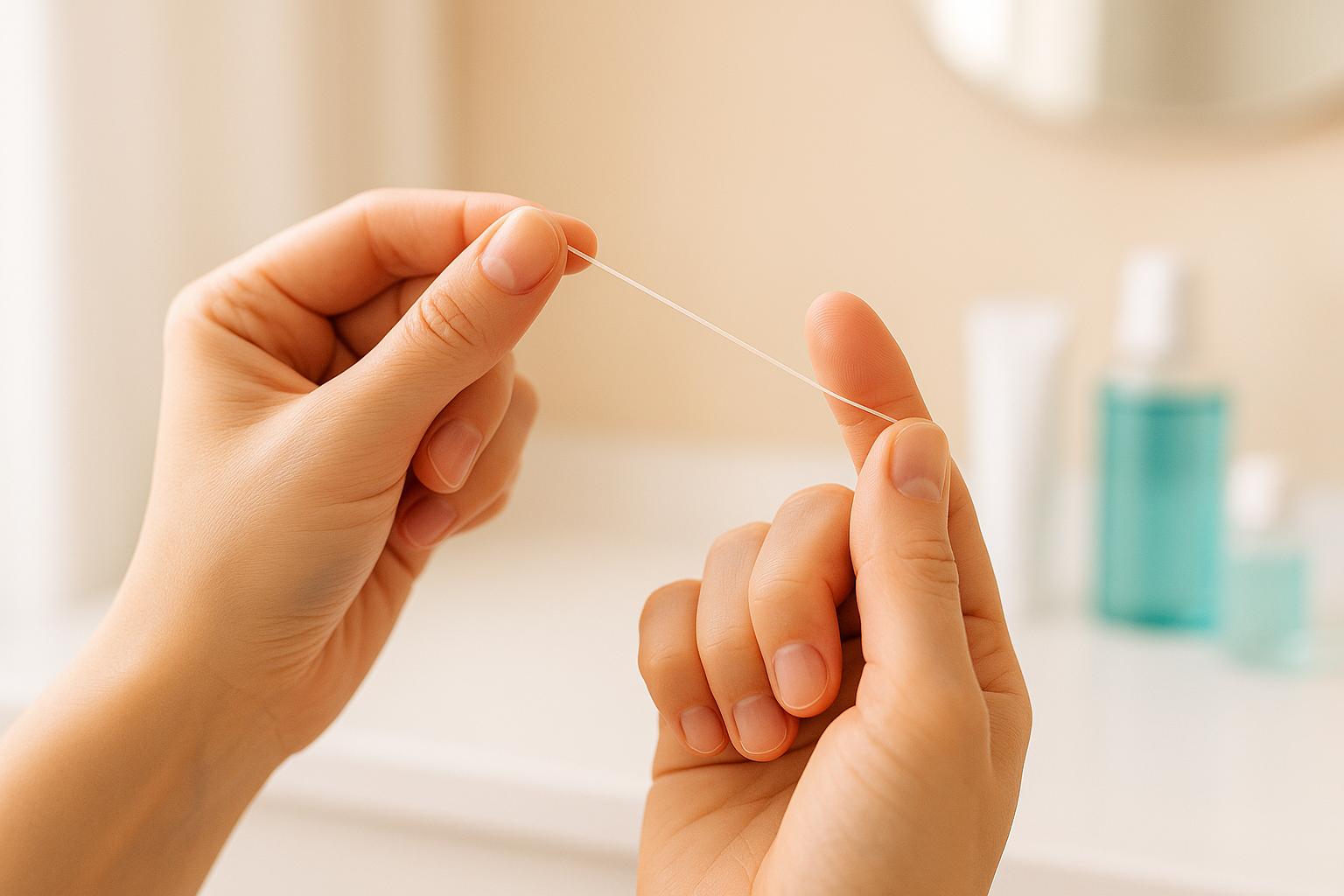
Flossing helps clean the 40% of tooth surfaces your toothbrush can’t reach. It removes plaque, food particles, and bacteria that can lead to cavities, gum disease, and bad breath. The American Dental Association (ADA) recommends flossing once daily for everyone, including kids whose teeth touch. Consistency is key, whether you floss in the morning, after lunch, or before bed.
Here’s how to get started:
- Choose the right floss: Waxed floss glides easily for beginners, while unwaxed floss suits tight spaces. Dental tape works well for larger gaps, and floss picks or water flossers are great alternatives.
- Floss properly: Use about 45 cm of floss, holding it tight between your fingers. Gently guide it between teeth, curve it into a ‘C’ shape, and clean below the gumline. Avoid snapping or reusing floss.
- Avoid common mistakes: Be gentle to prevent gum damage, and ensure you clean every tooth, including hard-to-reach molars.
Flossing is a small daily habit with big benefits for oral health, including reducing gum disease risk and improving breath. Start today for healthier teeth and gums.
Dentist Shows How To Floss Properly – String, Picks, and Proxabrushes
Flossing Tools and Equipment
Choosing the right flossing tools might feel overwhelming at first, but focusing on what suits your needs and budget can make the decision easier.
Types of Dental Floss
Dental floss comes in two primary types: nylon (multifilament) and monofilament. Nylon floss is made from woven strands, which can sometimes fray during use, while monofilament floss (often made from materials like Teflon) resists fraying and glides more smoothly between teeth [3]. Both are effective, so the choice depends on what feels most comfortable for you.
If you’re new to flossing or have sensitive gums, waxed floss is a great starting point as it slides easily between teeth. On the other hand, unwaxed floss may create a squeaking sound on clean surfaces, which some people find reassuring [3][4].
For those with larger gaps between teeth, dental tape is a good option due to its broader, flat design. Waxed dental tape, in particular, is often recommended for individuals with very sensitive gums [6].
If handling traditional floss feels tricky, floss picks provide a convenient alternative. These pre-threaded tools are easy to use, portable, and perfect for quick cleaning on the go. Trying out a variety of floss types can help you find the one that best fits your oral care routine [3].
Other Helpful Tools
Water flossers have become increasingly popular in Australia for their ability to clean effectively with a pulsating stream of water. These devices are particularly useful for removing plaque and food particles from between teeth and along the gumline. Research published in the Journal of Clinical Dentistry highlighted that water flossers can reduce gum bleeding and plaque by 29% more than string floss when used alongside brushing [5].
Among the top-rated options, the Waterpik Aquarius Water Flosser stands out with its ten pressure settings, timer, and seven nozzle tips, earning the title of "Best Overall" on Health.com. For those on a budget, the Aquasonic Aqua Flosser offers three effective settings without compromising on performance [8].
Dr. Diana Nguyen, a General Dentist and Associate Professor at UCSF Dental Centre, notes:
"Water flossers are great for any patients who might have bridges or implants, braces or fixed retainers…Water flossers can also be helpful tools for people who can’t floss with dental floss due to dexterity issues, whether they have an injury, are recovering from a stroke or have a condition like Parkinson’s disease. A water flosser is a great adjunctive tool or replacement tool in a situation like that because it doesn’t require two hands to use" [7].
Floss threaders are another excellent tool, especially for those with braces, bridges, or permanent retainers. These help guide floss under wires and around dental work. Similarly, interdental brushes, which resemble tiny bottle brushes, are perfect for cleaning larger gaps between teeth. For individuals with braces, the Philips Sonicare Power Flosser 5000 is worth considering, offering both "Clean" and "Deep Clean" modes alongside ten intensity settings [8].
While water flossers are a fantastic supplement, they shouldn’t completely replace traditional flossing. Water flossers are gentler and easier to use, but traditional floss remains more effective for cleaning tight spaces.
For the best results, consult your dentist for tailored recommendations to match your flossing needs. These tools can complement your technique, which will be further detailed in the upcoming step-by-step guide.
How to Floss Step by Step
Once you’ve chosen the right flossing tools, it’s time to learn the proper technique. Surprisingly, many Australians have never been shown how to floss correctly. Dr. Sasha Ross, DMD, MS, a periodontist, highlights this common issue:
"A lot of us have never really been shown how to properly floss. Just having your dentist or hygienist tell you to do it isn’t enough. You have to know how to do it." [9]
Here’s a step-by-step guide to make your flossing routine effective.
Preparing the Floss
Start by cutting about 45 centimetres (18 inches) of dental floss [10]. Wrap most of it around the middle finger of one hand, leaving around 5 centimetres on the middle finger of your other hand. Hold the floss tightly between your thumbs and forefingers, keeping about 2.5 centimetres (1 inch) taut between them. Make sure the floss stays tight, and use a fresh section for each tooth.
Mastering the Technique
Gently guide the floss between your teeth with a slight sawing motion, making sure not to snap it into your gums. Once the floss is in place, curve it into a ‘C’ shape around the tooth and slide it below the gumline. Move the floss up and down along both sides of the tooth, cleaning the surface facing your tongue and the one facing your cheek. Use a clean section for each tooth as you go.
Tackling Hard-to-Reach Areas
Getting to your back molars can be tricky, as these areas tend to trap food particles. To make it easier, avoid opening your mouth too wide and try to relax your jaw. For tight spaces, unwaxed floss works well because of its thinner design. If the floss gets stuck, gently wiggle it side to side instead of pulling hard.
sbb-itb-2be92ed
Flossing Mistakes to Avoid
Now that you’ve nailed the proper flossing technique, it’s just as important to steer clear of common mistakes that can undermine your oral health. Did you know that only 40% of adults floss daily? [11] Even among those who do, many don’t floss correctly, reducing its effectiveness in removing plaque.
Being Too Rough with the Floss
Flossing isn’t about brute force. Being too aggressive can actually harm your gums, leading to irritation, bleeding, and even gum recession [12][14]. When gums recede, the roots of your teeth become exposed, causing pain and sensitivity [13].
The key is to be gentle. Dental experts recommend a controlled approach: curve the floss into a C-shape around each tooth and gently slide it along the gumline. This technique helps clean effectively without damaging delicate gum tissue [12]. If you notice bleeding or discomfort while flossing, it’s a sign you might be pressing too hard. Consider asking your dentist for a demonstration to refine your technique. Also, make sure to use a fresh section of floss for each tooth to maintain hygiene.
Skipping Teeth or Using Dirty Floss
One of the most common mistakes? Skipping teeth or reusing the same section of floss. Missing even one tooth leaves it vulnerable to plaque buildup, which can harden into tartar and lead to gum disease [1]. On the other hand, reusing floss spreads bacteria around your mouth instead of removing it [15].
To avoid these pitfalls, always use a fresh section of floss for each tooth. A 45-centimetre piece of floss is ideal – unwind clean floss from one finger as you wind the used portion onto another. And don’t forget those hard-to-reach spots, like the back sides of your last molars, which often harbour plaque and food particles [1].
Skipping teeth doesn’t just lead to cavities. Gum disease can have far-reaching effects, including an increased risk of heart problems, difficulty managing blood sugar, respiratory illnesses, and even pregnancy complications [2]. As the American Dental Association puts it:
"Without it, you’re missing nearly half the surface area of your teeth." [2]
Take the time to floss every tooth properly – it’s a small habit with big benefits for your overall health.
Building a Daily Flossing Habit
Developing a daily flossing habit doesn’t have to be complicated. Here’s why it matters: only 16% of people floss daily [18], even though doing so can lower the risk of gum disease by 40% and reduce plaque buildup by 30% [16].
Making Flossing Part of Your Routine
The first step? Pick a consistent time of day – whether it’s in the morning, after lunch, or before bed. Sticking to a set schedule makes it easier to build the habit [1].
Keep your floss visible to remind yourself. For example, place it right next to your toothbrush or carry it in your handbag. As Flaus Admin puts it:
"One effective method of how to make flossing a habit is to add a visual reminder! Like, putting your floss right beside your toothbrush! Additionally, committing to flossing at the same time each day (like right before you brush your teeth) can make it easier to incorporate into your daily routine." – Flaus Admin [16]
Make flossing more enjoyable by adding small perks to the process. Play your favourite song, use a reminder app to track your progress, or try different types of floss – whether it’s waxed, flavoured, or tape-style – until you find one you like [39,41,43].
Daily reminders can be surprisingly effective. Around 90% of people who set reminders manage to stick to a flossing habit [16]. Start small, flossing just a few times a week, and gradually work up to flossing every day – perhaps before bed. Even flossing occasionally is better than skipping it altogether [40,42,43]. Celebrate your progress with rewards like a favourite snack, a relaxing evening, or a movie night [41,42].
"The key is that these rewards are genuinely enjoyable and help us feel good about sticking to our routines." – McGregor Smiles [17]
If you’re still struggling to make flossing part of your routine, don’t hesitate to seek professional advice.
When to See a Dentist
While it’s normal to experience some gum sensitivity when you first start flossing, keep an eye out for warning signs. If your gums bleed for more than a day or two, or if you experience persistent pain when flossing a specific tooth, it’s time to book a dental appointment [20]. A bad smell or taste after flossing could also signal an underlying issue [20].
Don’t ignore problems. If bleeding continues after two weeks of consistent flossing, schedule a visit with your dentist [22]. Regular check-ups are crucial for catching tooth decay and other issues early [19]. Your dentist can also provide personalised advice to help you get the most from your brushing and flossing routine [21].
Getting Professional Help
Still finding it hard to stick to a flossing habit? A dental professional can help. They can teach you proper flossing techniques, recommend tools tailored to your needs, and address any obstacles you’re facing [22].
For those in Bella Vista, Complete Smiles Bella Vista offers personalised oral hygiene guidance to help you refine your routine. With expert advice, you’ll not only floss regularly but also do it effectively, ensuring better oral health in the long run.
Conclusion
Flossing plays a crucial role in keeping your teeth and gums healthy throughout your life. While brushing covers just 60% to 65% of your tooth surfaces [23], flossing takes care of those hard-to-reach spots where plaque and food particles tend to hide.
The importance of flossing becomes even clearer when you look at the bigger picture. Nearly half of Australian adults show signs of gum disease, which underscores how flossing can help prevent conditions like gingivitis and periodontitis [25].
The good news? Flossing doesn’t have to be complicated. Using the proper technique – curving the floss into a C-shape around each tooth and gently cleaning beneath the gum line – can make all the difference.
And it’s not just about oral health. Regular flossing may also lower cardiovascular risks, assist with managing diabetes [24], and even save you from hefty dental bills down the track.
The secret to success is consistency. Make flossing a daily habit, ideally before bed when you can take your time [26]. Whether you prefer waxed floss, tape floss, or a water flosser, what truly matters is sticking with it. As Cristina from Surrey Hills Dental explains:
"The research is clear: incorporating this simple, quick step into our daily routine can yield dividends when it comes to our oral and overall health." [24]
Start flossing daily – not just for healthier teeth but for a healthier you. It’s a small effort that can lead to big benefits, so why not begin tonight?
FAQs
What type of floss is best for sensitive gums, and how should I use it properly?
If your gums are on the sensitive side, waxed dental floss or dental tape can be a gentler option. These are designed to glide more smoothly, reducing the chance of irritation. Here’s how to floss properly:
- Carefully guide the floss between your teeth, avoiding any forceful movements.
- Wrap the floss into a C-shape around each tooth to ensure it hugs the surface.
- Gently move it up and down to clean both the sides of the tooth and just beneath the gumline.
Steer clear of snapping or tugging the floss too hard – it can damage your gums. When done correctly, regular flossing not only keeps your gums happy but also helps fend off plaque build-up.
Can water flossers replace traditional flossing, and what are their benefits?
Water flossers offer a handy alternative to traditional flossing, especially for those who find manual flossing a bit challenging or uncomfortable. By directing a stream of water between teeth and along the gumline, they provide a gentler way to clean, which can be kinder to gums and support gum health.
That said, water flossers might not be as thorough at removing plaque as traditional floss, which physically scrapes away plaque and debris from the surfaces of your teeth. To maintain top-notch oral hygiene, you might want to use both methods together or chat with your dentist to figure out what suits you best.
How can I make flossing a regular part of my daily routine if I often forget or find it hard to stick with?
To make flossing a regular part of your day, try linking it to something you already do, like brushing your teeth. This creates a natural reminder and makes it easier to stick with. You could also use simple prompts, like a sticky note on your bathroom mirror or setting an alarm on your phone, to give yourself a nudge at the same time each day.
Start small – aim to floss daily for just a week. Once it feels manageable, you can gradually make it a permanent part of your routine. The trick is to keep it quick and straightforward, so it doesn’t feel like a chore. With time, flossing will become second nature, helping to protect your teeth and gums from issues like cavities and gum disease.
Related Blog Posts
- Best Foods for Healthy Teeth: Dentist Recommendations
- 5 Steps of Professional Dental Cleaning
- Phases of Dental Treatment Planning
- Toothbrushing Tips for Kids by Age
Important Notice: Any surgical or invasive procedure carries risks. Before proceeding, you should seek a second opinion from an appropriately qualified health practitioner.
Individual results may vary. The information provided in this article is for educational purposes only and does not constitute medical advice.
Checkout Related Blogs




Get in touch with us
For more information, call us now to start feeling better. Or fill the form below to make appointment
The Latest News from Complete Smiles
How to Clean Clear Plastic Retainers
Checklist for Choosing Wearable Dental Devices
Checklist for Choosing Cloud AI Platforms in Dentistry

Complete Smiles Bella VistaAccepts All Major Health Funds, Including





