





Soft Tissue Grafting: Aesthetic vs. Functional Goals
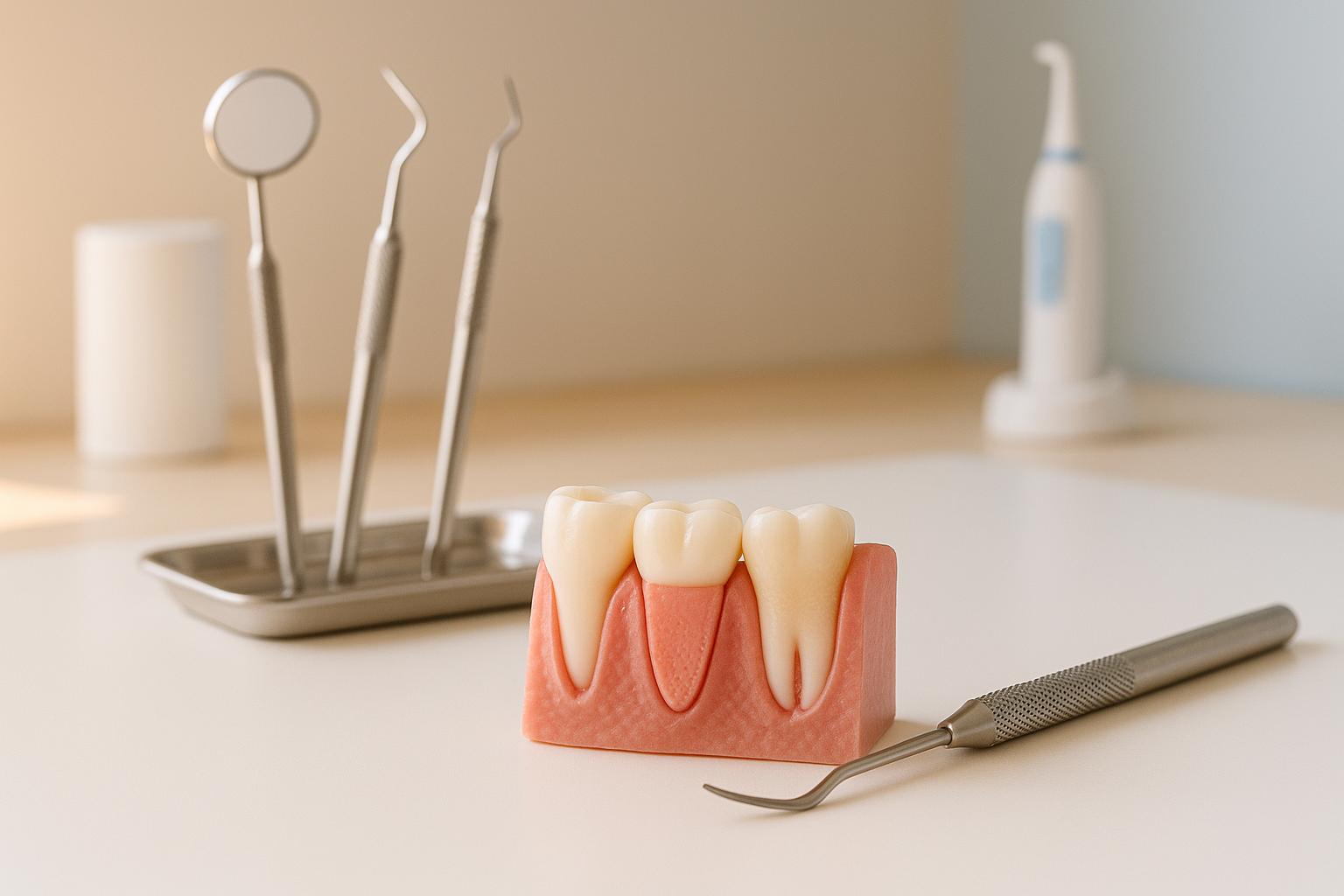
Soft tissue grafting is a dental procedure designed to address gum recession by transplanting tissue – usually from the roof of the mouth – to areas where gums have receded or roots are exposed. This treatment serves two main purposes:
- Health Goals: Protects tooth roots, reduces sensitivity, and prevents further gum disease or bone loss.
- Appearance Goals: Improves uneven gum lines and covers exposed roots for a more balanced, attractive smile.
The procedure is tailored to individual needs, balancing oral health improvements with cosmetic enhancements. Dentists assess factors like gum health, severity of recession, and patient priorities to recommend the best approach. Whether for functional protection or aesthetic improvement, soft tissue grafting offers a reliable solution for gum recession.
Key Insights:
- Health Benefits: Shields exposed roots, reduces sensitivity, and supports gum and bone health.
- Aesthetic Benefits: Smooths gum lines and restores a youthful, natural-looking smile.
- Dual Outcomes: Many patients benefit from a combined approach addressing both health and appearance.
Dentists use detailed diagnostics like periodontal mapping, imaging, and classification systems to create personalised treatment plans. Recovery is generally smooth, with patients often experiencing improved comfort and confidence post-procedure.
Health-Focused Goals of Soft Tissue Grafting
Protecting Tooth Structure
When gums recede, the roots of teeth lose their natural enamel shield, leaving them vulnerable to decay, temperature sensitivity, and discomfort from acidic foods or even light touch. This happens because exposed roots have microscopic tubules that transmit sensations straight to the tooth’s nerve.
Soft tissue grafting offers a solution by creating a protective barrier over these exposed areas. The procedure involves taking healthy gum tissue from another part of the mouth and using it to cover the affected root surface[2]. This added layer not only shields the root from bacteria but also prevents further bone loss and significantly reduces sensitivity. These benefits play a crucial role in maintaining better periodontal health.
Managing Gum Disease
Gum disease often leads to receding gums and the formation of deep pockets around teeth, which become breeding grounds for bacteria and can accelerate bone loss. Soft tissue grafting helps by restoring healthier gum contours and reducing these pocket depths[2]. For individuals with dental implants, proper gum coverage is especially important as it creates a healthier environment that lowers the risk of peri-implant diseases[1].
By addressing gum recession, grafting helps slow down the progression of periodontal disease. This, in turn, supports better long-term outcomes for both natural teeth and implants, contributing to a more stable and manageable oral health condition[2].
Health-Based Results
The benefits of soft tissue grafting go beyond preventing decay and disease – it also leads to noticeable improvements in oral health and function. One immediate advantage is a marked reduction in tooth sensitivity, as the grafted tissue effectively covers exposed roots[2]. This allows patients to enjoy food and drinks without discomfort.
Patients often report improved comfort and function after the procedure. Over time, studies show that grafting increases soft tissue thickness, widens the band of keratinised tissue, and helps stabilise bone levels. These changes are particularly beneficial for preserving both teeth and implants over the long term[3].
In the bigger picture, these enhancements reduce the risk of further gum recession and simplify daily oral care. By protecting against bone resorption, soft tissue grafting plays a key role in maintaining tooth retention and overall periodontal health over time.
Appearance-Focused Goals of Soft Tissue Grafting
Improving Smile Appearance
Uneven gum lines and exposed roots can make a smile look older and less balanced. While soft tissue grafting primarily protects tooth structure, it also plays a big role in enhancing the overall appearance of a smile. By correcting uneven gum lines and covering exposed roots, this procedure helps create a smoother, more balanced look. These adjustments improve gum contours and tooth display, addressing common concerns tied to gum recession and irregular margins[2][6].
Different grafting techniques are chosen based on specific cosmetic needs. The key to achieving natural results lies in selecting the right method and ensuring precise execution. When done well, these changes not only improve the aesthetics of the gums but also help patients feel more confident about their smiles.
Patient Confidence and Self-Esteem
The aesthetic benefits of soft tissue grafting often have a ripple effect on personal confidence. A more visually appealing smile can significantly boost self-esteem, especially in social or professional settings[2]. Gum recession and uneven gum lines can make people feel self-conscious, affecting how they interact with others. After undergoing this procedure, many patients find it easier to engage in conversations and feel more at ease during presentations or social gatherings. In Australia, where a warm and genuine smile is highly valued, such improvements can leave a lasting impact.
Setting Realistic Expectations
While soft tissue grafting can dramatically enhance a smile, it’s important for patients to have realistic expectations about the results. The extent of gum recession and the quality of the existing tissue can influence outcomes[2][6]. Patients should understand that while many achieve a more attractive smile, complete symmetry or perfection may not always be possible[5][6].
Research highlights the importance of setting clear, realistic goals. Clinical studies often report positive outcomes but also note variability in results, making it essential for dentists to guide patients through what they can reasonably expect[5]. Dentists typically use visual aids and thorough consultations to help patients understand the potential benefits and limitations of the procedure[2][6]. Success is usually measured through patient feedback, clinical evaluations, and before-and-after photos[5].
Complications from aesthetic soft tissue grafting are rare and usually minor. Patients might experience temporary swelling, bruising, or mild discomfort at the donor or recipient site[5]. Serious issues, such as infections or noticeable scarring, are uncommon when the procedure is done by skilled professionals. Most patients recover quickly and with minimal discomfort, making the process relatively straightforward.
Comparing Health and Appearance Goals
Factors That Determine Treatment Focus
When deciding between a health- or appearance-focused graft, clinicians weigh several clinical and personal factors. The most critical consideration is the patient’s oral health. For example, severe gum disease or exposed roots typically call for a health-focused approach, while patients with healthy gums but cosmetic concerns may benefit from an appearance-focused procedure.
The severity and location of gum recession also play a major role in treatment planning. The Miller classification system is often used to predict outcomes. For instance, Class I recession (where the recession does not extend beyond the mucogingival junction and there is no interproximal bone loss) generally allows for complete root coverage. On the other hand, Class II recession (which extends to or beyond the mucogingival junction but still has no interdental bone or tissue loss) can often achieve full coverage with the right grafting techniques.
Other clinical factors include the patient’s medical history, smoking habits, lip line, gingival biotype, adjacent bone levels, and aesthetic goals. For example, people with thin, scalloped gingival biotypes or bony defects may need both soft and hard tissue augmentation to improve their appearance.
Patient priorities also matter. Some individuals focus on functional improvements, like reducing tooth sensitivity, while others are more concerned with aesthetics to boost their confidence. To guide the treatment plan, clinicians use tools like periodontal probing, radiographs, and digital smile analysis to align the procedure with the patient’s needs and expectations.
Combined Treatment Approaches
Many modern procedures aim to deliver both health and aesthetic benefits, offering a more comprehensive approach. For example, a connective tissue graft can reduce sensitivity while improving the gum line’s appearance, addressing both functionality and aesthetics in one procedure.
In dental implant cases, a combined approach is often essential. Soft tissue grafting not only creates a healthy seal to protect against peri-implant disease but also helps the gum tissue blend naturally with the surrounding teeth. Connective tissue grafts are frequently paired with immediate implant placement and provisionalisation to minimise peri-implant mucosal recession and improve soft tissue outcomes in visible areas. Immediate provisionalisation, in particular, helps shape the peri-implant tissue to match the contours of the temporary restoration, reducing soft tissue changes.
These combined approaches require careful planning to balance functional needs with visual appeal. For instance, grafts may be used to restore gum integrity while sculpting the gum line for a more natural look. However, challenges like ensuring proper tissue volume, managing patient expectations, and promoting effective healing to prevent scarring or relapse must be addressed.
Comparison Table: Health vs Appearance Goals
| Treatment Focus | Primary Goals | Typical Indications | Expected Outcomes | Success Measures |
|---|---|---|---|---|
| Health-Focused | Root coverage, disease prevention, sensitivity reduction | Exposed roots, active gum disease, tooth sensitivity | Reduced sensitivity and improved gum health | Clinical stability and functional improvement |
| Appearance-Focused | Smile enhancement, gum contouring, aesthetic harmony | Uneven gum lines, cosmetic dissatisfaction, confidence concerns | Balanced gum contour and improved aesthetics | Patient satisfaction and natural visual symmetry |
| Combined Approach | Comprehensive improvement of both health and aesthetics | Recession affecting both function and appearance, implant placement, thin biotype cases | Functional protection and aesthetic enhancement | Clinical stability and positive visual outcomes |
Research highlights the effectiveness of connective tissue grafts (CTG) in improving key factors like marginal interproximal bone levels, keratinised tissue width, soft tissue thickness, papilla height, and midfacial gingival margin levels. CTG significantly increases soft tissue thickness compared to cases without grafts, while allogenic and xenogenic materials also show acceptable results in most outcomes.
Both health- and appearance-focused approaches have high long-term success rates when proper techniques and patient selection are applied. Health-focused grafts tend to prioritise oral stability, while appearance-focused grafts are judged more on patient satisfaction and visual results. Some studies suggest that local flap techniques may yield better cosmetic and functional outcomes, particularly in facial areas.
These findings allow clinicians to choose methods that balance stability and aesthetics. Material selection also plays a crucial role in combined treatments. While CTG remains a leading option, xenogenic collagen matrices have demonstrated excellent aesthetic results, such as higher Pink Esthetic Scores. Allogenic materials are also viable alternatives when autogenous tissue is not available. This adaptability enables dental professionals to personalise treatments to meet individual patient needs and clinical conditions.
sbb-itb-2be92ed
Patient Assessment and Personalised Care
Diagnostic Process
Diagnosing the need for soft tissue grafting requires more than just a quick look at the gums. Dentists carry out a thorough clinical examination, which includes periodontal charting. This process measures gum recession, evaluates exposed root surfaces, and checks the health of the surrounding tissues. Such detailed mapping helps determine whether grafting is necessary and identifies the most effective approach for treatment[2].
Radiographic imaging is another essential tool, offering insights into the bone structure beneath the gums and revealing any hidden issues that could impact the success of the procedure. Tooth sensitivity levels are also assessed to understand how gum recession might be affecting daily comfort. Additionally, the patient’s medical history is reviewed, with attention to factors like smoking, current medications, or systemic conditions that could influence healing.
To guide the choice of materials and techniques, dentists measure the width of keratinised tissue and assess the gingival biotype. Tools like digital photography and intraoral scanning not only document the current condition but also help patients visualise potential outcomes.
The Miller classification system is often used to predict how much root coverage can realistically be achieved. By setting clear expectations from the start, this diagnostic process helps patients make informed decisions while ensuring treatment plans are both effective and personalised.
Customised Treatment Planning
Once the diagnosis is complete, the focus shifts to creating a treatment plan tailored to the patient’s specific needs. These plans aim to address key priorities such as the severity of gum recession, aesthetic goals, sensitivity relief, and overall oral health. Cost considerations are also discussed transparently in Australian dollars.
Lifestyle factors play a big role in shaping the treatment approach. For instance, smoking habits, work schedules, and age are taken into account to ensure the plan is practical and achievable.
The choice of grafting materials and techniques is customised as well. For example, connective tissue grafts may be recommended for both functional and aesthetic improvements. Alternatively, when patient comfort or limited tissue availability is a concern, options like xenogenic collagen matrices might be suggested.
Digital planning tools are often used to demonstrate expected outcomes and help guide discussions. This collaborative planning ensures the treatment aligns with clinical goals while respecting the patient’s preferences and priorities.
Patient Education and Consent
After finalising the treatment plan, the next step is to educate the patient and obtain informed consent. This phase is crucial for ensuring that patients fully understand their proposed treatment. Dentists explain the recommended grafting technique, why it’s suitable for their specific situation, and what the procedure involves, step by step. The discussion also includes details about the graft material – whether it will be sourced from the patient’s own tissue or alternatives will be used[2][4].
Patients are briefed on what to expect during recovery, including typical healing times, post-operative care, and any activity restrictions. Pain management strategies are outlined, and they are informed about the difference between normal healing signs and potential complications that may need immediate attention. Risks such as graft failure, infection, or scarring are also discussed alongside the benefits of improved gum health and appearance.
Long-term maintenance is another key aspect of patient education. Dentists provide advice on maintaining proper oral hygiene, the importance of regular professional cleanings, and lifestyle changes that can help preserve the graft’s results. Patients are given written post-operative instructions and emergency contact details to ensure they feel supported throughout recovery.
The consent process also includes a review of alternative treatment options and the potential risks of delaying treatment. Some patients may choose to monitor their condition instead of undergoing grafting right away, and dentists make sure these decisions are informed by a clear understanding of the possible progression of untreated gum recession. By addressing both health and aesthetic goals, this approach ensures patients are well-prepared and confident in their choices, leading to better overall outcomes.
Conclusion
Key Points
Soft tissue grafting tackles both oral health challenges and cosmetic concerns with advanced techniques that safeguard tooth structure, combat gum disease, and improve the appearance of smiles. Research highlights the effectiveness of these methods, showing that 83.3% of patients typically need just one procedure, with satisfaction ratings averaging 7/10 for patients and 7.25/10 for surgeons[5]. Combining treatments has proven effective in addressing gum recession around natural teeth and dental implants, offering both protection and aesthetic benefits[2][4].
Modern approaches are highly refined and come with minimal complications. For instance, temporary swelling occurs in 48% of cases, while bruising is reported in 18%[5]. Innovations like nanofat grafting have shown statistically measurable improvements in cosmetic results compared to traditional techniques[5]. These advancements highlight the importance of tailored, expert care.
Importance of Professional Assessment
As outlined earlier, a thorough professional evaluation is critical to achieving successful results in both medical and cosmetic applications. Skilled practitioners rely on detailed diagnostic tools – such as periodontal charting, radiographic imaging, and the Miller classification system – to determine the most suitable treatment plans and set realistic expectations for patients[2][3].
Careful treatment planning by experts not only increases the chances of achieving functional stability and aesthetic satisfaction but also reduces risks by using evidence-backed materials and surgical methods. Without proper assessment, patients may face unsuitable treatments or unrealistic expectations. A comprehensive and professional approach ensures soft tissue grafting delivers the best possible outcomes, enhancing oral health and boosting patient confidence.
Soft tissue grafting in the esthetic area: Pros & Cons (recorded webinar) | Alpha-Bio Tec
FAQs
How do I choose between a health-focused and an appearance-focused soft tissue grafting procedure?
Choosing between a procedure focused on oral health and one aimed at improving appearance depends on what you’re hoping to achieve. If you’re dealing with gum recession, which can lead to tooth sensitivity, a higher risk of tooth loss, or other oral health concerns, health-focused grafting is the way to go. On the other hand, if you’re looking to refine the look of your smile – perhaps by evening out an irregular gum line or creating better symmetry – appearance-focused grafting could be the better option.
To figure out what’s right for you, it’s crucial to consult a qualified dental professional. They’ll assess your overall oral health, discuss your aesthetic goals, and consider long-term results to guide you toward the treatment that best suits your needs.
What are the differences in recovery for soft tissue grafting aimed at aesthetic improvement versus functional protection?
The recovery time for soft tissue grafting can differ based on whether the procedure is done for cosmetic improvement or to address functional concerns. When the goal is to enhance the appearance of the gums, the process often involves less invasive techniques. As a result, recovery tends to be faster, with most patients experiencing only mild discomfort and minimal swelling.
On the other hand, when soft tissue grafting is carried out to tackle issues like gum recession or to protect against further damage and sensitivity, the procedure might be more complex. In these cases, recovery could take a little longer as the graft needs time to integrate with the existing gum tissue, ultimately restoring stability and health. Regardless of the purpose, carefully following your dentist’s aftercare advice – such as practising proper oral hygiene and steering clear of certain foods – can significantly aid recovery and help achieve the best possible outcome.
What should I know about potential risks or complications of soft tissue grafting before deciding on the procedure?
Soft tissue grafting is generally considered a safe and effective procedure when carried out by an experienced dental professional. That said, like any surgery, it does come with some potential risks. These might include temporary swelling, discomfort, or minor bleeding in the area that’s been treated. Although rare, complications such as infection, graft rejection, or slower-than-expected healing can also occur.
To reduce the likelihood of any issues, it’s crucial to carefully follow your dentist’s post-operative care instructions. If you have any pre-existing conditions or concerns, be sure to discuss them with your dentist beforehand to confirm the procedure is right for you. Choosing a skilled and trusted dental professional with experience in soft tissue grafting can make all the difference in achieving the best outcome.
Related Blog Posts
- Advances in Gum Grafting Materials and Techniques
- Soft Tissue Grafting: Indications Explained
- Soft Tissue Grafting: Pre-Surgery Evaluation Explained
- Pinhole Surgery vs Traditional Gum Grafting
Important Notice: Any surgical or invasive procedure carries risks. Before proceeding, you should seek a second opinion from an appropriately qualified health practitioner.
Individual results may vary. The information provided in this article is for educational purposes only and does not constitute medical advice.
Checkout Related Blogs




Get in touch with us
For more information, call us now to start feeling better. Or fill the form below to make appointment
The Latest News from Complete Smiles
How to Clean Clear Plastic Retainers
Checklist for Choosing Wearable Dental Devices
Checklist for Choosing Cloud AI Platforms in Dentistry

Complete Smiles Bella VistaAccepts All Major Health Funds, Including





