





Best Sleep Positions for Jaw Pain Relief

If jaw pain disrupts your sleep, your sleeping position could be the culprit. The way you sleep impacts your jaw, neck, and spine alignment, which can either alleviate or worsen discomfort. Here’s what you need to know:
- Back sleeping: This is the best position for reducing jaw strain. It keeps your body aligned and avoids pressure on your jaw. Use a cervical pillow for support.
- Side sleeping with proper support: A good pillow that aligns your head, neck, and spine can reduce stress on the jaw. Avoid stacking pillows or using one that’s too low or high.
- Side sleeping with a knee pillow: Adding a pillow between your knees keeps your spine straight and prevents tension that can lead to jaw clenching.
- Avoid stomach sleeping: This position misaligns your body and puts strain on the jaw and neck.
- Don’t rest your hand under your jaw: This habit adds unnecessary pressure to the TMJ. Use a supportive pillow instead.
Switching to a supportive sleep setup, like the right pillow and posture, can ease jaw pain. If symptoms persist, consult a dentist or GP for further evaluation.
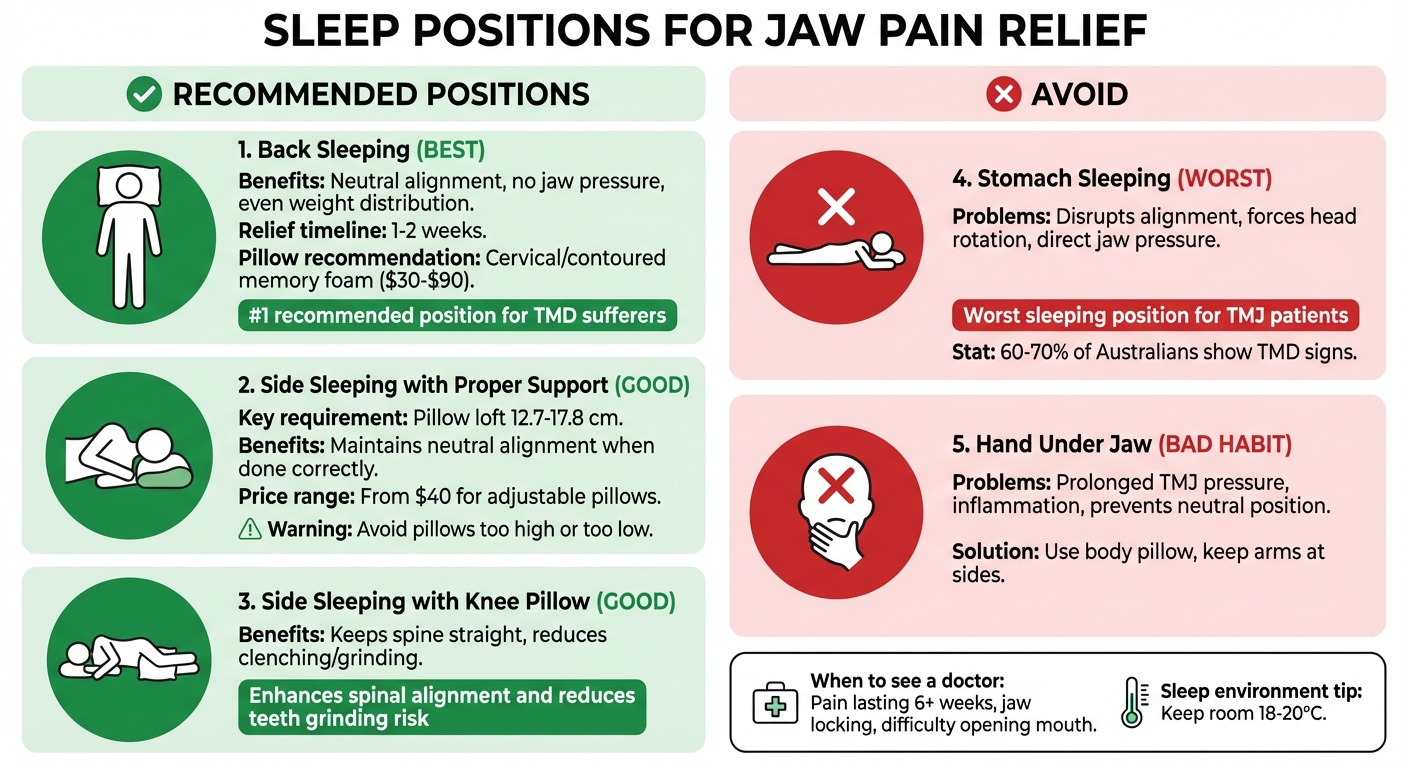
Best and Worst Sleep Positions for Jaw Pain Relief
Jaw Pain? Best & Worst Sleep Positions Explained! ????❌
sbb-itb-2be92ed
1. Back Sleeping
If you’re dealing with TMJ discomfort, sleeping on your back is often considered the best option. This position helps keep your body in a neutral alignment while avoiding any direct pressure on your jaw. It also evenly distributes the weight of your head, reducing the uneven strain that side sleeping can sometimes cause. Many people experience noticeable relief from jaw pain after sticking to back sleeping for just 1 to 2 weeks [3].
"The number one position that’s recommended for TMD sufferers is on the back." – Melbourne Dental Sleep Clinic Team [2]
To make back sleeping more comfortable and supportive, consider using a cervical or contoured memory foam pillow. These pillows are designed to support the natural curve of your neck, keeping your jaw in a neutral position. Adding a small pillow or a rolled towel under your knees can also help by easing lower back tension and making it easier to stay in this position throughout the night [2][3].
If you’re not used to back sleeping, body pillows can help keep you from rolling over. Cervical pillows typically cost between $30 and $90, while adjustable loft pillows range from $45 to $120 [3]. For a budget-friendly option, even a rolled-up bath towel placed under your neck can provide adequate support.
Switching to back sleeping can make a big difference in managing jaw strain and offers a clear advantage over less supportive sleeping positions.
2. Side Sleeping with Proper Pillow Support
Back sleeping is often recommended for reducing jaw pressure, but side sleeping can also minimise TMJ strain – if your pillow provides the right support. The key is maintaining neutral alignment. A pillow that’s too high will tilt your head upward, while one that’s too low can cause it to drop downward. Both positions can put unnecessary stress on your temporomandibular joint.
"The biggest mistake I see in people is sleeping with either a pillow that’s too high or several pillows that are stacked, cranking the neck too high." – Dr. Siamak Yasmeh, Orthopaedic Surgeon [10]
Experts suggest using an adjustable pillow with a loft between 12.7–17.8 centimetres and a contoured design. Features like a crescent cutout can help cradle your head and neck while keeping your shoulder, head, and jaw in alignment [7][9][10]. These adjustments not only improve your posture but may also ease TMJ-related jaw discomfort.
For example, adjustable pillows priced from around AU$40 offer customisable support and receive consistently high ratings [10][9].
When setting up your pillow, make sure your shoulder is positioned below it, not resting on top. A quick photo can help confirm that your head, neck, and spine are aligned. Also, avoid tucking your arm under the pillow or your jaw, as this can add extra strain to the joint [2][3][6][11].
3. Side Sleeping with a Pillow Between Your Knees
If you’re a side sleeper dealing with jaw pain, placing a pillow between your knees can make a big difference. This small adjustment helps keep your hips, pelvis, and spine aligned, reducing unnecessary twisting while you sleep [1]. When combined with proper head and neck support, it promotes better overall sleep posture.
Poor sleep posture often worsens issues like jaw clenching and teeth grinding [8]. By keeping your spine straight with a knee pillow, you can ease the tension that might otherwise contribute to these problems [8].
"A pillow between your knees can enhance spinal alignment and reduce the risk of grinding your teeth." – Melbourne Dental Sleep Clinic Team [8]
In addition to aligning your knees, it’s also important to use a pillow that supports your head so it stays in line with your spine. A firm pillow or a body pillow can help keep your legs properly aligned [1]. Be mindful not to rest your jaw on your hand or arm, as this adds unnecessary strain to the joint [6].
If sleeping on your back feels uncomfortable, side sleeping with the right knee and head support is a great alternative [8].
4. Avoid Sleeping on Your Stomach
Sleeping on your stomach is the worst position for anyone experiencing jaw pain. Unlike sleeping on your back or side, this position disrupts your body’s natural alignment. It forces your head to stay turned to one side for long stretches, creating tension in your jaw and neck muscles. On top of that, it puts direct pressure on your jaw joint, which can trigger or worsen teeth grinding and clenching [4] [3] [12]. The unnatural head rotation also strains the ligaments around your temporomandibular joint (TMJ), preventing your jaw from settling into a relaxed, natural position [3].
"This is the worst sleeping position for TMJ patients as your spine will be improperly aligned. Pushing your face into the pillow also puts a lot of pressure on your jaw, increasing the likelihood of teeth grinding and jaw clenching." – Head Pain Institute [12]
This strain often leads to waking up with stiffness and reduced jaw mobility [3]. Considering that 60% to 70% of Australians show signs of Temporomandibular Disorder (TMD), paying attention to your sleep posture becomes even more important [2].
If you’re someone who naturally sleeps on your stomach, you can try placing pillows on either side of your body to act as barriers, stopping you from rolling onto your stomach during the night [2]. Ideally, transitioning to sleeping on your back is best, but if that feels too challenging at first, side sleeping with proper support is a good alternative [3]. Adjusting your sleep posture is a practical step toward reducing jaw discomfort and improving your overall sleep quality.
5. Avoid Placing Your Hand Under Your Jaw
If you’re a side sleeper, you might unknowingly rest your hand under your jaw or pillow. While it may feel natural, this habit can put prolonged pressure on your temporomandibular joint (TMJ), leading to inflammation and stiffness when you wake up [3]. This pressure can also stop your jaw from settling into a neutral position, which is essential for the natural recovery processes that occur during sleep.
Relying on your arm to support your jaw can strain your neck muscles, often worsening jaw discomfort [2]. If this sounds familiar, it might be a sign that your pillow isn’t providing enough height or support to keep your head, neck, and spine properly aligned [3]. Adjusting your pillow to offer better support can help reduce the urge to use your hand in this way.
"Just avoid pulling your arms up near your head as this can strain your neck and cause you more jaw pain" [2].
To break this habit, try positioning your arms comfortably at your sides or resting them on your stomach instead of near your face. Using a hugging pillow or a body pillow can also be helpful. These pillows give your arms something to do, preventing them from creeping upward toward your jaw during the night.
A good pillow should allow your shoulder to settle naturally in the space beneath it, eliminating the need to use your hand as extra support for your head. This simple change can make a big difference in your overall comfort and jaw health.
How to Set Up Your Sleep Environment for Jaw Relief
Using the right pillow can make a huge difference in easing jaw tension. Memory foam and latex pillows are great choices because they mould to the shape of your head and neck, helping maintain a neutral spinal alignment[3]. If you sleep on your back, opt for a medium-firm cervical pillow. For added support, you could roll up a small bath towel and place it under your neck to support its natural curve[3]. Side sleepers, on the other hand, should go for a firmer, higher pillow to fill the space between the head and shoulder, keeping everything aligned[3].
"Choose a pillow that keeps your head in line with your spine. A good pillow can prevent your head from tilting too far forward or backward, reducing strain on your jaw and neck." – Dr. Benjamin Polan, DMD[4]
Once you’ve picked the ideal pillow, how you position it matters too. For extra support, try placing a thin pillow between your cheek and the main pillow to gently cushion your jaw joint[7].
To further relax your jaw before bed, consider giving yourself a quick masseter massage or practising proper tongue posture. These small actions can help ease tension and prepare you for a restful night[2].
Finally, create a bedroom environment that promotes uninterrupted sleep. Keep the room cool – around 18°C to 20°C – dark, and quiet to avoid disruptions that might lead to jaw clenching or tension during the night[3]. These simple tweaks to your sleep setup can go a long way in reducing strain on your jaw while you rest.
When to See a Dentist or Healthcare Provider
Adjusting your sleep position might help ease jaw discomfort, but if the pain doesn’t improve or becomes severe, it’s time to seek professional advice. If your jaw pain lasts longer than six weeks, or you’re struggling with jaw locking or difficulty opening your mouth, make an appointment with your GP or dentist [13][17].
Keep an eye out for signs of sleep bruxism, such as cracked, chipped, or loose teeth, dull headaches in the morning, tightness in the face, or changes in your bite [5][14]. With 60% to 70% of Australians showing symptoms of Temporomandibular Disorder (TMD) [2], it’s a common issue, and you’re certainly not alone.
"If you have symptoms that are bothering you, see your doctor or dentist. You should also see your doctor if your symptoms continue for more than 6 weeks." – Healthdirect [13]
It’s important to seek immediate care if you experience severe pain radiating to your face, ear, neck, or shoulders, if the pain prevents you from eating or drinking, or if it’s accompanied by vision changes [16][17]. A professional dental evaluation is essential for proper diagnosis and treatment.
Dental clinics, such as Complete Smiles Bella Vista, offer tailored solutions for TMJ disorders. They use tools like customised mouthguards and advanced diagnostic imaging (X-rays, CT, or MRI scans) to assess jaw issues. If needed, they can also refer you to a specialist for further care [5][13][14][16].
Conclusion
The way you sleep has a direct impact on jaw pain. Sleeping on your back helps keep your head, neck, and spine aligned without placing unnecessary pressure on your jaw [2]. Side sleeping can also be a good option, especially if snoring or sleep apnoea leads to jaw tension, but it’s important to use the right pillow for support [15]. On the other hand, stomach sleeping and propping your jaw on your hand should be avoided, as these positions can strain your jaw and increase tension [2]. Making these small adjustments can create a better sleep environment for your jaw.
Small changes to your sleep setup can also make a big difference in reducing jaw pain. A supportive pillow and simple remedies like a warm compress can help your body recover during the 7–9 hours of rest it needs [3].
While improving your sleep posture can ease jaw pain, it might not solve every problem. With 60–70% of Australians showing signs of temporomandibular joint disorder (TMD) [2], professional care is often necessary. If your jaw pain persists or you experience issues like a locked jaw, bite changes, or trouble eating, it’s important to see your dentist for general dental care or your GP for a thorough check-up.
FAQs
What kind of pillow can help ease jaw pain during sleep?
When it comes to easing jaw pain, the right pillow can make all the difference. Ideally, you’ll want one that provides medium to high support without being too firm or overly thick. This balance helps keep your head, neck, and jaw aligned, reducing strain on the muscles and joints around your jaw.
Materials like memory foam or latex are excellent choices. These materials mould to your natural contours, offering steady support throughout the night. Pairing the right pillow with a sleeping position that promotes alignment can further help in alleviating jaw discomfort.
What are some tips to stop sleeping on my stomach to ease jaw pain?
Sleeping on your stomach can put unnecessary pressure on your jaw and neck, which might make jaw pain worse. Switching to sleeping on your back or side can be a better choice, as these positions are typically easier on your jaw. Using supportive pillows that keep your head properly aligned can make it more comfortable to stick to these positions throughout the night.
To make this adjustment smoother, try incorporating relaxation techniques like deep breathing exercises or gentle stretches before bedtime. These can help ease muscle tension and prepare your body for a restful sleep. Stick with the new sleeping position consistently – over time, your body will naturally adapt, helping you avoid stomach sleeping and reduce jaw discomfort.
When should I see a healthcare professional for ongoing jaw pain?
If your jaw pain doesn’t improve or gets worse, it’s crucial to consult a healthcare professional. This is particularly important if you’re dealing with serious symptoms like difficulty eating or drinking, a locked jaw, trouble fully opening your mouth, or persistent discomfort around your jaw, ear, or head that doesn’t respond to self-care measures.
Getting an early evaluation can help pinpoint the cause and reduce the risk of further issues. If the pain is affecting your daily routine, don’t delay seeking professional advice.
Related Blog Posts
- Advances in Sleep Studies for Orofacial Pain
- Acupuncture vs. Relaxation: Pain Relief in Dentistry
- TMJ Pain Relief: 7 Treatment Options
- Managing Acute Pain After Orthognathic Surgery
Important Notice: Any surgical or invasive procedure carries risks. Before proceeding, you should seek a second opinion from an appropriately qualified health practitioner.
Individual results may vary. The information provided in this article is for educational purposes only and does not constitute medical advice.
Checkout Related Blogs




Get in touch with us
For more information, call us now to start feeling better. Or fill the form below to make appointment
The Latest News from Complete Smiles
How to Clean Clear Plastic Retainers
Checklist for Choosing Wearable Dental Devices
Checklist for Choosing Cloud AI Platforms in Dentistry

Complete Smiles Bella VistaAccepts All Major Health Funds, Including





