





Periodontal Care for Autoimmune Patients: What to Know

Living with an autoimmune condition can make managing oral health more challenging. Autoimmune disorders often increase the risk of gum disease, with systemic inflammation accelerating tissue and bone damage in the mouth. In Australia, gum disease affects nearly 30% of adults, and those with autoimmune conditions face even higher risks. This guide covers how autoimmune disorders impact oral health, signs to watch for, and the best practices for maintaining gum health.
Key Points:
- Autoimmune conditions like rheumatoid arthritis, lupus, and Sjögren’s syndrome can worsen gum disease.
- Symptoms include bleeding gums, dry mouth, oral ulcers, and gum overgrowth.
- Regular dental visits every 2–3 months are recommended for those with autoimmune conditions.
- Treatments include deep cleaning, antimicrobial rinses, and, in advanced cases, regenerative therapies.
- Daily care, including brushing, flossing, and managing dry mouth, is essential for prevention.
How Autoimmune Disorders Impact Periodontal Health
Autoimmune Conditions That Affect Gum Health
Autoimmune disorders can profoundly affect gum health, with each condition posing unique challenges. For instance, Rheumatoid Arthritis (RA) significantly increases the likelihood of periodontitis. Around 80%–85% of individuals with RA experience periodontitis, compared to just 40% in the general population [5]. A key player in this connection is the oral bacterium Porphyromonas gingivalis, which produces an enzyme that modifies proteins through a process called citrullination. This triggers the production of antibodies that inflame both joints and gums [4][7]. This creates a two-way relationship where oral infections can worsen joint inflammation, and vice versa.
Systemic Lupus Erythematosus (SLE) also elevates the risk of periodontal disease. People with SLE are 2.64 times more likely to develop periodontitis, with about 67% of patients experiencing this condition [4]. SLE often causes painless oral ulcers – red sores with white halos – that may appear on the cheeks, palate, or lips [6]. Interestingly, SLE patients have a 1.49 times higher risk of periodontitis compared to those with RA [4].
In Sjögren’s syndrome, reduced saliva production weakens the mouth’s natural defences, increasing the likelihood of tooth decay and gum inflammation [6]. Other conditions, such as Pemphigus Vulgaris and Mucous Membrane Pemphigoid, can lead to desquamative gingivitis – a painful condition where the gums blister, peel, or slough off [8][9]. Early recognition of these symptoms is essential for providing tailored periodontal care.
Each of these autoimmune conditions manifests differently, making it crucial to monitor for specific warning signs.
Warning Signs and Symptoms
While bleeding and swollen gums are common indicators of gum disease, autoimmune disorders often present with additional, distinctive symptoms. For example, red ulcers with white radiating lines may point to active lupus disease [6], while an extremely dry mouth that makes speaking or swallowing difficult could signal Sjögren’s syndrome. Additionally, white patches in the mouth, often caused by fungal infections like candidiasis, can occur due to immunosuppressive medications [6].
"The direct involvement of the oral cavity by lesions of lupus in the mouth may indicate active disease." – Dr Paul D. Freedman, Chief of the Division of Oral Medicine and Oral Pathology at New York-Presbyterian [6]
Another potential issue is gingival hyperplasia, an unusual overgrowth of gum tissue that sometimes arises as a side effect of medications like cyclosporine [6]. If gums appear to be peeling or sloughing off, this could indicate desquamative gingivitis, requiring immediate dental attention. Persistent lesions should always be biopsied to differentiate between medication side effects and active autoimmune disease [6]. Recognising these patterns ensures that treatment can be tailored to the specific needs of patients with autoimmune conditions.
The RA and Oral Health Connection
Periodontal Care Approaches for Autoimmune Patients
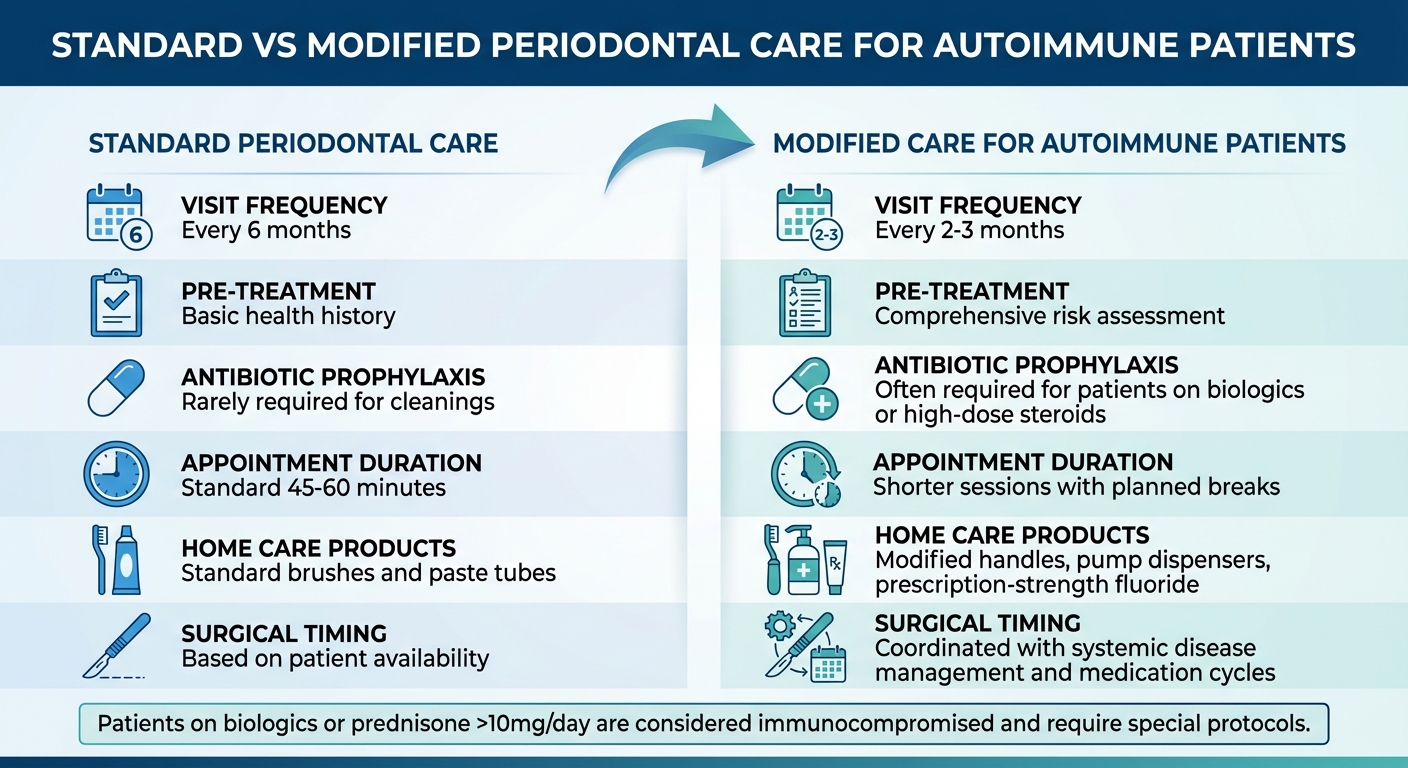
Standard vs Modified Periodontal Care for Autoimmune Patients
Prevention Methods
For individuals with autoimmune conditions, prevention plays a crucial role in maintaining periodontal health. Dental cleanings, which are typically scheduled every six months, are often increased to every two to three months. This more frequent schedule helps dental professionals catch early signs of disease progression before it leads to more serious issues [10][12].
Antimicrobial treatments are another key component in managing bacteria that can provoke immune responses. Dentists may recommend antiseptic mouth rinses or even place antibiotic chips directly into gum pockets to control infections in high-risk areas [13][17]. For those dealing with dry mouth – whether due to Sjögren’s syndrome or as a side effect of medication – saliva substitutes and high-concentration fluoride treatments are essential to protect against rapid tooth decay [10][13].
Customised home care routines can make daily oral hygiene more manageable, particularly for patients with physical limitations. For example, adapting a toothbrush handle with a tennis ball or bicycle grip can help those with joint pain maintain a firm grip [11]. Pump-dispenser toothpaste is a practical alternative to squeeze tubes for those with limited hand mobility, and power toothbrushes can assist in managing gum overgrowth caused by medications like cyclosporine [11][13].
When preventive measures are insufficient, targeted treatments become necessary.
Treatment Options: Non-Surgical and Surgical
When periodontal disease progresses, treatments must be carefully tailored to the patient’s immune system and current medications. Scaling and root planing, a deep cleaning procedure to remove bacteria and tartar below the gumline, is often the first step. This is frequently combined with antimicrobial irrigation to enhance results [16][17].
"Insisting on non-invasive or minimally invasive methods can significantly decrease the risk of complications… for patients whose healing processes might be slower than average." – Bloomfield Dental Designs [10]
In cases requiring surgical intervention, timing is everything. Elective surgeries should be scheduled during periods of stability in the autoimmune condition, avoiding times of active flare-ups [10][14]. Patients on biologic medications or those taking more than 10 mg of prednisone daily are considered immunocompromised, which may necessitate antibiotic premedication before invasive procedures [12].
Advanced regenerative therapies, such as Platelet-Rich Fibrin (PRF) and Platelet-Rich Plasma (PRP), are gaining popularity for their ability to support healing in patients with compromised immune systems [15]. These methods utilise the body’s own growth factors to speed up tissue regeneration and reduce discomfort after surgery. Additionally, treatment sessions are often shortened and include planned breaks to accommodate joint pain and fatigue [12].
Before starting any treatment, dentists review recent blood tests, including complete blood counts and metabolic panels. This ensures that the patient’s infection risk, bleeding potential, and overall health are thoroughly evaluated, allowing for a treatment plan that aligns with their current medical status [12]. These personalised strategies, combined with ongoing preventive care, help maintain optimal periodontal health.
Standard Care vs. Modified Care for Autoimmune Patients
When comparing standard periodontal care to the modified protocols required for autoimmune patients, the differences highlight the need for a more tailored approach that considers the complexities of systemic health.
| Feature | Standard Periodontal Care | Modified Care for Autoimmune Patients |
|---|---|---|
| Visit Frequency | 6-monthly | Every 2–3 months [10][12] |
| Pre-Treatment | Health history | Comprehensive risk assessment [12] |
| Antibiotic Prophylaxis | Rarely required for cleanings | Often required for patients on biologics or high-dose steroids [12] |
| Appointment Duration | Standard (45–60 minutes) | Shorter sessions with planned breaks [12] |
| Home Care Products | Standard brushes and paste tubes | Modified handles, pump dispensers, and prescription-strength fluoride [11][13] |
| Surgical Timing | Based on patient availability | Coordinated with systemic disease management and medication cycles [10][14] |
"The AAOS has determined that patients with rheumatoid arthritis using biologic disease modifying agents… or prednisone > 10 mg per day, are considered to be immunocompromised and premedication may be indicated." – JoAnn R. Gurenlian, RDH, MS, PhD [12]
These adjustments reflect a proactive shift in care, focusing on both oral health and the broader complexities of systemic conditions. Pain management strategies, such as scheduling morning appointments, can help reduce the risk of adrenal crises in patients on chronic steroids [12]. Additionally, avoiding anaesthetics containing epinephrine in patients with uncontrolled hyperthyroidism is crucial to prevent serious complications [12].
sbb-itb-2be92ed
Home Care and Lifestyle Modifications
Daily Oral Hygiene Practices
Taking care of your gums at home is especially important for autoimmune patients. Start with brushing your teeth twice a day – once in the morning and again at night – for at least two minutes each time. Use a toothbrush with a small head and soft bristles to avoid irritating sensitive or inflamed gums [20].
After brushing with fluoride toothpaste, it’s best to spit but avoid rinsing right away. This allows the fluoride to stay on your teeth longer, providing better enamel protection [20]. Also, wait at least 30 minutes after eating or drinking anything acidic before brushing to prevent damage to softened enamel [20].
Don’t skip interdental cleaning! Whether you prefer floss, interdental brushes, or a water flosser, cleaning between your teeth daily is essential. Use a gentle, curved motion to slide the floss or brush below the gumline, reaching spots your toothbrush can’t [20].
"Even if brushing causes bleeding, continue to brush gently twice a day." – Healthdirect [18]
Remember to replace your toothbrush – or the head of your electric toothbrush – every three months, or sooner if the bristles look worn [20]. If you have dry mouth, staying hydrated is key, as less saliva increases the risk of tooth decay and gum disease [19].
Beyond your cleaning routine, your diet and lifestyle choices also play a major role in keeping your gums healthy.
Diet and Lifestyle Factors
Supporting your oral hygiene efforts with smart diet and lifestyle habits can make a big difference. Drinking plain fluoridated tap water throughout the day keeps you hydrated and helps saliva neutralise harmful acids that can weaken enamel [20]. Try to limit snacking and avoid sugary drinks like soft drinks, energy drinks, and fruit juices – opt for water instead to protect your teeth [20].
If you smoke, it’s worth knowing that tobacco use significantly worsens gum inflammation and slows healing. In fact, 62% of U.S. adults aged 30 and older who smoke suffer from periodontitis [21]. Excessive alcohol consumption is another factor that raises your risk for gum disease [3].
Stress is often overlooked but can also impact gum health. Severe stress – whether physical or psychological – can increase the likelihood of developing conditions like necrotising periodontal disease, especially in those with weakened immune systems [2]. Managing stress through relaxation techniques, exercise, or other methods, combined with good oral hygiene, creates a stronger foundation for healthy gums.
Regular Monitoring and Professional Care
Working with Your Dental Team
Make sure your dental team is fully informed about any autoimmune conditions and medications you’re taking. Keep them updated with a current list of diagnoses, medications, and any changes in symptoms. This helps your dentist assess your specific risks and provide care that suits your needs [1][23].
Systemic inflammatory conditions can speed up periodontal disease, while inflammation in your mouth might worsen autoimmune symptoms [22][2]. If you notice sudden changes in your oral health – like rapid tissue loss or recurring infections – reach out to your dentist immediately. These could indicate a progression in your underlying condition or that your current medical treatment may need adjusting [23].
"To treat periodontitis in individuals with underlying systemic conditions effectively, both conditions may need to be managed by dentists and doctors who consult and cooperate with each other." – Dr. Stephen Wong, Dentist, Complete Smile Dental [2]
If surgery is planned, your dentist should confirm your blood health with your physician [23]. This ensures any necessary antimicrobial therapies are in place. Report symptoms like mouth sores, swollen gums, or a "punched out" appearance of the gums right away, as these may point to necrotising periodontal disease [23].
Recommended Visit Schedule
Regular dental check-ups are essential for early detection and effective management. While most people visit their dentist every six months, those with autoimmune conditions often need to schedule appointments every three to four months [25][23]. This more frequent "periodontal recall" helps manage inflammation and prevent bone loss, which can advance by 0.2 to 0.25 millimetres per year in aggressive cases [2].
| Patient Type | Visit Frequency | Primary Focus |
|---|---|---|
| Standard Patient | Every 6 months [24][25] | Prevention and routine cleaning |
| Autoimmune Patient | Every 3 to 4 months [25][23] | Control inflammation and bone loss |
Once your periodontal infection is under control, maintenance visits every three months are typically advised [23]. To stay on track, schedule your next appointment before leaving the dental office. This consistent monitoring is particularly important because periodontal pockets can harbour viruses and bacteria in immunosuppressed individuals, potentially leading to more frequent systemic flare-ups [23].
Conclusion
Managing periodontal health alongside an autoimmune condition is not only possible but can significantly improve overall well-being with the right care and consistent monitoring. The link between oral health and systemic conditions is a two-way street – periodontal inflammation can aggravate autoimmune symptoms, while autoimmune disorders and their treatments can heighten the risk of gum disease [27][15]. This makes controlling your autoimmune condition just as crucial as maintaining a thorough oral hygiene routine.
To protect your periodontal health, focus on the basics: brush twice daily using fluoride toothpaste, floss regularly, and avoid smoking, which can lead to plaque hardening into tartar [26][15]. It’s also wise to schedule dental check-ups more frequently than the usual six-month interval [28]. These steps help manage inflammation and prevent bone loss, forming the foundation of a strong partnership between you and your dental care team.
"Understanding the interactions between periodontal disease and systemic conditions could guide integrated healthcare strategies, emphasising periodontal care to improve systemic health outcomes."
Long-term success depends on coordinated care between your dentist and medical specialists. Keep your dental team updated on any medication changes, autoimmune flares, or new symptoms like bleeding gums or mouth sores. This teamwork ensures that your oral health plan complements your broader medical management.
While advanced periodontitis cannot be reversed, it can be effectively managed with professional treatment and a dedicated at-home care routine [21][15]. The key is early detection – acting quickly can stop reversible gingivitis from progressing to irreversible bone loss.
FAQs
Why are people with autoimmune conditions more likely to develop gum disease?
People with autoimmune conditions face a heightened risk of gum disease, largely due to the chronic inflammation their condition triggers. This persistent inflammation can upset the natural balance of bacteria in the mouth, creating an environment where harmful bacteria can flourish. On top of that, medications often prescribed for autoimmune diseases, like corticosteroids, can lead to reduced saliva production. Saliva plays a key role in defending gums and teeth against infections, so this reduction can leave the mouth more exposed.
When saliva levels drop, the mouth becomes more susceptible to bacterial overgrowth and infections, further increasing the likelihood of periodontal problems. For individuals with autoimmune conditions, prioritising regular dental check-ups and maintaining thorough oral hygiene is crucial in managing these risks effectively.
What oral care tips are recommended for people with autoimmune conditions?
People living with autoimmune conditions like lupus or rheumatoid arthritis often face a higher risk of gum inflammation. This is due to overactive immune responses and certain medications that can decrease saliva production. Because of this, maintaining good oral hygiene isn’t just about keeping your teeth clean – it plays a role in managing overall health by reducing the risk of systemic inflammation.
Here are some practical tips to care for your oral health:
- Brush gently twice a day using a soft-bristled toothbrush and fluoride toothpaste. Gentle brushing helps protect sensitive gums from irritation.
- Clean between your teeth daily with floss, interdental brushes, or a water flosser if flossing feels challenging. These tools help remove plaque from areas your toothbrush can’t reach.
- Use an antimicrobial mouthwash if your dentist recommends it, particularly if you’re dealing with dry mouth.
- Visit your dentist regularly for professional cleanings and to catch gum issues early. You might need more frequent check-ups if you have ongoing symptoms.
Additionally, staying hydrated, steering clear of tobacco, and cutting back on sugary or acidic drinks can go a long way in protecting your oral health. Don’t forget to keep your healthcare providers in the loop about any changes to your medications or condition – they can adjust your care plan to better suit your needs.
How should dental care be tailored for patients on immunosuppressive medications?
Patients on immunosuppressive medications – like corticosteroids, biologic agents, or drugs taken post-transplant – need tailored dental care due to their reduced infection-fighting ability and potential medication side effects. To ensure safe treatment, dentists must gather a detailed medical history and communicate with the prescribing doctor. This helps confirm medication details, any upcoming changes, and whether a temporary increase in steroid dosage is necessary for invasive procedures.
Because immunosuppression can cause dry mouth and increase the risk of gum disease, more frequent dental visits are recommended – typically every three to four months. These visits allow for professional cleaning and early identification of issues like gingivitis or periodontitis. At home, maintaining excellent oral hygiene is key. This includes brushing twice daily with a soft-bristled toothbrush, regular flossing, and using antimicrobial mouth rinses or saliva substitutes to manage dry mouth.
For surgical or periodontal treatments, the patient’s immune status should be carefully evaluated. Dentists may need to prescribe prophylactic antibiotics and, for those on long-term steroids, a supplemental steroid dose on the procedure day to prevent adrenal insufficiency. Post-operative care involves using gentle techniques, sutures, and chlorhexidine rinses to support healing and minimise infection risks. Cosmetic procedures should generally be postponed until the patient’s immunosuppressive treatment stabilises. By working closely with medical professionals and using patient-specific approaches, dental care can be safely adjusted to meet the unique needs of immunosuppressed individuals.
Related Blog Posts
- Chronic Conditions and Tooth Replacement: What to Know
- Periodontal Disease in Lupus Patients: Key Facts
- Periodontal Treatment Options for Rheumatoid Arthritis Patients
- Research: Systemic Diseases Mimicking Periodontitis
Important Notice: Any surgical or invasive procedure carries risks. Before proceeding, you should seek a second opinion from an appropriately qualified health practitioner.
Individual results may vary. The information provided in this article is for educational purposes only and does not constitute medical advice.
Checkout Related Blogs




Get in touch with us
For more information, call us now to start feeling better. Or fill the form below to make appointment
The Latest News from Complete Smiles
How to Clean Clear Plastic Retainers
Checklist for Choosing Wearable Dental Devices
Checklist for Choosing Cloud AI Platforms in Dentistry

Complete Smiles Bella VistaAccepts All Major Health Funds, Including





