





Comparing Pain Relief Methods for Kids: What Works Best?

Managing pain in children during medical or dental procedures can be challenging. Non-drug methods like distraction, CBT (Cognitive Behavioural Therapy), and tactile techniques are effective alternatives. Here’s a quick breakdown of these approaches:
- Cognitive-Behavioural Techniques: Uses relaxation, breathing exercises, and positive thinking to help kids manage pain. Best for older kids (6+ years) and chronic pain.
- Audio Distraction: Simple and affordable, like playing music or storytelling. Works for all ages during short procedures.
- Audio-Visual Distraction: Combines sound and visuals (e.g., movies, VR). Effective for reducing pain and anxiety, especially for kids aged 2+.
- Tactile Methods: Includes vibration tools, aromatherapy, or offering a sweet treat. Ideal for infants and younger children.
Key Findings:
- CBT is highly effective for chronic pain but requires preparation and is better suited for older kids.
- Audio-visual distractions are great for immediate relief during procedures.
- Tactile methods work well for infants and younger children but have limited use for older kids.
- Combining methods often provides the best results.
Quick Comparison:
| Method | Effectiveness | Ease of Use | Cost (AUD) | Best Age Group |
|---|---|---|---|---|
| Cognitive-Behavioural | High (Chronic Pain) | Moderate (Training) | $20–$150 | 6+ years |
| Audio Distraction | Moderate (Procedural) | Very Easy | Under $20 | All ages |
| Audio-Visual Distraction | High (Procedural) | Easy | $20–$150 | 2+ years |
| Tactile Methods | High (Infants) | Very Easy | Free to $20 | 0–5 years |
For the best outcomes, tailor the approach to the child’s age and situation. Pairing techniques can help reduce pain and anxiety while building coping skills.
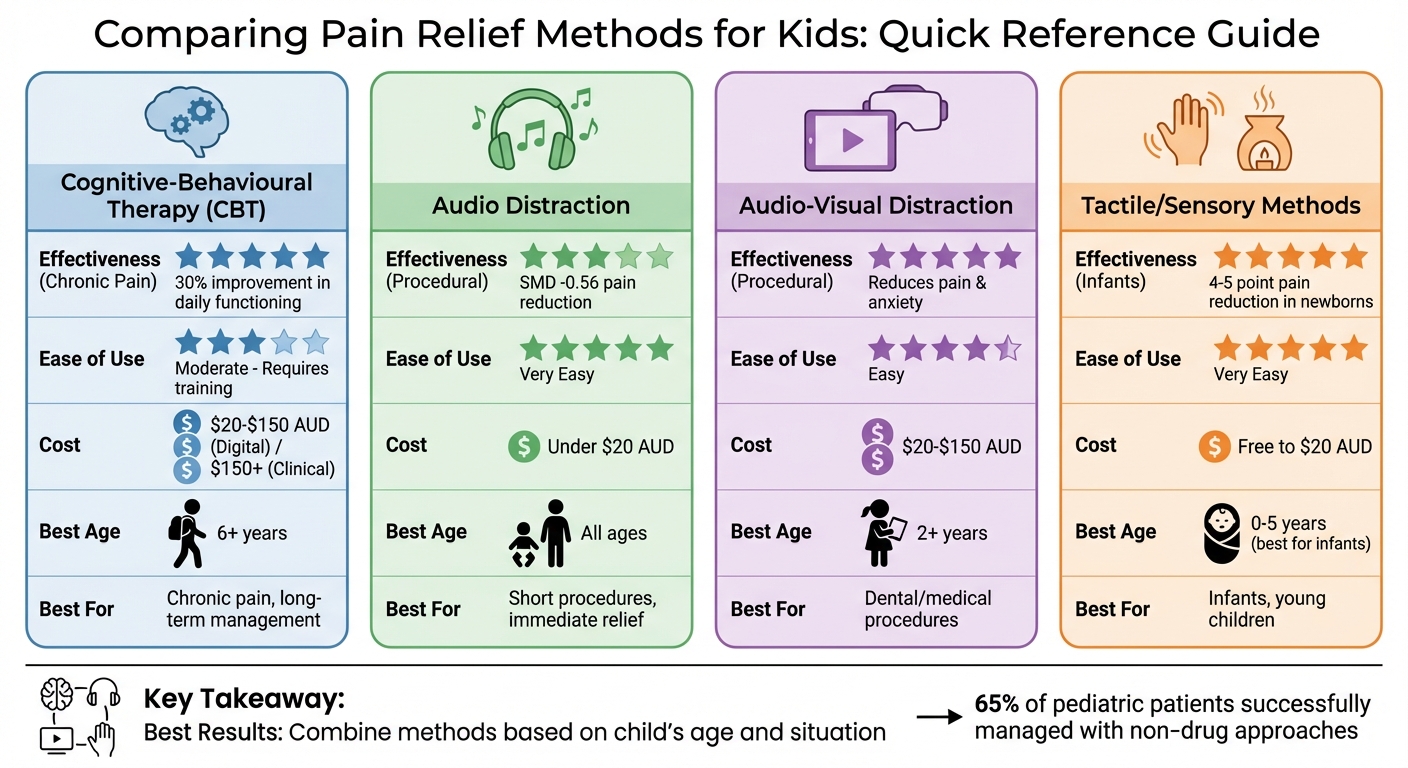
Comparison of Non-Drug Pain Relief Methods for Children by Effectiveness, Cost, and Age
Non-Pharmacologic Pain Management Strategies by C. Dowling | OPENPediatrics

1. Cognitive-Behavioural Strategies
Cognitive-behavioural therapy (CBT) uses tools like distraction, breathing techniques, relaxation, positive self-talk, and behavioural rehearsal to help manage pain during medical and dental procedures. These methods aim to reshape how children perceive pain while equipping them with practical coping skills. This foundation is essential when considering other distraction-based pain management techniques.
Effectiveness in Pain Relief
The success of cognitive-behavioural strategies in reducing pain depends on the type of pain and how it’s assessed. For chronic pain, CBT has shown impressive results. For instance, one study noted a decrease in pain intensity on the Numerical Rating Scale from 7.8 to 5.4 after eight weeks of group CBT sessions [4]. Combined CBT also reduced observer-reported pain, with a standardised mean difference (SMD) of -0.52, and lowered behavioural distress (SMD -0.40) [1]. However, its effects on self-reported pain during needle-related procedures were more modest (SMD -0.27) compared to hypnosis (SMD -1.40) or distraction techniques (SMD -0.56) [1]. Interestingly, online CBT programs have demonstrated a 30% improvement in daily functioning, with benefits lasting up to 12 months [4].
Ease of Implementation
CBT aligns well with non-pharmacological pain relief approaches, offering flexibility for different clinical and developmental contexts. Effective implementation requires preparation and clear communication. Parents play a key role by explaining procedures in simple terms. For example, the "Tell-Show-Do" method – explaining a procedure, showing the equipment, and then performing the task – can significantly reduce fear-related pain perception [5]. Importantly, avoid telling children that a procedure won’t hurt if it will, as this can lead to increased anxiety and mistrust in the future [5]. The adaptable nature of CBT allows it to be delivered in various ways, making it suitable for diverse clinical environments [2].
Adaptation by Age
CBT techniques are effective across a wide age range but must be tailored to suit developmental needs. Research supports their use for children aged 2 to 19 years [1]. For younger children, strategies often involve parent-led coaching and simple breathing exercises, like pretending to "inflate a balloon" [1]. Adolescents, on the other hand, benefit from more advanced cognitive strategies, such as reframing how they think about pain [2]. Allowing older children to make small choices, like selecting a flavour or distraction method, can boost their sense of control and reduce anxiety [5]. While most chronic pain studies focus on adolescents (average age around 12.6 years), research on needle-related procedures includes younger children as well [2].
2. Audio Distraction Techniques
Expanding on cognitive strategies, audio distraction provides an easy, non-drug method to help manage pain.
This approach uses sound – like music, storytelling, or conversation – to draw attention away from pain. It’s based on the "pain gate theory", which suggests that non-painful sensory input competes with pain signals, making it harder for pain messages to reach the brain. Essentially, it raises the pain threshold [7]. Studies back this up, showing that audio distraction reduces self-reported pain (standardised mean difference [SMD] of -0.56) and distress (SMD -0.82), while also lowering observer-reported pain and distress (SMDs of -0.62 and -0.72) [1][6].
Effectiveness in Pain Relief
The type of audio distraction plays a big role in its success. Active methods – like letting kids choose their music, encouraging them to sing along, or guiding them through rhythmic breathing – are often more effective than passive options, such as listening to pre-selected tracks [7]. While audio distraction can significantly reduce self-reported pain and distress, it’s less effective in curbing physical reactions like flinching or crying (SMD -0.44) [1][6]. Additionally, using audio as a distraction can make medical procedures smoother and quicker by helping kids stay more cooperative. However, it works best when combined with other pain management techniques rather than being used on its own [7].
Ease of Implementation
One of the big perks of audio distraction is how simple it is to use. It doesn’t require any special training, making it a practical tool for nurses, dental staff, or even parents [6]. Headphones can block out clinical noise, helping kids focus on the audio. Pairing this with an eye mask can further enhance the effect by eliminating visual distractions [8]. Encouraging kids to pick their favourite songs or sing along can make the technique even more effective [7].
Cost (AUD)
Audio distraction is affordable, as it mainly relies on everyday devices like smartphones or tablets [6][9].
Suitability for Different Ages
This technique is versatile, working well for children as young as two years old all the way up to teenagers (around 19 years) [1][6]. The key is to match the audio content to the child’s age and preferences. For younger kids, nursery rhymes or cartoon soundtracks might work best, while older children and teens may prefer their own playlists. Giving them the option to choose what they listen to can enhance their sense of control and engagement [6].
Next, we’ll take a look at how audio-visual techniques can add even more sensory input to the mix.
3. Audio-Visual Distraction Techniques
Expanding on the concept of audio distraction, audio-visual methods combine sound and visuals to create a more engaging way to manage pain. This could involve watching movies, playing video games, or using virtual reality (VR) headsets. These techniques leverage the pain gate theory, where visual and auditory inputs compete with pain signals, effectively raising the pain threshold [7]. This approach is especially useful during dental procedures involving needles for local anaesthesia.
Effectiveness in Pain Relief
By stimulating multiple senses at once, audio-visual distractions offer stronger pain relief than methods focusing on just one sense. Active distractions – like video games or interactive VR – tend to work better than passive options, such as watching TV, because they demand higher cognitive involvement. This leaves less mental capacity to focus on pain signals. VR stands out for its ability to create an immersive environment, pulling attention away from the dental procedure entirely [7]. The added benefit is that these techniques are simple to set up, making them practical for various settings.
Ease of Implementation
One of the biggest advantages of audio-visual distraction is how easy it is to use. It doesn’t require specialised training, meaning dental staff, nurses, or even parents can implement it. Devices like VR systems, tablets, or smartphones can be seamlessly integrated into the practice with minimal effort. For clinics without access to advanced equipment, even something as simple as letting a child watch their favourite cartoon on a tablet can work effectively.
Cost (AUD)
The cost of implementing these methods depends on the technology used. Tablets or smartphones are relatively low-cost options and often utilise devices already available. On the other hand, VR headsets involve a higher upfront investment. Dental practices will need to balance these expenses against the potential benefits, such as reduced anxiety and improved cooperation during procedures [1][7].
Suitability for Different Ages
Audio-visual distractions cater to a wide age range, from toddlers to teenagers. For very young children (up to 3 years), simple 2D videos are often enough, while older kids (4 years and above) tend to engage more with interactive games or VR experiences [3][10]. Since children under eight often find it hard to separate feelings of pain from anxiety, these tools can address both physical and emotional discomfort [10]. Choosing age-appropriate content further enhances the effectiveness of this approach, ensuring a more comfortable experience for young patients.
sbb-itb-2be92ed
4. Tactile and Sensory Distraction Techniques
Tactile and sensory methods use touch, smell, and taste to shift focus away from pain. These approaches can range from simple tools like vibration devices to more tailored methods such as aromatherapy or sensory-adapted environments. Unlike screen-based techniques, tactile strategies often involve physical contact or adjustments to the surroundings to create a soothing atmosphere. They work well alongside audio-visual methods by tapping into additional senses.
Effectiveness in Pain Relief
Studies suggest that vibration devices, such as Buzzy tools, are more effective than manual techniques like finger stroking for easing needle-related anxiety during procedures [11]. These devices rely on the gate control theory, which activates non-painful nerve fibres to "close the gate" on pain signals [11]. Aromatherapy using lavender oil has also been shown to significantly reduce dental anxiety during tooth extractions, surpassing the effectiveness of audio-visual methods [11]. For younger children, offering a sweet treat like honey or a lollipop before an injection not only reduces pain but also encourages cooperation [11]. Sensory Adapted Dental Environments (SADE), which involve changes to lighting, sound, and tactile elements, have been proven to lower physiological stress markers more effectively than standard dental setups, with a standardised mean change of -0.66 [12].
"SADE was superior to RDE (SMC -0.66; 95% CI -1.01 to -0.30; p = < 0.001) in reducing psychophysiological responses of dental anxiety."
- Kaitlyn Reynolds, School of Health Sciences, Western Sydney University [12]
Ease of Implementation
Many tactile and sensory strategies are straightforward to use. Tools like vibration devices and aromatherapy nebulisers need little training, while non-nutritive sucking (using pacifiers) and swaddling are easy for parents or caregivers to administer, especially for infants [13]. On the other hand, more elaborate setups like SADE require environmental changes, such as dimmed lighting, noise reduction, and specialised equipment [12].
Cost (AUD)
These methods are generally affordable. Items like pacifiers, swaddling blankets, and manual massage techniques are virtually cost-free [13]. Vibration devices and aromatherapy nebulisers require a modest investment, while creating a sensory-adapted environment involves higher upfront expenses for specialised lighting, sound systems, and room modifications. However, even these costs are usually lower than those associated with high-tech options like VR headsets or gaming systems.
Suitability for Different Ages
The effectiveness of tactile methods often depends on the age of the patient. For neonates and preterm infants, non-nutritive sucking has a strong impact on pain relief (SMD -1.13 to -1.49), while facilitated tucking – where a caregiver holds the baby’s limbs in a tucked position – is particularly effective for preterm babies (SMD -1.01) [13]. For children aged 5–10, animal-assisted therapy with trained dogs helps ease emotional distress [11]. For school-aged children (6–12 years), essential oils like lavender or orange have been shown to lower salivary cortisol levels and heart rates [11]. However, approaches like rocking or tickling, while effective for younger infants, have limited impact on older age groups, making them less suitable beyond the neonatal stage [13].
Advantages and Disadvantages
Different pain relief methods come with their own strengths and challenges. Cognitive-behavioural strategies are particularly effective for managing chronic pain over the long term. Studies show they can reduce disability for up to 12 months [2]. However, these methods require consistent effort and time to show results, making them less ideal for immediate relief. They’re also not well-suited for children under six, who may not yet have the cognitive maturity to fully engage [14].
Audio-visual distraction techniques are great for quick relief during procedures like vaccinations or dental treatments. They’re simple to use – think tablets or favourite TV shows – and work well across all age groups. That said, their effects are temporary and don’t address the deeper psychological factors tied to chronic pain [14]. Meta-analyses have consistently shown that distraction methods can significantly reduce self-reported pain levels.
For infants and younger children, tactile and sensory methods are especially effective. For example, non-nutritive sucking has been shown to reduce pain scores in newborns by an average of 4 to 5 points on a 21-point scale [13]. These methods are budget-friendly – often free – and require little to no training. However, their effectiveness tends to decrease as children grow older, with techniques like rocking or facilitated tucking losing impact over time.
When considering cost, tactile techniques and basic audio distractions are the most affordable, typically costing under $20 AUD. On the other hand, professional cognitive-behavioural therapy sessions can cost upwards of $150 AUD per session. Digital CBT programs strike a balance, offering similar long-term benefits at a fraction of the cost, with adherence rates ranging from 70% to 85% [4]. As highlighted in the method breakdowns above, each approach varies in practicality depending on the child’s age and the clinical situation. Tailoring pain management strategies to the specific needs of the child is key. The table below provides a quick overview of the effectiveness, ease of use, cost, and age suitability for each method:
| Method | Effectiveness | Ease of Use | Estimated Cost (AUD) | Age Suitability |
|---|---|---|---|---|
| Cognitive-Behavioural | High (Chronic/Long-term) | Moderate (Requires training) | $150+ (Clinical) / $20–$150 (Digital) | Generally 6+ years |
| Audio Distraction | Moderate (Procedural) | Very Easy | Under $20 | All ages |
| Audio-Visual Distraction | High (Acute/Procedural) | Easy | $20–$150 | 2+ years |
| Tactile/Sensory | High (Acute/Infants) | Very Easy | Free to $20 | All (Best for 0–5 years) |
"Non-pharmacologic treatments aid in the development of resilience and long-term pain management techniques, even though they might not offer the same level of immediate relief as pharmaceutical options." – Journal of Neonatal Surgery [14]
For the best results, consider combining methods. For example, pair audio-visual distraction for immediate relief with cognitive-behavioural strategies for managing recurring pain [14]. This combination can address both short-term distress and help build lasting coping skills.
Conclusion
Research highlights that both distraction (–0.56 SMD) and hypnosis (–1.40 SMD) are effective in reducing pain during dental procedures [6]. In practice, however, a combination of methods often works best in clinical settings. The "Tell‐Show‐Do" technique continues to be a cornerstone of paediatric dental care, with around 65% of patients successfully managed using non-drug approaches [15].
For dental professionals in Australia, blending strategies can lead to better outcomes. Pairing the Tell‐Show‐Do method with active distraction tools – like tablets or ceiling posters – and topical anaesthetics can help create a more relaxed environment for young patients. Clinics such as Complete Smiles Bella Vista exemplify how evidence-based psychological techniques can complement advanced dental practices to support children during their visits.
Parents also play an essential role in easing their child’s anxiety. Staying calm and using honest, age-appropriate explanations – avoiding false reassurances – can make a big difference [16][5]. For children aged four and above, preparing them in advance and incorporating simple breathing exercises, like blowing bubbles, can significantly lower their perception of pain [6].
FAQs
What are the most effective pain relief methods for children under 2 years old?
For children under two years old, simple soothing techniques like breastfeeding, skin-to-skin contact (also known as kangaroo care), and non-nutritive sucking (such as using a dummy) can work wonders in easing pain during minor medical procedures. These methods combine physical closeness and calming sensations, offering noticeable relief compared to doing nothing.
Breastfeeding stands out as particularly effective because it not only soothes through sucking but also provides the reassurance of close parental contact. Other helpful strategies include swaddling or holding the child gently in a tucked position, which can add an extra layer of comfort during medical or dental visits. These recommendations align with guidelines from New South Wales Health, which advocate for these non-medicated approaches as the first choice for managing pain in infants and toddlers.
What are some effective ways parents can help their kids manage pain using cognitive-behavioural techniques?
Cognitive-behavioural techniques (CBT) offer practical ways to help children manage pain by teaching them how to reinterpret pain signals and develop effective coping strategies. One simple starting point is relaxation breathing. Encourage your child to take slow, deep breaths, imagining they’re inflating a balloon. This technique can work wonders in reducing distress during procedures and in other painful moments.
Another valuable tool is positive self-talk. Teach your child to repeat calming phrases like “I’ve got this” or “It’ll be over soon.” These affirmations can help shift their focus and build resilience.
Distraction techniques are also highly effective. Listening to a favourite story, playing a game, or picturing a peaceful scene can take their mind off the pain. For younger kids, guided imagery – like pretending they’re walking along a sunny beach – can be particularly soothing. Older children might find it helpful to break a procedure into smaller steps and talk through what’s coming next, making the experience feel more manageable.
Practising these strategies at home can help your child feel more confident and prepared. If you’re planning a dental visit, consider discussing these approaches with your dentist at Complete Smiles Bella Vista to create a pain-management plan tailored to your child’s needs.
Do audio-visual distractions work better than audio alone for relieving pain in children?
Audio-visual distractions, like virtual reality (VR) headsets that blend immersive visuals with sound, tend to be more effective at easing pain in children compared to audio-only options like music or recorded stories. Studies show that combining visual and auditory elements captures a child’s attention more completely, which helps lower their awareness of pain.
Take, for instance, a child engaged with an interactive VR cartoon or game. They’re likely to experience less discomfort than if they were just listening to an audio track. The visual aspect adds an extra layer of engagement, making it a stronger method for helping kids cope during medical procedures or other unpleasant situations.
Related Blog Posts
- 5 Pain Relief Tips for Kids’ Dental Emergencies
- Acupuncture vs. Relaxation: Pain Relief in Dentistry
- Studies on Pain Management in Dental Extractions
- How Cognitive Behavioural Therapy Helps Kids in Dentistry
Important Notice: Any surgical or invasive procedure carries risks. Before proceeding, you should seek a second opinion from an appropriately qualified health practitioner.
Individual results may vary. The information provided in this article is for educational purposes only and does not constitute medical advice.
Checkout Related Blogs




Get in touch with us
For more information, call us now to start feeling better. Or fill the form below to make appointment
The Latest News from Complete Smiles
How to Clean Clear Plastic Retainers
Checklist for Choosing Wearable Dental Devices
Checklist for Choosing Cloud AI Platforms in Dentistry

Complete Smiles Bella VistaAccepts All Major Health Funds, Including





