





CEREC Applications in Dentistry
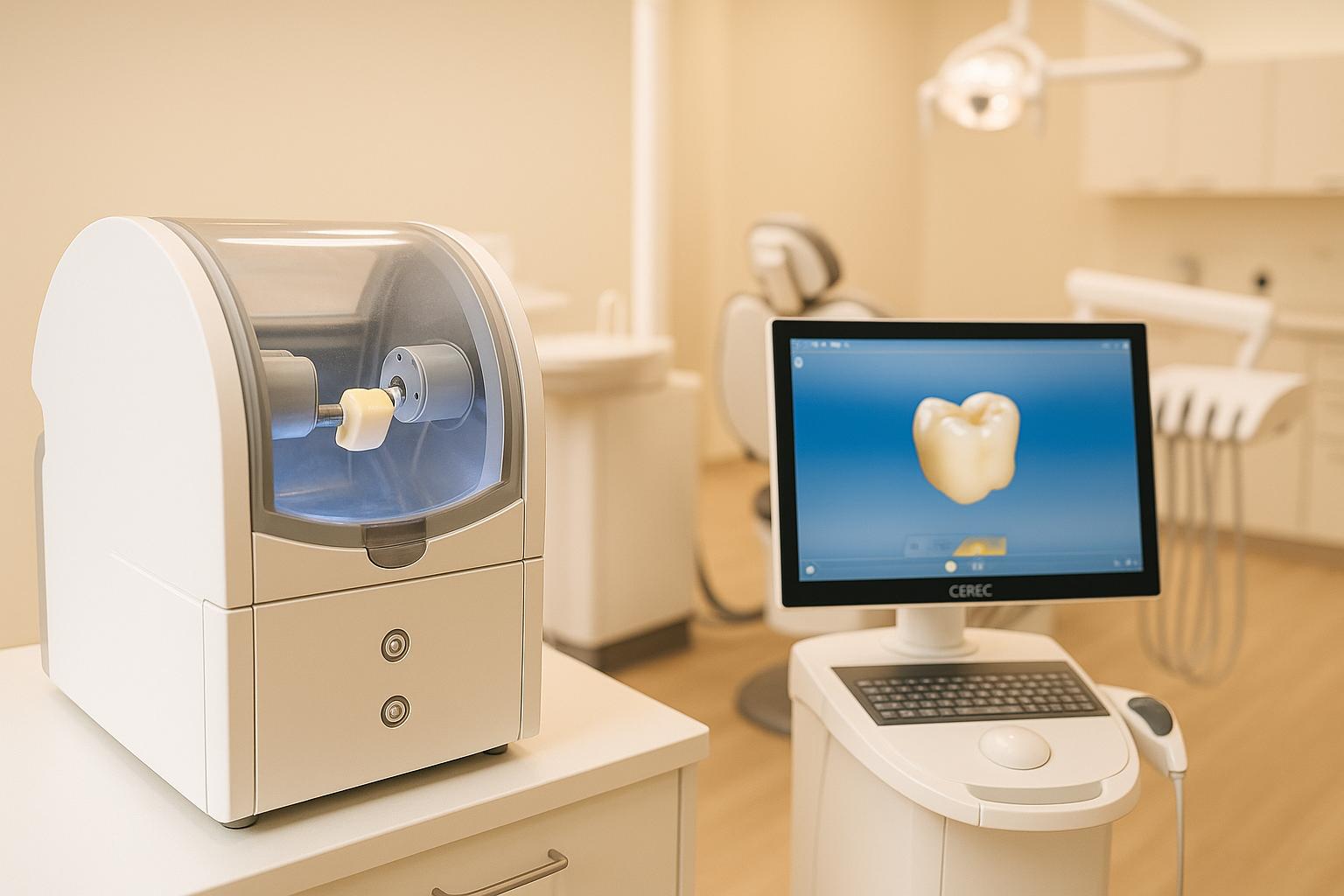
CEREC technology has transformed dentistry by offering same-day ceramic restorations like crowns, veneers, inlays, onlays, and bridges. Using digital scanning, 3D design, and in-office milling, dentists can create precise, permanent solutions in a single appointment. This eliminates the need for temporary fixes or multiple visits, saving time for both patients and practitioners.
Key benefits include:
- Time-saving: Single-visit restorations (2–3 hours).
- Precision: Digital scans ensure accurate fits and minimal adjustments.
- Aesthetic results: Ceramic materials mimic natural teeth.
- Convenience: No temporary crowns or external lab delays.
- Durability: Success rates over 95% for 10+ years.
However, CEREC may not suit complex cases requiring specialised materials or aesthetic work. Clinics across Australia, like Complete Smiles Bella Vista, are integrating CEREC to meet growing demand for efficient, high-quality dental care. For many, it’s a practical choice that aligns with modern patient needs.
Your Secret Weapon for Restoration Success: CEREC® CAD/CAM Technology
Main Uses of CEREC in Dentistry
CEREC technology simplifies restorative dental procedures by combining digital scanning, design, and on-site milling. This allows dentists to provide permanent solutions in just one visit, making it a practical choice for various treatments.
Same-Day Crowns
With CEREC, crown procedures are quicker and more convenient. Instead of relying on traditional moulds and multiple visits, this system uses digital impressions to design and create a custom crown on the spot. The result? A permanent, natural-looking crown that matches the tooth’s colour and eliminates the need for temporary fixes or repeat appointments[1][2].
Veneers for Better Appearance
CEREC also excels at crafting veneers to improve the look of teeth. Whether addressing discolouration, minor chips, or small gaps, the digital scanning process ensures precise measurements. This means patients can walk out with veneers that enhance their smile – all in a single visit.
Inlays, Onlays, and Bridges
For inlays, onlays, and bridges, CEREC provides a highly accurate and efficient solution. The digital design process reduces the risk of errors often associated with traditional impressions, creating restorations that fit perfectly and help preserve the natural structure of the teeth – all in just one appointment.
CEREC Process and Patient Experience
The CEREC process has reshaped dental care by turning what used to be a multi-visit ordeal into a convenient single-appointment procedure. Gone are the days of temporary solutions and repeated trips to the dentist. With CEREC, everything from scanning to crafting the final restoration happens seamlessly in one sitting.
Digital Scanning and 3D Design
The journey starts with a digital scan using an intraoral scanner. This device quickly captures detailed 3D images of the tooth and its surroundings, offering a much more comfortable alternative to traditional putty moulds. No mess, no discomfort – just a quick and precise scan. If necessary, the scan can be redone immediately to ensure accuracy. These images are then fed into advanced 3D design software, which creates a virtual model of the restoration.
On-Site Ceramic Milling
Once the design is perfected, the process moves to on-site ceramic milling. The CEREC milling machine carves the restoration from high-quality ceramic material right there in the dental office. By handling fabrication on-site, there’s no need for external dental labs or temporary crowns. This not only speeds up the process but also ensures that patients leave with their permanent restoration on the same day [3].
CEREC vs Traditional Methods
Compared to traditional methods, CEREC stands out by completing the entire restoration in a single visit. Its digital workflow ensures a precise fit, thanks to the combination of accurate scanning and computer-aided design. This precision often reduces the need for follow-up adjustments.
However, it’s worth noting that CEREC isn’t suitable for every case. More complex situations – like multi-unit restorations or treatments requiring intricate aesthetic work – may still benefit from traditional laboratory techniques. The choice between CEREC and conventional methods ultimately depends on the specific clinical needs and the patient’s preferences.
sbb-itb-2be92ed
Benefits and Limitations of CEREC Restorations
CEREC technology comes with a mix of advantages and limitations, which play a key role in determining the best treatment approach.
Benefits of CEREC Technology
One of the biggest perks of CEREC is time efficiency. Patients can get permanent restorations in a single 2–3-hour visit, cutting out the need for temporary crowns and follow-up appointments. This is a major plus for people with packed schedules.
Another standout feature is its digital precision. CEREC’s scanning technology often delivers better-fitting restorations compared to traditional putty moulds. The digital scans capture even the smallest details, ensuring accurate margins and contacts. This precision reduces the need for adjustments during the fitting process, making the experience smoother for both the dentist and the patient.
When it comes to looks, CEREC restorations excel in aesthetic outcomes. The ceramic materials used closely mimic the way natural teeth reflect light, allowing the restorations to blend seamlessly with surrounding teeth. The computer-aided design also helps dentists recreate the natural contours of the tooth, giving it a lifelike appearance.
Biocompatibility is another advantage. The ceramic materials used in CEREC are gentle on gum tissues and unlikely to cause allergic reactions. They are also resistant to staining and maintain their appearance over time, making them a great choice for front teeth that are always on display.
Lastly, CEREC restorations offer immediate functionality, allowing patients to eat and speak normally as soon as the procedure is completed. That said, while it’s a fantastic option for many, CEREC isn’t suitable for every clinical scenario.
Limitations and When to Use CEREC
Despite its many benefits, CEREC does have its limitations. It works best for straightforward cases, but more complex situations may require traditional methods.
For complex multi-unit restorations, such as bridges involving multiple teeth or full-mouth reconstructions, dental laboratories often provide better results. These cases demand specialised skills and equipment that go beyond what CEREC can offer.
There are also material limitations to consider. While CEREC ceramics perform well in most scenarios, certain cases might call for alternative materials like gold alloys or zirconia, which are typically created in a lab. High-stress areas, such as back molars in patients who grind their teeth, might benefit from materials with properties that are better suited to such conditions.
In cases of aesthetic complexity, especially for highly visible teeth, the expertise of a skilled dental technician may be necessary. Although CEREC produces excellent results in most cases, intricate shade matching or unique tooth characteristics might be better handled in a laboratory setting.
Finally, there’s a learning curve associated with CEREC. A dentist’s experience with the technology can significantly impact the outcome, particularly during the early stages of using the system.
Side-by-Side Comparison
| Factor | CEREC Restorations | Traditional Laboratory Restorations |
|---|---|---|
| Appointment Time | Single visit (2-3 hours) | Two visits over 2-3 weeks |
| Cost Range (AUD) | $1,200-$2,000 per crown | $1,000-$1,800 per crown |
| Temporary Crown | None | Necessary between visits |
| Material Options | Ceramic blocks only | Wide range including metal, ceramic, zirconia |
| Aesthetic Complexity | Good for standard cases | Excellent for complex aesthetics |
| Adjustment Time | Immediate if needed | Potential extra adjustment |
| Durability | 10-15 years typical lifespan | 10-20 years depending on material |
| Precision | High digital accuracy | Depends on impression quality |
The decision between CEREC and traditional methods often depends on the patient’s specific needs. For those with busy schedules and straightforward cases, CEREC offers a convenient and efficient solution. However, for more intricate aesthetic requirements or cases needing specialised materials, traditional lab-based methods may be the better choice.
CEREC Technology in Australian Practices
CEREC in Australian Clinics
CEREC technology has become a staple in dental clinics across Australia, from bustling city centres like Sydney, Melbourne, and Brisbane to smaller regional practices. The increasing demand for convenient, same-day dental treatments has driven its adoption on a wide scale.
Did you know that over 40% of Australian adults are likely to need at least one crown in their lifetime? Whether it’s due to decay, fractures, or failed fillings, this statistic underscores the value of efficient restorative solutions like CEREC[4].
While city clinics often lead the charge in adopting advanced digital systems, regional practices are reaping their own benefits. By completing restorations on-site, they sidestep the delays associated with relying on external dental labs, offering patients quicker solutions.
And when it comes to durability? CEREC crowns hold their own against traditional lab-made crowns. Studies show success rates exceeding 95% over a 10-year span[4]. This combination of speed and reliability is reshaping patient expectations and paving the way for more patient-focused innovations.
Patient Considerations
For Australian patients, several factors influence access to CEREC treatments. One of the main considerations is the variability in dental coverage provided by health funds, which can impact both the cost and timing of procedures.
The time-saving nature of CEREC is a game-changer. Traditional dental procedures often require multiple appointments, with each visit eating up 2–3 hours of a patient’s day. CEREC’s single-visit approach not only reduces this disruption but also simplifies life for busy individuals.
To ease the financial burden, many clinics now offer interest-free payment plans or flexible financing options. Additionally, by eliminating the need for temporary crowns and reducing the likelihood of follow-up adjustments, CEREC treatments often provide better long-term value for patients.
Geography also plays a role. For those in remote or regional areas, the single-visit approach is especially beneficial. It eliminates the need for repeated trips to city-based clinics, which are often the hubs for advanced dental services. These practical benefits demonstrate why clinics like Complete Smiles Bella Vista have embraced CEREC technology as part of their comprehensive care offerings.
Complete Smiles Bella Vista and Advanced Dental Care

Complete Smiles Bella Vista serves as a prime example of how CEREC is integrated into a broader spectrum of advanced dental services. Under the leadership of Dr. James Hanna, the clinic combines CEREC technology with other specialised treatments, including cosmetic dentistry, dental implants, and more.
At this clinic, CEREC isn’t just an isolated service. Instead, it’s woven into personalised treatment plans. Patients needing porcelain crowns or bridges enjoy the convenience of same-day restorations while benefiting from continuity in their overall dental care.
To make these advanced treatments more accessible, Complete Smiles Bella Vista offers flexible payment options. The clinic also collaborates with various health funds, helping patients navigate their insurance benefits while accessing cutting-edge dental solutions.
The adoption of CEREC technology at practices like Complete Smiles Bella Vista reflects a broader shift in Australian dentistry. It’s a move towards patient-centred care that balances clinical precision with everyday convenience, meeting the needs of modern patients who value both efficiency and quality.
Conclusion
CEREC technology has undoubtedly changed the game in restorative dentistry, offering a streamlined, efficient solution for patients across Australia. With its ability to produce durable crowns, veneers, bridges, inlays, and onlays in just one visit, it eliminates the need to wait weeks for lab-made restorations. Using precise digital scanning and on-site ceramic milling, this approach skips traditional impression materials, creating restorations that blend seamlessly with natural teeth while being gentle on oral tissues.
For patients in regional areas, the convenience of a single-visit treatment means less time spent travelling and fewer disruptions to daily life.
Dental clinics like Complete Smiles Bella Vista incorporate CEREC into tailored treatment plans, ensuring a personalised approach to dental care.
If you’re considering restorative work, ask your dentist about CEREC. It’s a forward-thinking solution that prioritises both efficiency and patient comfort.
FAQs
What are the cost and time benefits of CEREC technology compared to traditional dental restorations?
CEREC technology stands out for its ability to save time, allowing dentists to create dental restorations like crowns in just one visit. Unlike traditional methods that often stretch across multiple appointments over weeks, CEREC offers a convenient alternative, especially for patients with tight schedules.
When it comes to cost, CEREC restorations are typically in the same ballpark as traditional crowns, with prices ranging from $500 to $1,500, depending on the complexity of the procedure. While the initial cost might occasionally be a bit higher, the elimination of follow-up visits can make it a more efficient option in the long run.
For those looking for a quicker, hassle-free dental restoration process, CEREC delivers a modern approach that doesn’t compromise on quality or durability.
What dental procedures are most suitable for CEREC technology, and when might traditional methods be better?
CEREC technology shines when it comes to straightforward dental treatments like crowns, veneers, and inlays/onlays, especially for patients who value the convenience of same-day restorations. It’s a reliable choice for addressing minor tooth issues like small cracks, wear, or slight damage, providing strong and visually appealing ceramic options.
That said, traditional techniques may still hold the advantage in more intricate situations. For example, cases requiring metal-based restorations or extensive customisation for structural or aesthetic reasons might benefit from conventional methods. These approaches are also often better suited for managing significant tooth damage or when a wider variety of materials beyond ceramics is necessary.
What should I consider before choosing CEREC restorations?
CEREC restorations offer a practical and appealing solution for many dental procedures, but there are a few considerations to weigh. The ceramic material used is both strong and visually appealing, but it might not hold up as well as traditional materials in cases of larger or more intricate restorations. This makes it potentially less ideal for teeth that endure heavy biting forces or have extensive gaps.
Moreover, achieving a precise fit can sometimes require additional adjustments, particularly for patients with unique dental structures. To make the best decision, it’s important to have an open conversation with your dentist about your specific dental needs and whether CEREC is the right option for you.
Related Blog Posts
- Wear-Resistant Materials in Dental Restorations
- Ceramic Materials in Crowns and Bridges
- CAD/CAM vs. Traditional Restorations: Key Differences
- CAD/CAM in Dentistry: Cost vs Value
Important Notice: Any surgical or invasive procedure carries risks. Before proceeding, you should seek a second opinion from an appropriately qualified health practitioner.
Individual results may vary. The information provided in this article is for educational purposes only and does not constitute medical advice.
Checkout Related Blogs




Get in touch with us
For more information, call us now to start feeling better. Or fill the form below to make appointment
The Latest News from Complete Smiles
How to Clean Clear Plastic Retainers
Checklist for Choosing Wearable Dental Devices
Checklist for Choosing Cloud AI Platforms in Dentistry

Complete Smiles Bella VistaAccepts All Major Health Funds, Including





