





Patient Compliance in Orthodontics: Key Insights
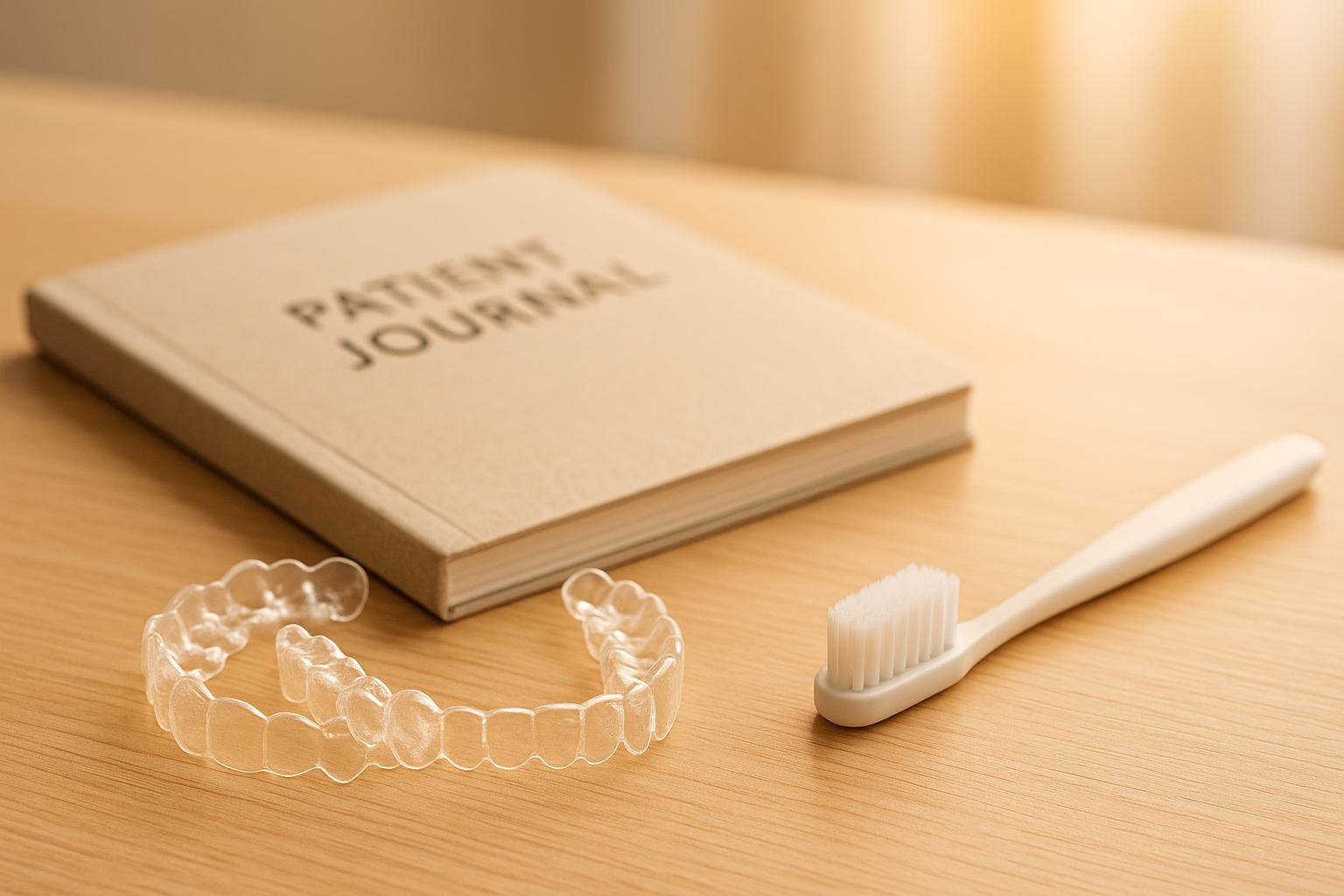
Patient compliance is the backbone of successful orthodontic treatment. Whether it’s wearing braces or aligners as prescribed, maintaining oral hygiene, or attending appointments, adherence directly impacts treatment outcomes. However, only 69.5% of patients follow hygiene and dietary guidelines, and just 53.5% stick to their full treatment plans. This gap can lead to delays, relapse, and higher costs.
Key takeaways:
- Good compliance results in 75–90% success rates for orthodontic outcomes.
- Poor adherence can extend treatment times and increase relapse risks.
- Only 25.9% of patients wear retainers consistently, jeopardising long-term results.
- Tools like digital monitoring have reduced non-compliance rates from 24.5% to below 10%.
Challenges include forgetfulness (34.5%), discomfort (24.1%), and social concerns. Age, gender, and appliance type also influence compliance. For example, clear aligners require dedication (20–22 hours/day), but fixed braces demand strict hygiene. Personalised education, AI-driven tools, and tailored retention plans are helping tackle these issues, ensuring better adherence and outcomes.
Relapse, Retention and Compliance – Orthodontics Medico-Legal Perspectives – GF023
What Affects Patient Compliance
Patient compliance in orthodontic treatment is shaped by a mix of personal factors, external barriers, and treatment methods. By understanding these influences, orthodontists can create strategies to improve adherence to treatment plans.
Individual Patient Factors
Age plays a key role in compliance. Adolescents aged 15–17 tend to follow treatment plans better than younger children. Adults, while often more aware of the importance of treatment, may face unique challenges that impact their adherence[1][3].
Parental involvement is especially crucial for younger children aged 7–12. When caregivers actively supervise, children are more likely to stick to treatment routines, such as wearing appliances and maintaining proper oral hygiene[3].
Motivation and understanding are also vital. Among patients who clearly understand their treatment plans, 62.2% demonstrate better compliance with oral hygiene and dietary guidelines[1]. Personality traits matter too – organised, goal-oriented, and health-conscious individuals often adapt more easily to treatment demands. Gender differences have been observed, with one study reporting compliance rates of 36.0% for males compared to 26.1% for females[4]. Additionally, first-time orthodontic patients tend to comply better than those with prior treatment experience[4].
The type of orthodontic appliance prescribed also has a significant impact on compliance levels.
How Appliance Type Affects Compliance
The choice of orthodontic appliance greatly influences the challenges patients face and their ability to comply with treatment requirements.
Removable appliances, like clear aligners, demand 20–22 hours of daily wear for effectiveness. However, research shows that around 50% of adolescents fall short of this target[3]. While clear aligners are popular for their aesthetic appeal, their success hinges entirely on the patient’s dedication.
Fixed appliances, such as traditional braces, remove the issue of wear time but come with their own set of challenges. Patients must maintain meticulous oral hygiene to clean around brackets and wires and avoid certain foods that could damage the braces.
Retainers, used after active treatment, present a different compliance hurdle. Only 25.9% of patients consistently wear their removable retainers as instructed[2]. This is concerning because proper retainer use is essential for maintaining long-term treatment results.
| Appliance Type | Primary Compliance Challenge | Success Dependency | Monitoring Method |
|---|---|---|---|
| Clear Aligners | Daily wear time (20–22 hours) | Very High | Digital apps, check-ins |
| Traditional Braces | Oral hygiene, dietary compliance | Moderate | Regular appointments |
| Removable Retainers | Consistent post-treatment wear | High | Patient self-reporting |
Choosing the right appliance requires more than just clinical considerations. It’s important to factor in the patient’s lifestyle, maturity, and ability to follow instructions. Local practices, such as Complete Smiles Bella Vista, specialise in tailoring appliance options to match individual needs and improve compliance. Additionally, treatment duration can vary depending on the appliance. For instance, traditional braces often complete treatment 3–6 months faster than clear aligners for similar cases[8]. However, even shorter treatment times still require consistent patient cooperation.
These various factors highlight the complexity of patient compliance and pave the way for targeted strategies to address these challenges later in this article.
Methods to Improve Compliance
Improving patient compliance in orthodontic care requires a mix of education, technology, and personalised strategies. By addressing challenges through these targeted approaches, adherence to treatment can be significantly enhanced.
Patient Education Methods
Education is the backbone of effective orthodontic treatment. Using visual aids like progress charts and treatment timelines helps patients see their progress and understand the importance of sticking to their plan. Age-appropriate verbal explanations also play a key role in ensuring patients grasp why their treatment is necessary and what results they can expect.
Digital tools, such as interactive apps and educational videos, allow patients to revisit treatment details at home, reinforcing their understanding. When orthodontists combine these educational methods, patients tend to stay more engaged and committed throughout their treatment journey[1].
Building on this foundation, technology further strengthens patient adherence.
Technology-Based Solutions
Technology has transformed the way compliance is monitored and encouraged. AI-driven platforms are particularly effective, offering real-time tracking, visual updates on progress, and automated reminders that keep patients motivated and on track[6][7].
Mobile app reminders are another valuable tool, sending personalised alerts for aligner wear, appointments, and oral hygiene. Advanced systems even track wear time and provide feedback to both patients and clinicians, bridging the gap between instructions and execution.
For additional support, AI chatbots provide round-the-clock guidance. These chatbots can answer common questions, offer encouragement, and notify clinicians if intervention is needed. A study revealed that patients using AI chatbots for oral hygiene guidance saw a 15% improvement in gingival health compared to those without this support[7].
Electronic feedback systems also play a critical role, enabling continuous communication between patients and clinicians. Digital monitoring tools have been shown to reduce poor compliance rates in clear aligner therapy from 24.5% to below 10%[4].
Moreover, AI systems can analyse patient behaviour and adapt treatment strategies dynamically. By identifying patterns and risk factors, these tools help maintain patient engagement and ensure treatment goals are met[6][7][5].
The retention phase, often a challenging part of orthodontic care, also benefits from personalised strategies.
Personalised Retention Plans
Retention is crucial for maintaining treatment results, yet only 25.9% of patients consistently wear their removable retainers as instructed[2]. Customised retention plans are key to addressing this issue.
Tailored retention protocols take into account individual factors like lifestyle, comfort preferences, and relapse risk. Rather than using a one-size-fits-all approach, orthodontists can adjust retainer types, wear schedules, and follow-up education to suit each patient’s unique needs[2].
For instance, addressing discomfort might involve gradual adjustment periods or offering more aesthetically pleasing options like clear or removable retainers. These personalised touches can make patients more likely to stick to their retention plans.
Regular follow-ups and reinforcement are equally important. Digital reminders and scheduled check-ins ensure patients remain committed, leading to higher retainer wear rates and reduced relapse[2]. Beyond the appliance itself, educational materials and communication preferences can also be tailored to meet individual needs, ensuring a holistic approach to compliance.
| Method | Primary Benefit | Compliance Improvement | Best Application |
|---|---|---|---|
| Visual Education | Motivation through progress | Moderate-High | All age groups |
| AI Chatbots | 24/7 support and guidance | 15% improvement in gingival health | Tech-comfortable patients |
| Digital Monitoring | Real-time tracking | Poor compliance reduced from 24.5% to <10% | Clear aligner therapy |
| Personalised Retention | Addresses individual barriers | Higher long-term wear rates | Post-treatment phase |
When combined, these strategies – education, technology, and personalisation – create a powerful framework for improving patient compliance. Together, they enhance adherence and lead to better overall treatment outcomes.
sbb-itb-2be92ed
Measuring Patient Compliance
Accurately measuring patient compliance is essential for identifying non-adherence early and adjusting treatment plans promptly. Various methods, ranging from simple questionnaires to advanced AI systems, provide different insights into patient behaviour and compliance patterns.
Standard Assessment Methods
To better understand and address compliance challenges, orthodontic practices rely on several measurement tools. Among these, self-report questionnaires are the most widely used in Australian orthodontic clinics. Tools like the Orthodontic Patient Cooperation Scale are quick, inexpensive, and provide insights into patient attitudes and attendance habits.
However, self-reports have their flaws. Patients often overestimate their compliance due to recall bias or the desire to present themselves favourably to their orthodontist[1][2]. This makes self-reporting less reliable for capturing actual behaviour.
Clinical observations offer a direct way to gauge compliance during appointments. They allow orthodontists to provide immediate feedback and adjust treatment as needed[1]. Unfortunately, this method only captures behaviour during scheduled visits, leaving gaps in understanding what happens between appointments. Additionally, assessments can vary depending on the clinician’s perspective.
Electronic monitoring systems provide a more objective solution. These systems use micro-sensors embedded in aligners or retainers to track wear times. Unlike self-reports, this data is accurate and often reveals lower adherence rates than patients claim[2]. This highlights the importance of objective tools in understanding compliance.
AI-driven platforms are becoming increasingly valuable for monitoring compliance. These systems can predict non-compliance risk with 82% accuracy and have been shown to reduce unscheduled follow-up visits by 28% in studies involving over 1,200 patients[7]. Offering real-time progress tracking and tailored support, AI tools are particularly beneficial for busy orthodontic practices.
Digital monitoring has proven especially effective for clear aligner therapy. For instance, studies in Germany noted that these tools reduced poor compliance rates from around 24.5% to under 10%[4]. The combination of immediate feedback and reliable data helps both patients and clinicians stay aligned with treatment goals.
Comparing Compliance Measurement Tools
Each compliance measurement method comes with its own strengths and limitations. Selecting the right approach depends on the needs of the practice and its patient base.
| Measurement Tool | Strengths | Limitations | Clinical Applicability |
|---|---|---|---|
| Self-report Questionnaires | Easy to use, low cost, captures patient perspectives | Prone to bias, often overestimates compliance | Useful for initial screening and gauging patient attitudes |
| Clinical Observations | Allows direct assessment and immediate feedback | Limited to appointment times, subjective, misses between-visit data | Best for ongoing monitoring during regular check-ups |
| Electronic Monitoring | Provides accurate, real-time data, reduces bias | Higher costs, requires technology adoption, potential technical issues | Ideal for removable appliances and objective tracking |
| AI-driven Platforms | Offers predictive analytics, personalised feedback, and 24/7 monitoring | Requires technical infrastructure, data security considerations, learning curve | Emerging tool for comprehensive and efficient care |
A multi-method approach is often the most effective for addressing the limitations of individual tools[1][3]. For example, a practice might use self-report questionnaires for initial screenings, clinical observations for routine check-ups, and electronic monitoring for patients using removable appliances.
Patient demographics also play a role in compliance. Younger patients tend to adhere better due to parental oversight, while adolescents often show reduced compliance[3]. The type of appliance and the clarity of instructions also influence how reliable these measurement tools are. For instance, electronic monitoring has revealed that about 50% of adolescents with removable appliances fail to meet recommended wear times[3]. This kind of objective data allows orthodontists to identify at-risk patients and intervene early to avoid compromising treatment outcomes.
Orthodontic practices are increasingly embracing technology to improve compliance tracking. For instance, Complete Smiles Bella Vista combines advanced monitoring systems with personalised education to enhance patient outcomes. This approach blends the convenience of traditional methods with the precision of modern digital tools.
Ultimately, the success of compliance measurement depends on selecting tools that align with the type of appliance, patient age, practice resources, and treatment complexity. Practices that integrate multiple methods typically achieve better patient outcomes and streamlined treatment timelines. This comprehensive approach lays the groundwork for exploring how compliance impacts clinical results and informs ongoing research.
Clinical Impact and Future Research
The challenges posed by poor compliance have prompted researchers to explore new strategies aimed at reversing these trends. Non-compliance not only stretches treatment timelines but also drives up costs and disrupts clinical workflows.
Effects of Poor Compliance
When patients fail to follow prescribed care, treatments often take longer to complete. This extended duration increases financial strain on patients and complicates scheduling for clinics. Worse, it can lead to relapse, where teeth shift back to their original positions, requiring further intervention. Studies reveal that only 25.9% of patients consistently wear their removable retainers[2]. This inconsistency significantly raises relapse rates, often necessitating retreatment.
Non-compliance also results in less effective outcomes, impacting both the appearance and function of orthodontic work. Common reasons for non-compliance include forgetfulness (34.5%), discomfort (24.1%), concerns about aesthetics (13.8%), and challenges with oral hygiene (10.3%)[2]. These barriers highlight the complexity of ensuring adherence, pushing clinicians to seek better solutions.
New Approaches to Improve Compliance
To address these issues, digital tools and personalised strategies are gaining traction. For instance, AI-powered monitoring systems provide real-time updates and use predictive analytics to flag patients likely to struggle with compliance. Mobile apps further aid adherence with automated reminders, progress tracking, and customised educational content – features that particularly resonate with younger users.
Digital monitoring has already shown success in reducing non-compliance. Another promising development is teleorthodontics, which allows for remote consultations. This approach not only expands access to care for patients in regional areas but also enables timely adjustments to treatment plans, making it easier for busy individuals to stay on track.
Personalised retention plans are another effective strategy. By tailoring care to an individual’s lifestyle and specific challenges, clinics are seeing higher satisfaction rates and more stable outcomes. Clear aligner therapy, which combines aesthetic appeal with built-in digital monitoring, has achieved success rates of 75–90% and has reduced treatment periods to 12–18 months[4].
Applying Research Findings in Practice
Clinics are now incorporating evidence-based methods to boost patient compliance. A thorough patient assessment early in treatment helps identify potential barriers to adherence. Research suggests that males and first-time orthodontic patients are often more likely to follow treatment plans[4], indicating that customised approaches based on patient demographics can improve outcomes.
Many practices are adopting a combination of digital tracking, in-person check-ins, and patient feedback to address compliance issues proactively. For example, Complete Smiles Bella Vista demonstrates how advanced monitoring systems, paired with personalised education and support, can bring research findings into daily practice.
While implementing technologies like AI tracking and digital reminders requires upfront investment in tools and staff training, the long-term advantages include better patient outcomes, shorter treatment durations, and smoother clinic operations. Future research is focusing on age-specific strategies and the psychological and social factors that influence adherence. By integrating behavioural science principles, orthodontic care can move towards more personalised solutions, leaving behind the one-size-fits-all approach.
As technology advances, the possibilities for predictive analytics and tailored interventions will continue to grow. This progress positions forward-thinking clinics to deliver better results while streamlining their workflows for greater efficiency.
Conclusion
Patient compliance plays a crucial role in achieving successful orthodontic outcomes. It directly impacts how long treatment takes, its effectiveness, and the stability of results over time. A 2024 study revealed that while 69.5% of patients showed good compliance with oral hygiene and dietary guidelines, only 53.5% adhered strictly to treatment protocols [1]. This gap underscores the challenge of turning knowledge into consistent daily habits.
As discussed earlier, effective orthodontic care hinges on a combination of patient education, ongoing support, and strategies tailored to overcome common obstacles like forgetfulness or discomfort. For example, only 25.9% of patients consistently wear their removable retainers [2], highlighting the importance of personalised retention plans to address these challenges.
Incorporating digital tools, such as mobile apps and electronic reminders, offers a practical way to tackle non-compliance [4]. These technologies can complement traditional methods, making it easier for patients to stay on track and for clinicians to monitor progress.
For orthodontic practices in Australia, adopting evidence-based approaches tailored to individual patient needs is essential. This means conducting thorough initial assessments to identify potential barriers, providing consistent education throughout treatment, and leveraging digital solutions to keep patients engaged. In clear aligner therapy, for instance, high compliance rates are linked to success rates of 75–90% and treatment durations of 12–18 months [4].
As orthodontics continues to embrace advancements like AI-powered monitoring and teleorthodontics, the human element remains just as important. Fostering strong partnerships between practitioners and patients, built on clear communication and realistic expectations, is the foundation for achieving the best outcomes. By prioritising education, digital monitoring, and personalised support, orthodontic care can continue to deliver effective, patient-centred results.
FAQs
How can digital tools and artificial intelligence help improve patient compliance during orthodontic treatment?
Digital tools and artificial intelligence (AI) are reshaping orthodontic care, making treatment plans more interactive and easier to stick to. AI-powered apps and wearable devices now offer personalised reminders, monitor progress, and deliver real-time feedback, helping patients stay committed to their treatment.
On top of that, tools like virtual consultations and 3D treatment simulations let patients see their progress and envision the end results. This visualisation can be a great motivator, encouraging them to follow their orthodontist’s instructions. These advancements not only boost compliance but also make orthodontic care more convenient and engaging for patients.
What challenges affect patient compliance in orthodontic treatment, and how can they be managed?
Patient compliance in orthodontics often hinges on a mix of factors like discomfort, misunderstanding the benefits of treatment, or the hassle of keeping up with oral hygiene while using braces or aligners. Tackling these issues requires a combination of clear communication, education, and customised support.
Orthodontists can play a key role by explaining why sticking to the treatment plan is crucial and sharing practical tips to ease discomfort or simplify oral hygiene routines. Regular check-ins and personalised guidance can also keep patients motivated and engaged throughout their treatment journey.
Why is it important to wear retainers consistently after orthodontic treatment?
After completing orthodontic treatment, wearing retainers as instructed is crucial to keep your teeth aligned. Once braces or aligners come off, your teeth can gradually shift back to their original spots. This movement happens naturally due to chewing, ageing, and the inherent tendency of teeth to move.
Retainers play a key role in holding your teeth in their corrected positions while the surrounding gums and bone settle and adapt. By wearing your retainers regularly, you safeguard the results of your treatment and preserve the time and effort invested in creating a confident, healthy smile.
Related Blog Posts
- Benefits of AI in Orthodontic Progress Tracking
- Orthodontic Force Measurement: Why Accuracy Matters
- Role of Medical History in Orthodontic Diagnosis
- Advances in Orthodontic Pain Management Techniques
Important Notice: Any surgical or invasive procedure carries risks. Before proceeding, you should seek a second opinion from an appropriately qualified health practitioner.
Individual results may vary. The information provided in this article is for educational purposes only and does not constitute medical advice.
Checkout Related Blogs




Get in touch with us
For more information, call us now to start feeling better. Or fill the form below to make appointment
The Latest News from Complete Smiles
How to Clean Clear Plastic Retainers
Checklist for Choosing Wearable Dental Devices
Checklist for Choosing Cloud AI Platforms in Dentistry

Complete Smiles Bella VistaAccepts All Major Health Funds, Including





