





AI Algorithms for Orthodontic Diagnosis Explained
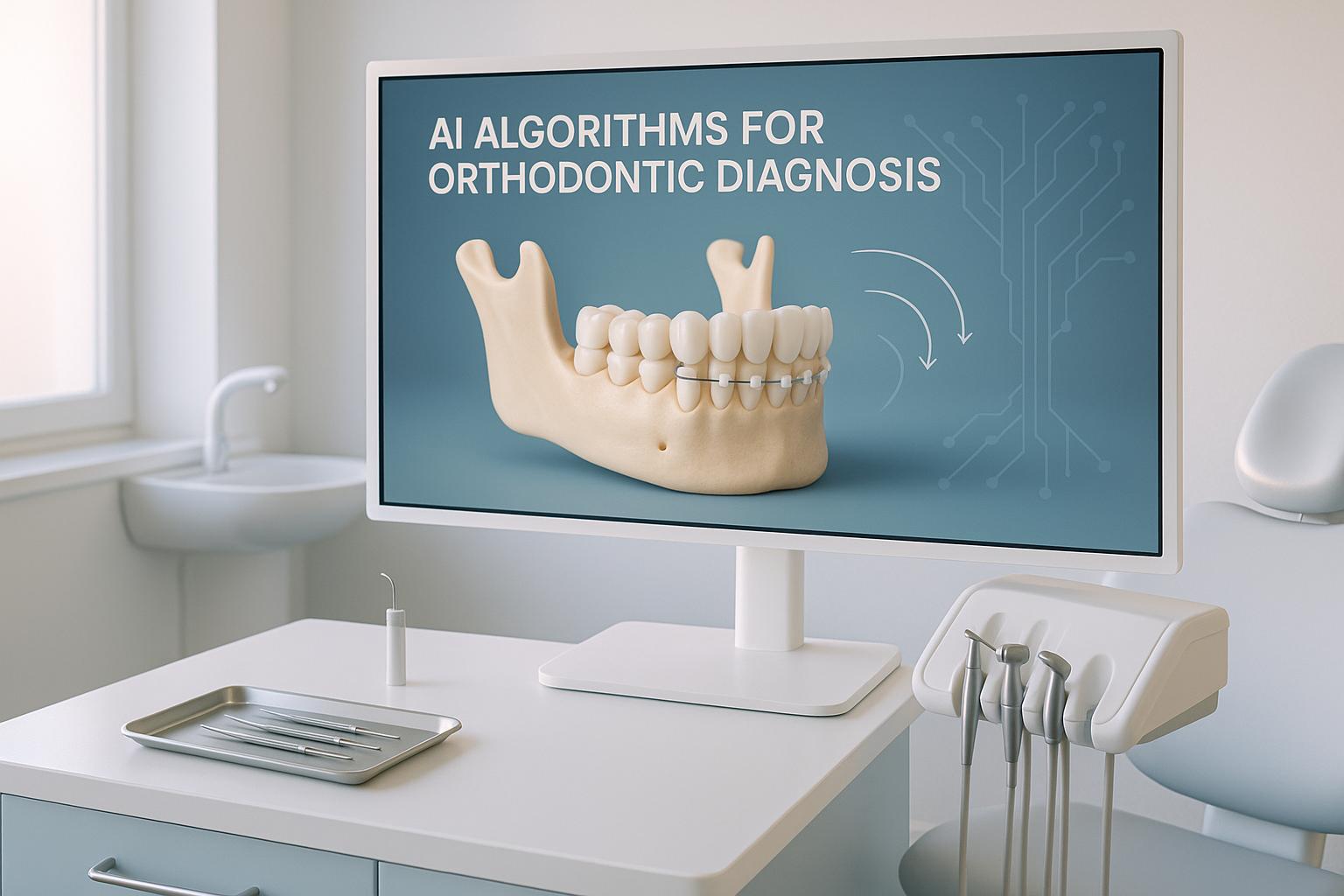
AI is transforming orthodontic diagnosis in Australia by improving accuracy and efficiency in analysing dental issues like misalignments and growth patterns. Tools like convolutional neural networks (CNNs) process X-rays and 3D scans faster and more precisely than manual methods, reducing errors and saving time. These systems also predict treatment timelines and monitor progress in real time, making orthodontic care more precise and personalised.
Key highlights:
- Accuracy: AI achieves over 90% precision in detecting dental issues, outperforming manual assessments.
- Efficiency: Automated analysis cuts processing time by up to 95%.
- Predictive Power: AI forecasts treatment outcomes and risks, such as root resorption, with up to 96% reliability.
- Remote Monitoring: AI-powered teledentistry expands access for regional patients.
While AI enhances care, challenges like data privacy, algorithm biases, and regulatory concerns remain. Australian clinics, such as Complete Smiles Bella Vista, are adopting AI responsibly, ensuring orthodontists retain oversight to deliver safe, effective treatments.
AI in Orthodontics: From Research to Reality Ep. 66
AI Algorithms and Technologies in Orthodontics
The use of AI in orthodontics is built on sophisticated algorithms designed to handle dental data with precision. These technologies analyse imaging, predict treatment outcomes, and assist in clinical decision-making. Let’s break down the key AI models driving these advancements.
Convolutional Neural Networks (CNNs)
CNNs are at the heart of AI-powered orthodontic diagnostics, tackling variability in diagnosis through automated image analysis. They excel in tasks like cephalometric landmark detection, tooth segmentation, and assessing skeletal maturity or airway obstruction. By identifying patterns in radiographs, CBCT scans, and intraoral photos, CNNs have proven to be highly effective. For example, in lateral cephalogram analysis, CNNs have achieved mean errors of just 1.17–1.36 mm and a detection success rate of 97.30% within a 2 mm margin. When applied to 3D imaging, these networks deliver a mean error of 2.73 mm while significantly cutting down processing time. Advanced versions, such as YOLOv3, further streamline tasks like automated landmark detection, making them faster and more efficient [3].
Deep Learning Models in Orthodontics
Deep learning takes AI applications in orthodontics beyond basic image analysis, enhancing treatment planning and risk assessment. Architectures like GoogLeNet and ResNet are commonly used for evaluating periodontal health, while LSTM networks adapt treatment plans dynamically based on real-time patient data. These models have demonstrated impressive capabilities, such as early detection of root resorption with accuracies exceeding 90%. Additionally, hybrid systems combining feature selection with deep learning have achieved a 96% area under the curve for classifying endodontic resorption risks. Techniques like soft tissue segmentation allow for in-depth evaluations of gingival thickness, periodontal health, and facial aesthetics, enabling orthodontists to craft more comprehensive and tailored treatment plans [1].
Data Integration and Multiple Data Source Approaches
AI systems are advancing beyond isolated image analysis by integrating data from multiple sources, including CBCT, intraoral scanners, 3D facial imaging, and clinical records. This unified approach enhances diagnostic precision and allows for dynamic tracking of treatment progress. Instead of relying on periodic assessments, multimodal techniques enable real-time adjustments. For example, imaging data fusion over time allows for radiation-free monitoring of periodontal health by detecting subtle tissue changes. When combined with patient records, compliance data, and biomechanical responses, these systems support deep reinforcement learning, creating self-optimising treatment strategies. Australian orthodontic clinics adopting these integrated technologies can provide more accurate diagnostics and highly personalised care, setting a benchmark for advanced orthodontic practices [1].
How AI is Used in Orthodontic Diagnosis
AI has moved beyond research labs and is now a practical tool in orthodontic clinics, reshaping how diagnoses and treatment plans are approached. By automating intricate diagnostic tasks, AI equips Australian orthodontists with tools that improve the accuracy and efficiency of patient care. Let’s explore how AI simplifies cephalometric analysis, predicts treatment outcomes, and supports ongoing treatment monitoring.
Automated Cephalometric Analysis
In traditional orthodontics, cephalometric analysis involves manually identifying anatomical landmarks on radiographs – a process that’s not only labor-intensive but also prone to human error and variability between practitioners. AI has revolutionised this process with automated systems. For instance, convolutional neural network (CNN)-based models have been shown to achieve mean errors ranging from 1.038 to 2.73 mm, with success rates between 92.3% and 97.3% within a 2 mm margin. Even more impressively, these systems reduce the time required for analysis by a staggering 95% compared to manual methods [1][3].
Predicting Treatment Duration and Outcomes
AI doesn’t stop at automating diagnostic tasks – it also helps orthodontists predict how long treatments will take and what outcomes can be expected. By analysing extensive datasets of past cases alongside patient-specific anatomical details, AI models can estimate treatment durations and simulate how factors like skeletal growth could affect results. For example, hybrid AI models used for classifying external root resorption have achieved an area under the curve (AUC) of 96%, making them highly effective in identifying teeth at risk of complications early on [1].
Monitoring Progress and Adjusting Treatment Plans
Traditional orthodontic monitoring typically relies on periodic check-ups, which provide only a snapshot of progress. AI, however, allows for continuous and dynamic monitoring by analysing sequential imaging, intraoral scans, and biomechanical feedback. Using deep reinforcement learning, AI systems can detect when tooth movement deviates from expected patterns and suggest adjustments to appliance settings or treatment timelines. This approach accounts for biological variability in ways that conventional methods cannot.
Teledentistry platforms that incorporate AI prediction models, such as those using Long Short-Term Memory (LSTM) networks, enable orthodontists to make real-time adjustments during virtual consultations [1]. If complications arise – like a growth spurt affecting appliance fit – AI systems can flag the issue and prompt consultations with multidisciplinary teams. These teams can then review high-precision scans and make coordinated treatment decisions. This level of adaptability ensures that AI-driven care aligns closely with the needs of Australian orthodontic patients.
For example, clinics like Complete Smiles Bella Vista have embraced AI-powered systems to deliver personalised, precision-driven care. These technologies adapt treatment plans based on each patient’s unique response, setting a high standard for orthodontic care in Australia.
| Traditional Monitoring | AI-Powered Monitoring |
|---|---|
| Periodic assessments | Real-time progress tracking |
| Reactive problem detection | Proactive risk identification |
| Static treatment plans | Dynamic plan adjustments |
| Manual measurement errors | Consistent automated analysis |
| Limited data integration | Multimodal data synthesis |
With AI, orthodontic care shifts from being reactive to proactive. Continuous monitoring ensures clinicians can refine treatment strategies as needed, reducing risks and improving outcomes for patients. This evolution represents a significant step forward for orthodontic practices across Australia.
sbb-itb-2be92ed
Benefits and Challenges of AI in Orthodontics
This section explores the advantages and practical hurdles of implementing AI in orthodontics within Australia, building on real-world examples and data.
Benefits of AI in Orthodontics
One of the standout advantages of AI in orthodontics is its improved diagnostic accuracy and consistency. With deep learning models achieving over 90% accuracy in detecting minor dental changes and more than 94% accuracy in diagnosing gingivitis from intraoral images, AI often surpasses manual clinical assessments [1][3]. This means fewer missed diagnoses and more reliable treatment plans, regardless of the practitioner.
Another major benefit is the significant boost in workflow efficiency. AI dramatically reduces the time needed for processing compared to traditional methods [3]. This efficiency allows orthodontists to focus more on patient care and complex decision-making.
Personalised treatment planning has also reached new levels. By combining imaging and clinical data, AI enables treatment plans that are more predictable and less prone to complications [1][5].
AI’s ability to provide early risk detection is a game-changer. It can spot issues like root resorption and periodontal problems before they become serious, allowing for timely interventions [1]. For example, hybrid AI models for classifying external root resorption have achieved an impressive 96% area under the curve (AUC), making early detection highly reliable [1].
For patients in regional areas, enhanced remote care accessibility is a significant advantage. AI-powered teledentistry platforms make it easier to provide care to those who might otherwise struggle to access orthodontic services [4].
Limitations and Ethical Considerations
Despite its benefits, AI in orthodontics comes with challenges and ethical concerns that need addressing. One of the most pressing issues is algorithmic bias. AI models trained on limited or unrepresentative datasets may perform poorly for certain groups, potentially leading to unequal care [2].
Data privacy and security is another critical concern. Dental records and imaging data are highly sensitive, and Australian practices must comply with strict privacy regulations while ensuring AI systems can access the data they need to function effectively [1][3]. This includes safeguarding detailed facial scans and medical histories against breaches.
The need for clinician oversight remains essential. AI algorithms can sometimes lack transparency, making it difficult to understand their decision-making process – a challenge often referred to as the "black box" issue [2]. Orthodontists must retain the expertise to validate AI-generated recommendations and step in when necessary.
AI’s effectiveness is also tied to the quality and diversity of its training data. Poor or biased datasets can result in subpar performance in real-world scenarios [1][3]. Building datasets that reflect Australia’s diverse population is a time-intensive and resource-heavy task.
Lastly, regulatory and ethical uncertainties continue to evolve. Questions around liability, transparency in AI decision-making, and obtaining patient consent for AI-assisted care remain open topics within the Australian dental community [1][3].
Comparison Table: Benefits vs Challenges
Here’s a side-by-side look at the benefits and challenges of AI in orthodontics:
| Benefits | Challenges |
|---|---|
| Improved diagnostic accuracy (>94% for gingivitis detection) | Algorithmic bias affecting underrepresented groups |
| Faster analysis (95% reduction in processing time) | Data privacy and security concerns with sensitive records |
| Personalised treatment planning through integrated data | Need for clinician oversight to validate AI outputs |
| Early risk detection (96% AUC for root resorption) | Dependence on high-quality datasets for effective training |
| Enhanced remote care for regional patients | Regulatory uncertainties and evolving ethical standards |
| Reduced manual errors and variability | Lack of transparency in AI decision-making processes |
AI is undoubtedly transforming orthodontics, but it’s not about replacing orthodontists. Instead, it serves as a powerful tool to enhance precision, efficiency, and personalised care. Practices like Complete Smiles Bella Vista are already using AI as a decision-support system to complement the expertise of clinicians. The key is thoughtful implementation, ensuring that technology and human expertise work hand in hand for the best patient outcomes.
AI in Australian Orthodontic Practices and Future Directions
AI Adoption in Australian Orthodontics
Orthodontic clinics across Australia are steadily incorporating AI technologies, though the pace of adoption varies widely. These advancements are primarily being applied in areas like automated cephalometric analysis, predictive modelling, and the interpretation of multimodal imaging data, which includes CBCT scans, intraoral images, and 3D facial mapping [1][2].
One standout development is the use of convolutional neural networks for cephalometric landmark detection. This method has proven to be highly precise, significantly reducing the errors and inconsistencies often associated with manual tracing.
AI is also transforming how clinics monitor treatments in real time. By identifying deviations early, AI systems recommend adjustments to treatment plans, helping to address potential complications such as root resorption or periodontal issues before they become serious. This is particularly beneficial for remote monitoring, where AI-powered teledentistry platforms enable orthodontists to analyse patient-submitted images and intraoral scans. For patients in regional and remote areas of Australia, this technology is breaking down geographical barriers and improving access to specialist care [1].
The benefits of AI in orthodontics are clear – diagnostic accuracy exceeding 90%, reduced variability, and faster treatment planning [1][2]. However, challenges remain. Clinics are grappling with issues like inconsistent data formats for AI training, high integration costs with existing systems, and the need for ongoing staff training. Additionally, variability in AI performance across different imaging modalities often requires manual review to ensure accuracy [2]. These challenges highlight the importance of refining AI tools and integrating them thoughtfully into clinical workflows.
Complete Smiles Bella Vista: A Case in Point

A prime example of AI integration in Australian orthodontics is Complete Smiles Bella Vista. Under the leadership of Dr James Hanna, this clinic has embraced advanced AI technologies while adhering to strict regulatory standards. The practice offers services like Invisalign and digital treatment planning, showcasing how AI can enhance orthodontic care.
At the heart of their approach is a commitment to personalised care, reflecting the broader trend of AI adoption in Australian orthodontics. However, navigating this technological shift requires compliance with the guidelines set by AHPRA and the Dental Board of Australia. These regulations ensure that patient safety, data privacy, and transparency about AI’s role in treatment are prioritised. Importantly, AI tools at Complete Smiles are used to support, not replace, clinical judgement, with orthodontists retaining full responsibility for interpreting AI-generated insights [2].
This balance between innovation and regulation lays a strong foundation for the future of AI in orthodontics.
Future Potential of AI in Orthodontics
Looking ahead, AI in Australian orthodontics is poised to address current challenges and unlock even greater possibilities. One promising development is the emergence of adaptive learning systems, which can refine treatment strategies in real time. This shift from static treatment plans to dynamic, responsive care protocols marks a significant step forward [1].
LSTM networks are already enabling real-time adjustments during virtual consultations, ensuring timely interventions [1]. Such advancements are particularly valuable in maintaining high standards of care during remote monitoring sessions.
Future AI applications are also expected to take a more integrated approach, combining orthodontic care with periodontal and general dental treatment planning. This could streamline coordination among dental specialists, resulting in a more comprehensive approach to oral health.
Predictive analytics is another exciting frontier. AI systems under development aim to assess the risk of relapse and recommend customised retention strategies. By focusing on long-term treatment stability, these tools could reduce the likelihood of retreatment and improve patient outcomes.
Additionally, AI-driven preventive care is set to play a major role in early detection of orthodontic issues. Catching problems early could minimise the need for extensive treatments later. Australian universities and dental hospitals, often collaborating with technology companies, are working on AI models tailored to local clinical needs, ensuring these tools are both relevant and effective.
As regulatory frameworks evolve, AI is expected to become central to orthodontic care in Australia. The technology promises to deliver more precise treatment planning, shorter treatment times, and better patient experiences – all while maintaining the high standards that Australian patients have come to expect.
Conclusion
AI is reshaping orthodontic diagnosis in Australia, bringing a new level of precision, efficiency, and improved patient care to the field. These advancements are not just theoretical; they’re backed by compelling data.
For instance, studies reveal that AI models consistently achieve over 90% accuracy in critical diagnostic tasks. A standout example is the use of hybrid AI models – combining feature selection techniques with deep learning – which have reached an impressive AUC of 96% in classifying external root resorption. This capability allows for early intervention, preventing complications before they escalate [1].
But the impact of AI goes far beyond accuracy. Take 3D cephalometric analysis as an example: using convolutional neural networks (CNNs), this process now takes 95% less time compared to manual methods [3]. For patients, this means shorter appointments and quicker treatment starts – a win for both efficiency and experience.
AI also supports real-time treatment monitoring, enabling orthodontists to catch deviations from expected outcomes early. It can recommend timely adjustments and flag risks like root resorption before they become significant clinical issues. With multimodal data integration, AI systems provide a comprehensive view of the patient’s progress, ensuring proactive and precise care throughout the treatment journey.
For clinics like Complete Smiles Bella Vista, AI offers a way to deliver more personalised care while adhering to the guidelines set by AHPRA and the Dental Board of Australia. AI doesn’t replace clinical expertise – it enhances it, ensuring patient safety and maintaining the quality of care.
Key Takeaways
AI is driving substantial improvements in orthodontic diagnosis and treatment planning. Here are some highlights:
- Enhanced diagnostic accuracy: CNN-based models for cephalometric landmark identification achieve mean errors as low as 1.038 ± 0.893 mm, with a 97.30% success rate within a 2 mm tolerance [3].
- Precision in treatment planning: Predictive modelling powered by AI can forecast tooth movements, accurately estimate treatment durations, and identify complications before they arise. This leads to more efficient protocols, reducing both treatment time and the risk of adverse outcomes.
- Improved patient experience: Faster diagnosis, reduced wait times, and clearer communication about treatment plans have boosted patient satisfaction. Remote monitoring and virtual consultations have also expanded access to specialist care, especially for those in regional and remote parts of Australia.
- Comprehensive assessments: AI systems integrate data from CBCT scans, intraoral images, and 3D facial mapping, providing a thorough evaluation that would be challenging and time-consuming to achieve manually [1][2].
Looking ahead, adaptive learning systems and real-time treatment adjustments hold the potential to make orthodontic care even more tailored to individual needs. These advancements promise to elevate patient experiences while maintaining the high standards Australians expect from their healthcare providers.
AI-powered orthodontics is not just about technology; it’s about transforming patient care. By combining precision, efficiency, and a focus on individual needs, AI is setting a new benchmark for orthodontic practice in Australia. This evolution signals a promising future for patient-centred orthodontics, where technology and human expertise work hand in hand to deliver exceptional outcomes.
FAQs
How does AI improve the accuracy and reliability of orthodontic diagnoses compared to traditional methods?
AI brings a new level of precision to orthodontic diagnosis by analysing extensive datasets to uncover patterns and irregularities that might slip past traditional methods. This means orthodontists can make more accurate evaluations of dental alignment, jaw structure, and bite-related concerns.
With the help of advanced algorithms, AI can also forecast treatment outcomes and provide more reliable estimates for how long treatments might take. These advancements allow orthodontists to create tailored treatment plans, improving the overall experience and results for patients.
How are data privacy and algorithmic bias being addressed in AI-based orthodontic care?
AI-powered orthodontics places a strong emphasis on data privacy and addressing algorithmic bias to deliver care that is both ethical and effective. Protecting patient information is a top priority, achieved through measures like robust data encryption, secure storage solutions, and adherence to privacy regulations such as the Australian Privacy Act. These safeguards ensure that sensitive health data is managed with the utmost responsibility.
To minimise algorithmic bias, developers focus on training AI models with diverse datasets that reflect a broad spectrum of patient demographics. This approach helps prevent skewed outcomes, ensuring accurate diagnoses and tailored treatment plans for everyone. Additionally, regular audits and updates of AI systems are essential to uphold fairness and precision in orthodontic care.
How can AI-powered orthodontic tools improve access to care for patients in rural and remote areas of Australia?
AI-driven orthodontic tools are transforming access to dental care for people living in rural and remote parts of Australia. By analysing dental images and patient data, these tools help clinicians make faster and more precise diagnoses, even when face-to-face consultations aren’t an option. This means patients in distant areas can receive personalised treatment plans without needing to travel frequently to city-based clinics.
On top of that, AI is boosting the potential of teleorthodontics. Patients can now consult with specialists remotely, breaking down the barriers of distance and limited local resources. This approach not only makes care more convenient but also ensures that regional patients receive the same high standard of treatment as those in urban areas.
Related Blog Posts
- AI in Dentistry: Predicting Periodontal Disease
- AI in Orthodontics: Risk Assessment Explained
- AI in Orthodontics: Diagnosis and Treatment Planning
- How AI Predicts Orthodontic Treatment Outcomes
Important Notice: Any surgical or invasive procedure carries risks. Before proceeding, you should seek a second opinion from an appropriately qualified health practitioner.
Individual results may vary. The information provided in this article is for educational purposes only and does not constitute medical advice.
Checkout Related Blogs




Get in touch with us
For more information, call us now to start feeling better. Or fill the form below to make appointment
The Latest News from Complete Smiles
How to Clean Clear Plastic Retainers
Checklist for Choosing Wearable Dental Devices
Checklist for Choosing Cloud AI Platforms in Dentistry

Complete Smiles Bella VistaAccepts All Major Health Funds, Including





