





Australian Rules for Dental Waste Disposal
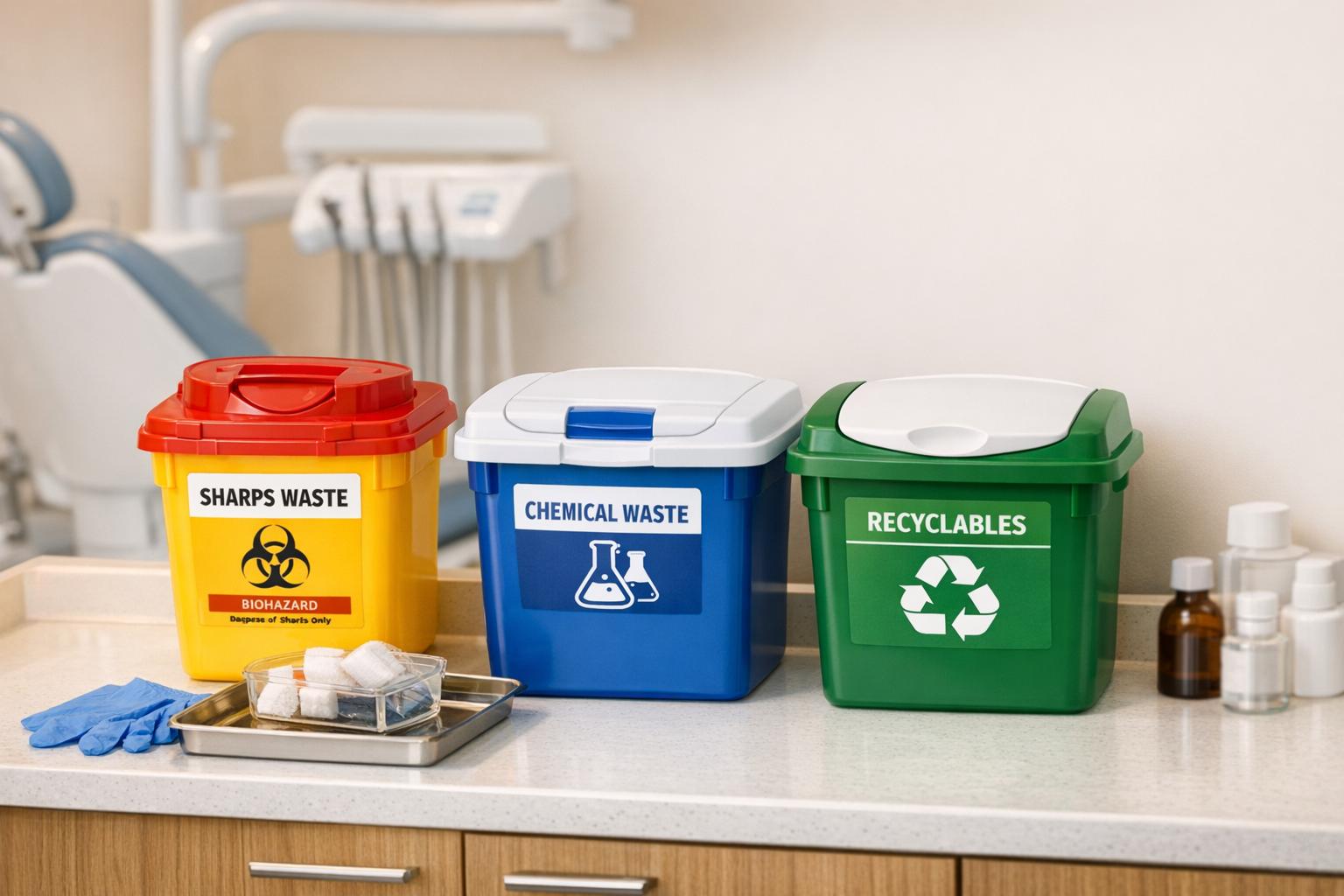
Proper disposal of dental waste in Australia is critical for public health and environmental safety. Dental clinics must follow strict regulations to manage hazardous materials like needles, amalgam, and cytotoxic substances. Here’s a quick overview of the key points:
- Waste Classification: Dental waste is categorised as "reportable priority waste" under Australian law, requiring proper handling and disposal.
- Handling Hazardous Waste: Sharps, amalgam (mercury-containing), and cytotoxic materials have specific disposal requirements to prevent harm.
- Regulations: Compliance with state laws, such as the Environment Protection Act 2017 in Victoria, is mandatory.
- Segregation & Storage: Use colour-coded bins (e.g., yellow for clinical waste) and follow strict storage rules.
- Licensed Providers: Only work with authorised waste collectors to ensure proper treatment, such as incineration or autoclaving.
- Recycling: Clinics are encouraged to recycle materials like amalgam, X-ray film, and dental consumables where possible.
Failing to comply can result in legal penalties, making adherence to these protocols essential for every dental practice.
Types of Dental Waste and How They’re Classified
Dental clinics generate various types of waste, each requiring specific handling and disposal methods. Under Schedule 5, clinical and related industrial waste is classified as reportable priority waste [1]. This classification imposes legal responsibilities on waste generators, transporters, and receivers to ensure proper management.
It’s crucial to separate waste that poses health risks from everyday rubbish. Clinical waste refers to materials produced in clinical settings that could spread disease, cause injury, or be offensive to the community. This often includes microbiological or biological materials that need to be treated before disposal. Related industrial waste, on the other hand, includes items contaminated with chemicals, pharmaceuticals, or cytotoxic substances. These categories form the basis for appropriate waste management practices.
Clinical and Biomedical Waste
In dental clinics, clinical waste includes items like used gauze, cotton rolls, extracted teeth, and gloves that have come into contact with patients. Because these materials may carry blood, tissues, or bodily fluids, they must be handled with care to prevent the spread of infections. The Environment Protection Act 2017 mandates that waste generators ensure such materials are sent to properly authorised treatment facilities [1].
Sharps and Hazardous Waste
Sharps, such as needles, scalpels, and dental burs, are a unique category of waste due to their potential to cause needle-stick injuries and spread infections. These items should always be disposed of in puncture-resistant containers to minimise risks. Hazardous waste, which requires strict controls, includes cytotoxic substances that can harm body cells even in tiny amounts. Dental amalgam, which contains mercury, also falls into this category because of its toxicity. Many dental practices in Australia have shifted to mercury-free composite fillings to eliminate this hazardous waste stream entirely [2].
General and Recyclable Waste
Not all waste from dental clinics needs specialised handling. General waste includes items like uncontaminated paper, packaging materials, and plastics that haven’t been exposed to harmful substances. These can often be disposed of through regular municipal waste systems or recycled when possible. By separating non-hazardous materials from clinical or hazardous waste, clinics can reduce costs and minimise environmental impact. Effective segregation also helps conserve resources and promotes eco-friendly practices.
Australian Regulations for Dental Waste Disposal
In Australia, dental waste management is tightly regulated to ensure safety and compliance with legal standards. Both national and state-specific laws govern how dental practices handle waste, with the Australian Dental Association (ADA) offering additional guidance. While the ADA sets overarching recommendations, individual states enforce their own environmental protection laws to manage day-to-day operations. Below, we’ll explore the key state-specific regulations and ADA guidelines shaping dental waste disposal.
Environment Protection and Waste Management Policies
In Victoria, dental waste management is governed by the Environment Protection Act 2017 and the Environment Protection Regulations 2021. These laws classify clinical and industrial waste as reportable priority waste, placing legal obligations on dental practices to ensure proper handling. A cornerstone of these regulations is the General Environmental Duty, which requires practices to minimise risks to human health and the environment, particularly when managing waste materials [1][5].
The EPA Victoria emphasises:
"It is the responsibility of the waste generator to ensure that all waste types are only sent to treatment facilities that have a permission for those specific waste types." [1]
Other states have similar frameworks. For instance, New South Wales follows the Protection of the Environment Operations (Waste) Regulation [3][4], while South Australia operates under the Environment Protection (Waste to Resources) Policy 2010. Across all states, clinical waste must be treated – typically through incineration or autoclaving – before disposal [1]. In Victoria, dental practices storing up to 40m³ of biomedical waste on-site are required to hold an A21 – Temporary storage – biomedical waste registration [1][5].
ADA Guidelines for Dental Waste
Complementing state laws, the ADA provides detailed guidelines to help dental clinics maintain high standards of infection control and waste management. ADA Policy Statement 6.1 – Infection Control outlines best practices for handling clinical waste and sharps, aiming to minimise the spread of blood-borne diseases and other infections [6]. For managing amalgam waste, which contains mercury, Policy Statement 6.18 – Safety of Dental Amalgam offers a clear framework [6]. This is particularly important as many dental practices have transitioned to mercury-free alternatives, such as white composite fillings [2].
The ADA also promotes environmental responsibility through Policy Statement 6.21 – Dentistry and Environmental Sustainability, encouraging clinics to adopt eco-conscious practices [6]. This includes reducing reliance on materials that pose environmental risks and considering greener alternatives wherever possible. Together, these guidelines ensure that dental clinics not only comply with legal standards but also contribute to broader environmental efforts.
How to Segregate, Store, and Dispose of Dental Waste
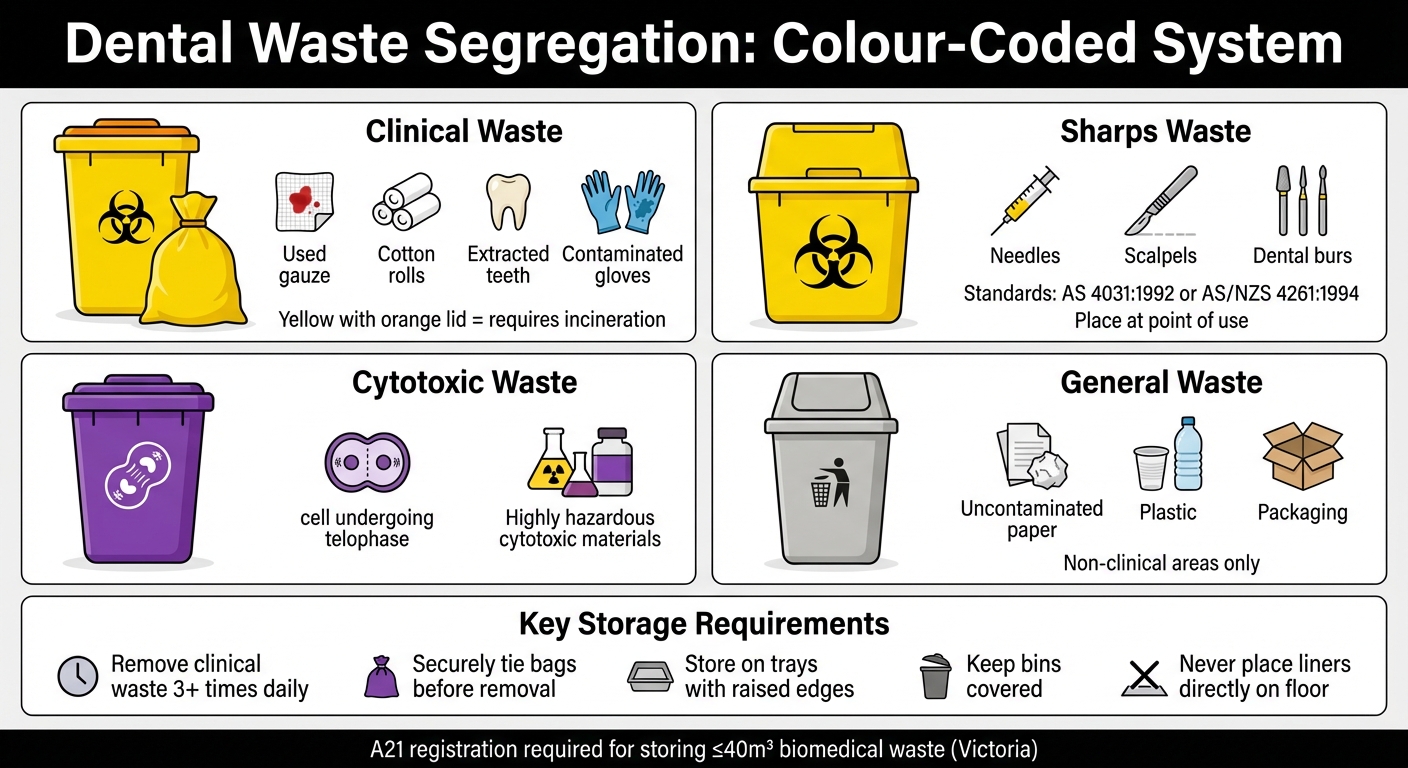
Australian Dental Waste Disposal: Colour-Coded Segregation Guide
Handling dental waste starts right from the moment it is generated. To minimise risks and meet legal requirements, dental practices must separate waste into the correct categories immediately. Proper segregation not only prevents cross-contamination but also ensures that each type of waste is sent to the appropriate treatment facility [1]. Below are detailed steps to manage segregation, storage, and timely disposal effectively while staying compliant with safety protocols.
Segregation Using Colour-Coded Bins
In Australia, regulations mandate the use of colour-coded containers for different types of waste. Here’s how it works:
- Clinical waste: Use yellow bags or bins marked with the black biological hazard symbol on at least two sides. For waste that requires incineration, such as human tissue or pharmaceuticals, use yellow containers with orange lids to differentiate it from waste that can be autoclaved [7].
- Sharps: Dispose of sharps in yellow, puncture-resistant containers that meet Australian Standards AS 4031:1992 or AS/NZS 4261:1994. To reduce the risk of injuries, place these containers at the point of use for immediate disposal [8][9].
- Cytotoxic waste: This highly hazardous waste must go into purple, puncture-resistant, and leak-proof containers clearly marked with the white "cell undergoing telophase" symbol [7].
- General waste: Uncontaminated items like paper and plastic from non-clinical areas can be discarded through standard household waste channels [8].
Storage and Waste Removal Schedules
Once waste is properly segregated, maintaining strict storage and removal routines is essential to avoid contamination and hazards. Clinical waste should be removed at least three times daily, or more frequently if volumes exceed safe thresholds [9].
- Securely tie all waste bags before removing them from treatment areas. Store waste containers on trays with raised edges to contain any spills, and always keep bins covered to prevent water ingress or pest issues [7].
- Avoid placing clinical or industrial waste in plastic liners directly on the floor, as this increases the risk of leaks and contamination [7].
For practices storing biomedical waste on-site, Victorian regulations require an A21 registration if the volume stored is 40m³ or less [1]. Smaller quantities can be kept in standard 120-litre or 240-litre wheelie bins [7]. Before waste collection, verify that your service provider holds the necessary permissions for each type of waste being disposed of [1].
sbb-itb-2be92ed
Recycling and Eco-Friendly Practices in Dental Clinics
Beyond adhering to strict disposal guidelines, dental clinics can make a big difference by embracing recycling and environmentally conscious practices. These efforts not only protect the planet but also help clinics stay compliant with regulations. By focusing on procurement and waste management, dental practices can reduce their environmental impact. Here’s a closer look at key recycling systems that help manage hazardous materials and recover valuable resources.
Amalgam Separators and Mercury Recycling
Managing amalgam waste properly is a cornerstone of eco-friendly dental practices. Amalgam separators play a crucial role in capturing amalgam particles before they enter wastewater systems. Without these devices, mercury from dental amalgam can pollute waterways and eventually make its way into the food chain. To prevent this, all amalgam waste – whether from removed fillings, leftover material, or capsule remnants – must be sent to approved recycling facilities rather than mixed with general waste.
Australia’s commitment to the Minamata Convention on Mercury, which came into effect in August 2017, highlights the importance of phasing down amalgam use and ensuring proper waste capture systems are in place. Additionally, valuable metals from extracted crowns and bridges should be collected and sent to metal refineries for recovery. Lead foil from X-ray films also needs to be disposed of through specialised lead recycling services to avoid environmental harm [10][11].
Recycling General and Electronic Waste
Dental clinics generate a variety of waste materials that can often be recycled with the right systems in place. For example, old X-ray films can be processed for silver reclamation, but it’s essential to de-identify them first to protect patient privacy [10].
Recycling dental consumables can be tricky, as many aren’t accepted in standard curbside collections. However, programs like TerraCycle and Oral-B’s "Recycle On Us" offer solutions by accepting items such as toothpaste tubes, toothbrushes, and their packaging – materials that would otherwise end up in landfill. For more specialised items like PPE and autoclave materials, dedicated recycling programs are the best way to minimise their environmental impact [10].
Penalties for Non-Compliance and Choosing Licensed Waste Collectors
Compliance Penalties and Fines
Dental practices that fail to follow proper waste disposal regulations face serious consequences, including hefty fines and legal penalties. Clinical and dental waste, classified as reportable priority waste, must be handled, transported, stored, and treated – through incineration or autoclaving – exclusively at approved facilities. Exceeding storage limits without the necessary registration is a direct violation of the law [1].
Under the General Environmental Duty (GED), dental clinics are obligated to minimise risks to both human health and the environment caused by their waste. As the waste producer, your clinic must ensure that all waste is sent only to treatment facilities holding the appropriate permissions. Breaching these licence conditions can lead to fines and further legal repercussions [1].
Improper disposal of waste poses serious health hazards, such as needle-stick injuries and the spread of infectious diseases. These penalties highlight the importance of maintaining strict waste management practices.
Licensed Waste Service Providers
To avoid non-compliance, it’s essential to work exclusively with licensed waste service providers. Ensure that your chosen provider has up-to-date EPA permissions for every type of waste your clinic generates, whether it’s clinical, pharmaceutical, or cytotoxic waste [1]. A good starting point is checking official government databases, such as the Protection of the Environment Operations Act 1997 (POEO Act) public register in New South Wales. In Victoria, look for specific permission codes like "A21 – Temporary storage – biomedical waste" [1].
"It is the responsibility of the waste generator to ensure that all waste types are only sent to treatment facilities that have a permission for those specific waste types." – EPA Victoria [1]
Always verify the provider’s EPA licences and permission documents to confirm they meet all conditions for transporting and storing biomedical waste. Additionally, make sure they use treatment facilities authorised to dispose of dental waste through approved methods like incineration or autoclaving. If you’re unsure about a provider’s credentials, reach out directly to your state’s EPA for clarification. Ultimately, the responsibility for ensuring proper waste management lies with your practice, even after the waste has left your premises [1].
Conclusion
Managing dental waste effectively is essential for protecting both public health and the environment. In Australia, clinical and dental waste is classified as reportable priority waste, meaning strict protocols must be followed – from sorting waste on-site to ensuring it’s treated using authorised methods. This isn’t just about compliance; it’s about linking daily practices with broader legal and environmental responsibilities.
As highlighted earlier, clinics must ensure their waste collectors are properly licensed by the EPA and use approved treatment options like incineration or autoclaving, depending on the type of waste. These measures are critical in preventing serious risks, such as needle-stick injuries or the spread of infectious diseases. Even small amounts of cytotoxic waste can pose significant dangers if not handled correctly.
Proper compliance also benefits the environment. By adopting mercury-free composite fillings and implementing rigorous segregation processes, your clinic can minimise hazardous waste while staying within regulatory guidelines.
To stay on the right track, work closely with licensed waste service providers, secure the necessary storage permissions, and follow state-specific regulations. These efforts will not only keep your practice compliant but also contribute to a cleaner, safer environment for everyone.
FAQs
What are the consequences of not disposing of dental waste properly in Australia?
In Australia, mishandling dental (clinical) waste can lead to hefty fines under the Protection of the Environment Operations (Waste) Regulation 2014. Individuals could be penalised up to 200 penalty units, while corporations might face fines reaching 400 penalty units.
These rules exist to ensure dental waste is disposed of responsibly, safeguarding both public health and the environment. By adhering to proper waste management practices, dental clinics not only avoid penalties but also play a crucial role in maintaining a cleaner and safer community.
What steps should Australian dental clinics take to comply with waste disposal regulations?
Dental clinics across Australia are required to adhere to strict regulations when it comes to managing and disposing of waste responsibly. This involves categorising waste into specific types, including general waste, clinical waste (such as materials contaminated with body fluids), and hazardous waste (like amalgam or radiographic chemicals). Each category has its own disposal rules, with designated containers and processes outlined by both state and federal guidelines.
To stay compliant, clinics should take the following steps:
- Use approved amalgam separators and store amalgam waste in airtight containers, as guided by the Australian Dental Association.
- Sort sharps, contaminated items, and hazardous materials into colour-coded, leak-proof containers, ensuring proper collection by licensed waste-management providers.
- Keep detailed records of waste generation, transport, and disposal, and update waste-management plans annually to align with the latest regulations.
By implementing these measures, dental clinics can meet the requirements set by the EPA, state health authorities, and the Dental Board of Australia, while also contributing to a more sustainable environment.
What are some eco-friendly ways dental clinics in Australia can manage waste?
Dental clinics can embrace environmentally conscious waste management by categorising waste into general waste (like paper and plastics), contaminated waste (such as gloves and sharps), and hazardous waste (including amalgam and chemicals). This approach not only aligns with Australian regulations but also helps lessen environmental harm.
Practical steps include recycling materials like extracted crowns and amalgam scrap, switching to biodegradable consumables like compostable paper towels, and using reusable items like metal impression trays when it’s safe to do so. Clinics can further cut down on packaging waste by purchasing in bulk and partnering with suppliers who prioritise sustainability. Ensuring waste is disposed of properly through licensed waste transporters is another crucial measure to meet both state and federal requirements.
By adopting these practices, dental clinics such as Complete Smiles Bella Vista can lower their ecological impact without compromising on care or compliance.
Related Blog Posts
- ISO Standards for Dental Materials
- Reducing Dental Waste: Key Solutions
- Future of Cosmetic Dentistry: Green Materials
- Australian Standards for Dental Tool Disinfection
Important Notice: Any surgical or invasive procedure carries risks. Before proceeding, you should seek a second opinion from an appropriately qualified health practitioner.
Individual results may vary. The information provided in this article is for educational purposes only and does not constitute medical advice.
Checkout Related Blogs




Get in touch with us
For more information, call us now to start feeling better. Or fill the form below to make appointment
The Latest News from Complete Smiles
How to Clean Clear Plastic Retainers
Checklist for Choosing Wearable Dental Devices
Checklist for Choosing Cloud AI Platforms in Dentistry
Complete Smiles Bella VistaAccepts All Major Health Funds, Including





