




How Biomimetic Coatings Improve Osseointegration
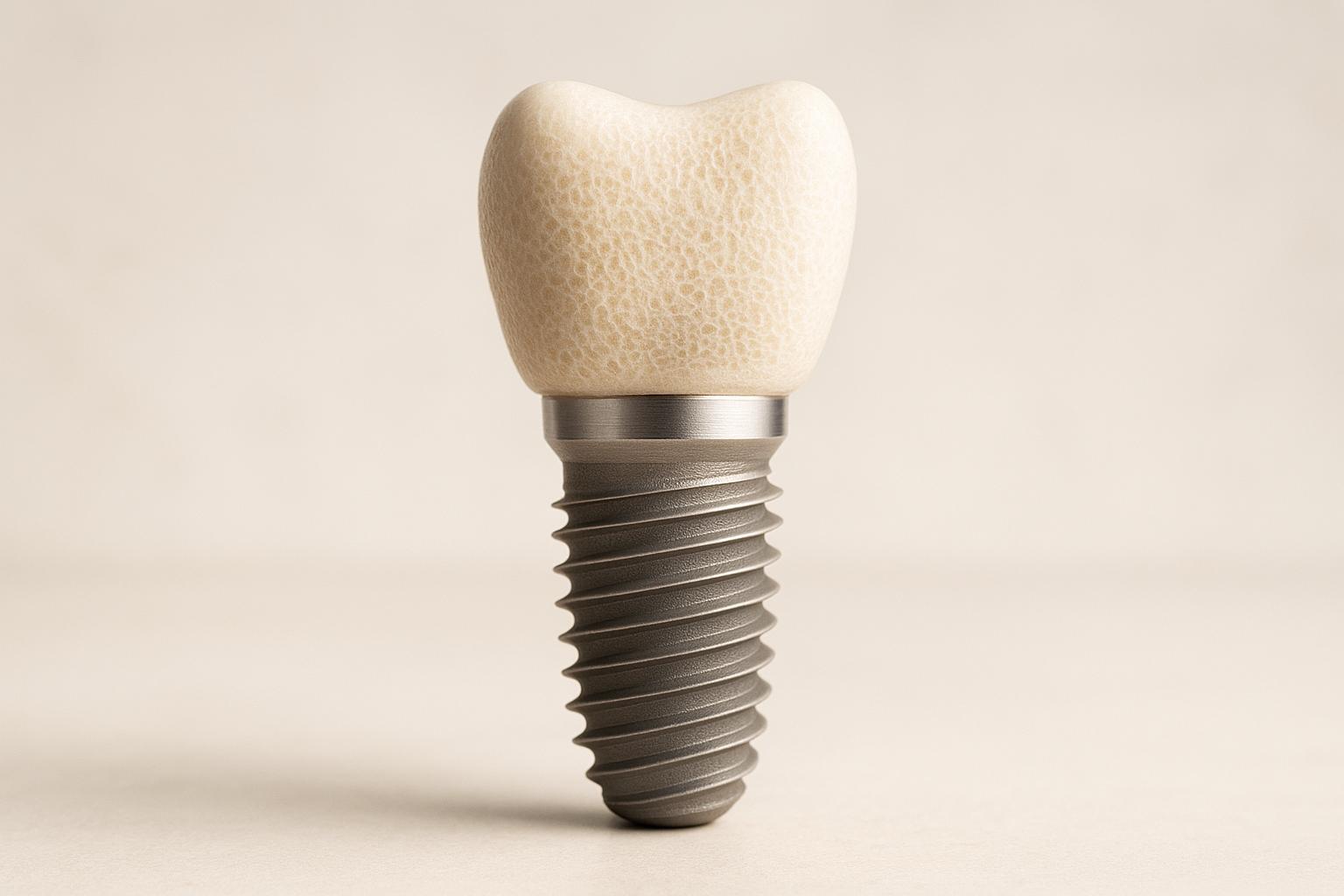
Biomimetic coatings are transforming dental implants by mimicking bone tissue to improve healing and stability. These coatings use materials like hydroxyapatite, calcium phosphate, and collagen to replicate the natural bone environment, promoting better cell attachment, growth, and bone regeneration. This leads to faster integration, enhanced implant strength, and suitability for patients with low bone density.
Key Points:
- What They Are: Surface treatments that imitate bone tissue using materials like calcium phosphate and collagen.
- How They Work: Provide biological signals to encourage bone cell activity and faster healing.
- Benefits: Improved healing, stability, and success rates, even in challenging cases like low bone density.
- Types: Hydroxyapatite coatings for minerals, ECM protein coatings for organic components, and growth factor-embedded coatings for cellular stimulation.
- Challenges: Issues like coating durability, cost, and controlled release of growth factors remain.
Biomimetic coatings are advancing dental implant technology, offering better outcomes for patients and clinicians. However, challenges like mechanical durability and cost need ongoing attention.
Types of Biomimetic Coatings for Osseointegration
Modern dental implants use three primary types of biomimetic coatings, each designed to mimic specific aspects of natural bone tissue. These coatings employ unique mechanisms to assist the body’s natural healing and integration processes.
Hydroxyapatite and Calcium Phosphate Coatings
Hydroxyapatite (HA) and calcium phosphate (CaP) coatings replicate the mineral composition of bone tissue. These coatings consist of calcium and phosphate ions that form crystals similar to those found in natural bone[2][3]. By using simulated body fluid (SBF) mineralisation at room temperature, calcium phosphate layers are deposited to improve surface roughness and oxide formation. Research shows that implants treated with these mineralisation methods achieve higher bone-to-implant contact compared to those with only mechanical surface treatments[2].
HA coatings are particularly effective in promoting osseointegration by enhancing cell proliferation and stimulating growth factor expression[3]. However, challenges remain, including limitations in tensile strength and fracture toughness due to variations in chemical composition and ion doping[2]. While HA focuses on mimicking the inorganic aspects of bone, extracellular matrix protein coatings target the organic components of bone regeneration.
Extracellular Matrix Protein Coatings
Extracellular matrix (ECM) protein coatings mimic the natural protein environment surrounding bone tissue. Collagen type I (COL1), the primary structural protein in bone, is the most commonly used in these coatings[3]. These proteins interact with integrin receptors on bone mesenchymal stem cells (BMSCs), activating pathways like FAK/PI3K/MAPK to encourage cell proliferation and matrix mineralisation.
ECM coatings, particularly those based on collagen type I, enhance cell attachment and osteogenic differentiation through integrin signalling. Confocal microscopy has confirmed the presence of pro-osteogenic proteins on biomimetically coated titanium surfaces, demonstrating improved proliferation and differentiation of human mesenchymal stem cells (HMSCs) compared to uncoated, roughened implants[1]. The ECM’s ability to continually remodel and regulate tissue homeostasis makes it a promising candidate for implant surface modification[3].
Growth Factor-Embedded Coatings
Growth factor-embedded coatings deliver bioactive signals to stimulate bone formation further. These coatings typically incorporate growth factors like transforming growth factor-beta (TGF-β), bone morphogenetic proteins (BMPs), platelet-derived growth factor (PDGF), and fibroblast growth factor (FGF)[2][4]. These bioactive molecules promote cell differentiation and new bone formation by providing targeted biological signals at the implant surface.
One challenge with these coatings is achieving a controlled, sustained release of growth factors to ensure long-term therapeutic effects. To address this, advanced coating methods are being developed to provide continuous delivery during the healing process[2]. Additionally, emerging nanocomposite coatings, which combine materials like graphene oxide and hydroxyapatite, have shown improved cell adhesion and osteogenic differentiation. Studies using rat femur models have demonstrated that these nanocomposites significantly enhance peri-implant bone formation compared to single-material coatings[6].
For biomimetic coatings to be effective, they must promote proper cell differentiation, support new bone growth, and be synthesised without the need for allograft extraction – minimising the risk of disease transmission. These coatings should also be resorbable in response to osteogenic activity, avoid triggering immune responses, maintain chemical stability until implantation, and offer a cost-effective solution[4]. Addressing challenges like implant loss due to coating delamination and ensuring long-term stability remain key areas of focus in this field.
How Biomimetic Coatings Improve Osseointegration
Biomimetic coatings play a key role in improving osseointegration by mimicking the natural biological processes that occur during bone healing. When a titanium implant is placed, a series of cellular and molecular events begin at the interface between the implant and the surrounding tissue. These specialised coatings create an environment that supports bone cell attachment, growth, and the formation of strong bonds with the implant surface.
Promoting Cell Attachment and Growth
The foundation of successful osseointegration lies in the ability of bone cells to attach firmly to the implant surface. Biomimetic coatings facilitate this process through a combination of mechanisms designed to enhance bone cell activity.
For instance, coating titanium surfaces with extracellular matrix proteins like collagen type I enables direct interaction with integrin receptors on bone mesenchymal stem cells (BMSCs). This connection triggers cellular pathways that encourage cell proliferation and matrix mineralisation. Studies have shown that human mesenchymal stem cells cultured on biomimetically coated surfaces exhibit significantly higher proliferation rates compared to uncoated surfaces[1].
Another critical factor is surface roughness, which biomimetic coatings enhance. By increasing the implant’s surface area, these coatings provide more points for cells to anchor, spread, and grow. Research confirms that this textured surface directly correlates with improved cell proliferation and growth rates[4].
Confocal microscopy has revealed that biomimetically coated surfaces contain pro-osteogenic proteins, creating a microenvironment that supports osteogenic cell activity. This means cells not only attach more effectively but also differentiate into bone-forming osteoblasts more efficiently. Studies have reported significant increases in osteogenic gene expression when cells are cultured on biomimetically coated surfaces compared to uncoated ones[1].
These cellular advancements pave the way for effective protein adsorption on the implant surface.
Facilitating Protein Adsorption
Protein adsorption is a vital step in osseointegration, bridging the gap between implant placement and bone cell attachment. The proteins that adhere to the implant surface form a biological layer that determines whether bone cells can successfully attach and initiate the healing process.
Coatings made of hydroxyapatite and calcium phosphate are particularly effective at supporting protein adsorption because they closely resemble the mineral structure of natural bone[3]. This similarity encourages proteins to bind naturally to the implant surface. Additionally, the chemical properties of calcium phosphate coatings can be fine-tuned through ion doping to optimise protein binding[3].
The increased surface roughness provided by these coatings further enhances protein adsorption, offering more surface area for molecular interactions[4]. This improved protein layer not only accelerates bone cell adhesion but also lays the groundwork for faster and more effective osseointegration.
By improving the biocompatibility of implant surfaces, biomimetic coatings ensure a higher quality and quantity of protein adsorption. This, in turn, speeds up the integration process, benefiting both the healing timeline and clinical outcomes[4].
Accelerating Bone Regeneration
Beyond improving cell adhesion and protein interactions, biomimetic coatings actively accelerate bone regeneration. By promoting osteogenic activity, these coatings reduce healing times and enhance implant stability through multiple biological pathways that encourage new bone formation.
Surface modifications incorporating biomimetic elements stimulate increased production of growth factors, leading to faster osseointegration and shorter recovery periods[4]. Research has consistently found higher bone-implant contact (BIC) rates for implants with advanced surface treatments compared to those with mechanical modifications alone[2].
Nanocomposite coatings represent a major leap forward in this area. For example, graphene oxide-hydroxyapatite (GO-HA) nanocomposite coatings have been shown to significantly enhance new bone formation in studies involving rat femurs[6]. These coatings improve BMSC proliferation, support osteogenic differentiation, and boost the expression of osteogenesis-related genes[6].
Additionally, nanocomposite coatings increase alkaline phosphatase (ALP) activity, a key marker of osteogenic differentiation. This indicates that cells are actively producing the necessary proteins and minerals for bone formation. The superior corrosion resistance of GO-HA coatings compared to uncoated titanium or HA-only coatings further ensures long-term implant stability[6].
Collagen type I-coated implants have also proven effective in promoting osseointegration, even in challenging conditions like osteopenic bone models. This makes them particularly beneficial for patients with compromised bone density, where traditional implants might face higher risks of failure[3].
The dynamic properties of extracellular matrix (ECM)-based coatings make them especially effective at accelerating bone regeneration. The ECM continuously remodels and regulates tissue homeostasis, providing ongoing biological signals that support the healing process[3]. This interaction between the coating and surrounding tissue creates an environment where bone regeneration occurs more efficiently than with uncoated implants, leading to faster healing and improved implant stability.
Benefits and Limitations of Biomimetic Coatings
Biomimetic coatings play a critical role in improving osseointegration, offering a blend of advantages and challenges. Understanding these factors allows both patients and clinicians to make well-informed decisions when considering implant treatments.
Benefits of Biomimetic Coatings
Biomimetic coatings are designed to speed up the healing process and improve implant success rates. By incorporating biomimetic elements, these surface modifications promote faster osseointegration, which means patients can resume normal activities like eating and speaking much sooner[4].
Another major benefit is improved biocompatibility. These coatings enhance protein adsorption and cell adhesion on implant surfaces, leading to better integration with surrounding tissues. Compared to mechanically treated surfaces, biomimetic coatings result in stronger and more stable implants by increasing bone-implant contact[2]. Their roughened surfaces also encourage greater cell proliferation and growth[4].
They are particularly useful in special cases, such as patients with osteopenic conditions, where bone density is compromised[3].
Advanced nanocomposite coatings, like graphene oxide–hydroxyapatite (GO-HA) combinations, stand out for their superior corrosion resistance and ability to enhance osteogenic differentiation. For example, studies on rat femurs have shown that GO-HA coatings with 2% graphene oxide significantly increase new bone formation compared to standard titanium or hydroxyapatite-only coatings[6].
Additionally, these coatings stimulate biological activity. By boosting cell proliferation and activating growth factors, they expedite bone formation. Research has demonstrated that biomimetically coated titanium surfaces can increase proliferation rates and osteogenic gene expression in human mesenchymal stem cells, promoting better integration and long-term success[1].
However, these benefits come with certain challenges that need to be carefully considered.
Challenges and Limitations
Despite their promise, biomimetic coatings face several hurdles that limit their widespread use.
One of the main issues is mechanical durability. Traditional bioactive coatings often have low tensile strength (less than 51 MPa) and fracture toughness (0.28 to 1.41 MPa·m¹/²), making them prone to delamination and failure under the stresses of daily use[2]. Manufacturing complexity is another challenge. Variations in the fabrication of calcium phosphate coatings – due to differences in chemical composition, structure, and ion doping – can affect the consistency and quality of implants, requiring rigorous quality control measures[3].
Growth factor–based coatings also face difficulties with controlled release. These coatings often deliver growth factors too quickly, reducing their long-term therapeutic effectiveness[2].
In laboratory settings, some bioactive-modified surfaces have shown reduced adhesion, viability, and proliferation of fibroblast cells compared to unmodified biomaterials[2]. Moreover, in vitro studies don’t perfectly replicate the complexities of the human body, making it harder to predict clinical outcomes with complete accuracy[6].
Cost is another practical concern. The advanced manufacturing processes required for biomimetic coatings can lead to higher costs compared to standard implants. For Australian patients, this means a greater upfront expense. Clinics like Complete Smiles Bella Vista can help patients weigh the costs against the potential benefits based on their specific needs.
Comparison Table: Benefits vs Limitations
| Aspect | Benefits | Limitations |
|---|---|---|
| Healing Time | Faster osseointegration and shorter recovery periods[4] | Higher initial costs |
| Biocompatibility | Improved protein adsorption and cell adhesion for better integration[2] | Potential reduction in fibroblast activity in lab studies[2] |
| Bone Contact | Increased bone-implant contact compared to mechanical treatments[2] | Low tensile strength and fracture toughness may lead to delamination[2] |
| Cell Activity | Rough surfaces encourage higher cell proliferation and growth[4] | Manufacturing complexity can lead to inconsistent coating quality[3] |
| Special Cases | Effective for patients with compromised bone density[3] | In vitro results may not fully predict real-world outcomes[6] |
| Advanced Coatings | Nanocomposites improve corrosion resistance and bone formation[6] | Growth factor–based coatings may release too quickly for sustained effectiveness[2] |
| Long-term Stability | Supports lasting integration through enhanced gene expression[1] | Standardisation issues can affect reproducibility across manufacturers |
As research progresses and manufacturing technologies advance, the benefits of biomimetic coatings are likely to increase while addressing current limitations. For Australian patients, choosing implants with biomimetic coatings involves a detailed discussion with experienced practitioners. Factors like bone quality, health conditions, and long-term goals should all be considered to ensure the best outcomes.
sbb-itb-2be92ed
Clinical Considerations for Biomimetic Coatings in Australia
When exploring biomimetic-coated dental implants, Australian dental practitioners must take into account patient assessment, compliance with local regulations, and the expertise needed to integrate advanced implant technologies. These factors ensure safe, effective outcomes while building on the biological and material principles discussed earlier.
Patient Suitability and Surgical Factors
Determining patient suitability involves evaluating bone quality, anatomical considerations, and overall health. Successful implant placement depends on having adequate bone height, width, and density at the implant site. Patients with conditions like osteopenia require careful evaluation before proceeding. Interestingly, research shows that biomimetic coatings may expand treatment options for patients with compromised bone conditions.
Precision in three-dimensional implant placement is key to achieving optimal load distribution and improving bone-implant contact. This step becomes even more critical when using biomimetic surfaces, as these coatings enhance bone integration through advanced surface modifications [2].
Systemic health is another crucial factor. Practitioners should assess conditions like diabetes and smoking habits, as both significantly impact healing and osseointegration. While well-controlled diabetes may not exclude a patient from treatment – especially with the enhanced healing offered by biomimetic coatings – active smokers face a higher risk of implant failure. Advising patients to address these risk factors can improve outcomes.
One of the standout benefits of biomimetic coatings is their ability to accelerate osseointegration. This feature shortens healing times and promotes faster bone formation, which is particularly beneficial for patients with compromised bone conditions who might otherwise face longer recovery periods or lower success rates with traditional implants [4].
Regulatory and Safety Standards
Beyond patient and surgical factors, ensuring compliance with strict regulatory standards is essential. In Australia, biomimetic coatings for dental implants must meet the requirements set by the Therapeutic Goods Administration (TGA) and align with international benchmarks like ISO 13485 for medical device quality management.
Hydroxyapatite and calcium phosphate coatings are among the most researched and clinically validated biomimetic surface modifications [3][5]. While traditional bioactive surfaces have shown mechanical limitations, advancements like graphene oxide-hydroxyapatite nanocomposite coatings applied via electrophoretic deposition offer improved corrosion resistance and mechanical durability [6].
Practitioners must verify that all biomimetic-coated implants have TGA approval and documented biocompatibility testing before use. This ensures both patient safety and practitioner accountability. As new coating technologies continue to emerge, staying updated on approval standards and safety guidelines is critical.
Local Expertise and Advanced Practices
The successful implementation of biomimetic coating technologies requires a deep understanding of the biological principles behind various coatings, such as hydroxyapatite, calcium phosphate, extracellular matrix proteins, and growth factor-embedded systems [5][4]. Advanced training helps practitioners translate these biological benefits into reliable clinical outcomes.
Specialised knowledge in assessing and selecting implant surfaces is vital, as the choice of coating has a direct impact on results. Staying informed about new technologies, like nanocomposite coatings with enhanced mechanical properties, is equally important. Accredited professional development ensures practitioners remain up to date with the latest evidence-based materials and techniques.
Leading clinics, such as Complete Smiles Bella Vista, exemplify this approach by combining advanced dental techniques with personalised care. Under the leadership of Dr. James Hanna, they conduct thorough evaluations to determine if biomimetic-coated implants are suitable based on a patient’s bone quality, health status, and long-term treatment goals.
Selecting the right implant involves more than just choosing a coating. Factors like implant design, surgical method, and post-operative care all play a role. Certification in advanced implant techniques and familiarity with peer-reviewed research enables practitioners to make informed decisions grounded in science rather than marketing claims.
While biomimetic-coated implants often come at a higher initial cost due to their advanced manufacturing processes, their long-term benefits – such as lower complication rates and extended longevity – can offset the upfront investment. This makes them a cost-effective option over time, particularly when compared to conventional implants that may require earlier replacement.
Finally, practitioners should set realistic expectations with patients regarding healing timelines. Traditional implants typically take three to six months to achieve osseointegration, but biomimetic-coated implants can often achieve similar results in less time due to accelerated bone growth [4]. This allows patients to return to normal function sooner, enhancing their overall experience.
Conclusion: The Future of Biomimetic Coatings in Dental Implants
Key Takeaways
Biomimetic coatings are transforming how dental implants integrate with bone by promoting better attachment and growth of bone cells. These coatings replicate natural biological processes, helping bone cells adhere, grow, and form durable connections with implant surfaces.
Research has demonstrated that biomimetically coated titanium surfaces significantly boost both the proliferation of human mesenchymal stem cells and the expression of osteogenic genes [1]. For patients, this means quicker healing and more consistent results.
Different coatings provide specific benefits. Hydroxyapatite and calcium phosphate coatings improve bone–implant contact, while collagen type I coatings activate pathways that encourage cell growth and mineralisation – even in patients with reduced bone density [2][3].
In Australia, these advancements lead to shorter recovery periods thanks to improved biocompatibility and faster osseointegration. Biomimetic coatings also tackle key clinical challenges, such as enhancing implant stability, reducing recovery times, and lowering the risk of peri-implantitis [4].
The field is evolving rapidly, moving towards multi-functional coatings that integrate several biological cues. For example, nanocomposite coatings like graphene oxide-hydroxyapatite (with 2 wt% graphene oxide) not only improve bone formation but also offer better corrosion resistance compared to uncoated titanium or standard hydroxyapatite coatings [6].
With these proven benefits, the future holds even more advanced solutions that promise enhanced clinical outcomes.
Future Directions
The next phase of biomimetic coating development is already underway, with researchers exploring natural mineralisation processes to refine coating methods. One promising approach involves depositing calcium phosphate crystals onto titanium surfaces using simulated body fluids at room temperature. This technique yields coatings that are both stable and effective [2].
A major focus for future coatings is the controlled, gradual release of therapeutic agents, addressing the limitations of current growth factor-based systems. By extending the release of growth factors throughout the critical healing period, these coatings could significantly improve long-term outcomes [2].
Nanocomposite technologies, which combine multiple materials, represent a particularly exciting area of research. These advanced coatings have shown exceptional results in both lab and animal studies, suggesting they could become the go-to option for complex clinical cases [6]. Ongoing research continues to refine these technologies and guide their practical application [1].
For Australian dentists, staying updated on these advancements is crucial. The trend is shifting towards coatings that simulate natural bone healing more comprehensively by delivering multiple biological cues [3]. As studies further validate the effectiveness of biomimetic extracellular matrix coatings on titanium implants [1], these innovations are expected to become standard in dental practices.
Looking ahead, these breakthroughs will likely lead to faster recovery times, more predictable outcomes, and expanded treatment options for patients with compromised bone health. As biomimetic coating technologies advance, they promise to make dental implant procedures more accessible and successful for patients across Australia.
FAQs
How can biomimetic coatings help improve osseointegration for patients with low bone density who need dental implants?
Biomimetic coatings improve osseointegration by imitating the body’s natural biological processes, making them especially helpful for individuals with low bone density. These specialised coatings provide a surface that actively encourages bone cell growth around the implant, strengthening the connection between the implant and the surrounding bone.
For those with low bone density, this translates to a more secure and stable integration of the implant, lowering the likelihood of complications and boosting the chances of long-term success. By replicating the body’s own healing processes, biomimetic coatings contribute to better outcomes in dental implant treatments.
What challenges arise in developing biomimetic coatings for dental implants, and how are they being addressed?
Biomimetic coatings for dental implants are designed to improve osseointegration by imitating the body’s natural biological processes. The goal is to create a surface that not only integrates seamlessly with the surrounding bone but also supports effective cell attachment. However, there are some hurdles to overcome, such as ensuring these coatings are both biocompatible and durable, while also finding ways to manufacture them affordably and with consistent quality for practical use.
To tackle these challenges, researchers are turning to advanced materials like bioactive ceramics and nanostructures. These materials are engineered to closely resemble the natural bone environment, enhancing their compatibility and effectiveness. On top of that, advancements in surface engineering and coating technologies are making strides in improving how well these coatings adhere and how stable they remain over time. These developments are paving the way for better, more reliable outcomes for patients who rely on dental implants.
What are the benefits of nanocomposite coatings like graphene oxide-hydroxyapatite compared to traditional biomimetic coatings for osseointegration and implant stability?
Nanocomposite coatings, like graphene oxide-hydroxyapatite, bring a fresh edge to the world of biomimetic coatings, especially when it comes to improving osseointegration and implant stability. These coatings combine two powerhouse materials: hydroxyapatite, known for its close resemblance to natural bone minerals and excellent biocompatibility, and graphene oxide, celebrated for its strength and antibacterial properties. Together, they create a coating that not only encourages faster bone integration but also lowers the risk of infection, ensuring implants remain stable over time.
What sets nanocomposite coatings apart is their ability to mimic natural biological processes more effectively than traditional options. With their unique blend of structural strength and biological compatibility, they’re paving the way for better outcomes in dental and orthopaedic implants. These coatings represent a promising step forward in ensuring both the durability and functionality of modern implants.
Related Blog Posts
- How Hybrid Coatings Improve Osseointegration
- Surface Modifications for Better Osseointegration
- Advances in Polymeric Coatings for Dental Implants
- Titanium Implant Surface Modifications for Osseointegration
Important Notice: Any surgical or invasive procedure carries risks. Before proceeding, you should seek a second opinion from an appropriately qualified health practitioner.
Individual results may vary. The information provided in this article is for educational purposes only and does not constitute medical advice.
Checkout Related Blogs



Get in touch with us
For more information, call us now to start feeling better. Or fill the form below to make appointment
The Latest News from Complete Smiles
How to Clean Clear Plastic Retainers
Checklist for Choosing Wearable Dental Devices
Checklist for Choosing Cloud AI Platforms in Dentistry
Complete Smiles Bella VistaAccepts All Major Health Funds, Including