





Ultimate Guide To Retainer Cleaning
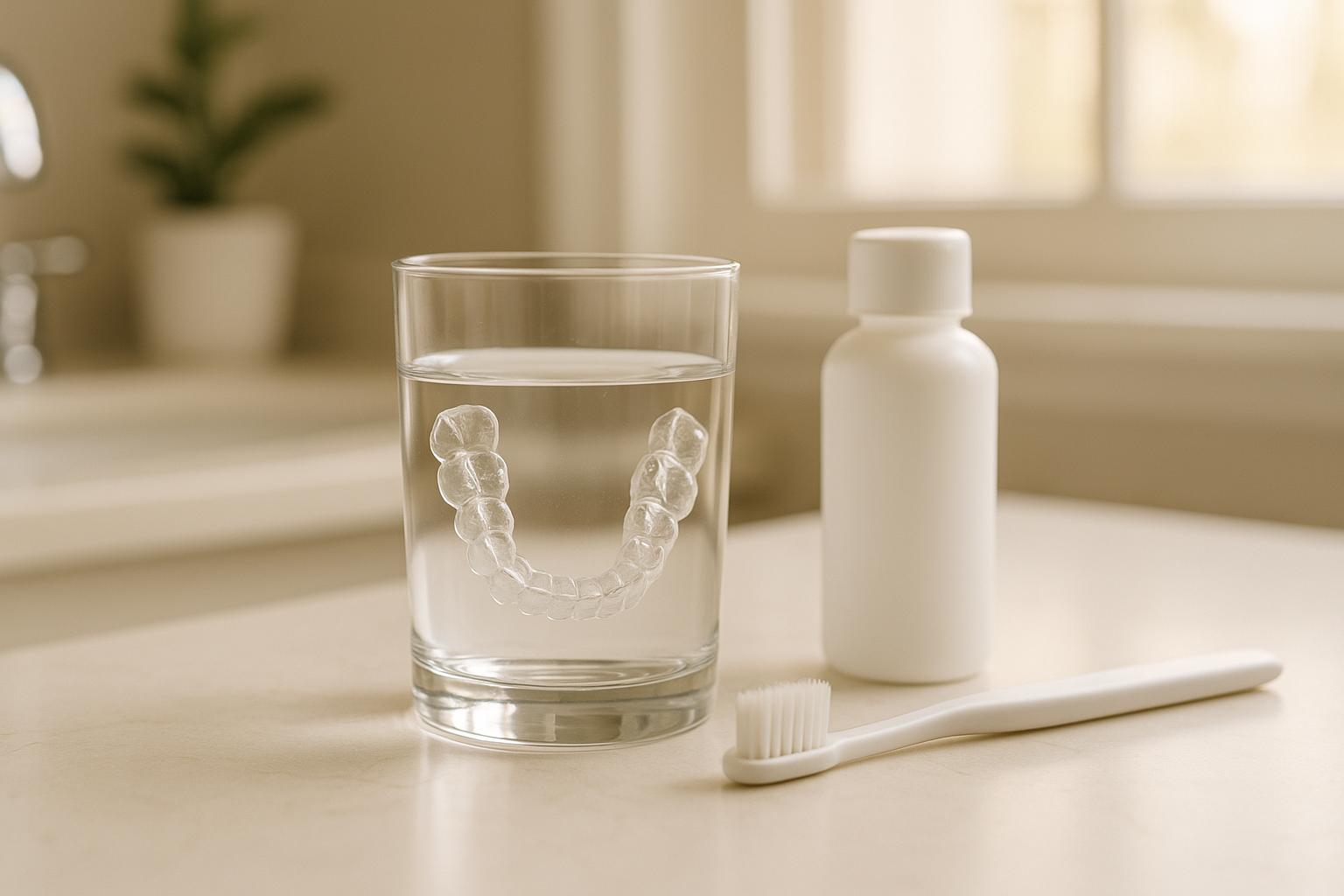
Your retainer needs daily care to stay clean and effective. Without proper cleaning, bacteria, plaque, and germs can build up, leading to bad breath, cavities, or gum issues. Whether you use a removable or fixed retainer, the cleaning process requires specific steps and tools to maintain hygiene and extend its lifespan. Here’s what you need to know:
- Daily Care for Removable Retainers: Rinse with cool water, brush with a soft toothbrush and mild soap, and store in a clean case. Avoid hot water, abrasive cleaners, or toothpaste to prevent damage.
- Deep Cleaning: Use retainer cleaning tablets or mild dish soap weekly to tackle stubborn stains and bacteria. Skip harsh chemicals like bleach or alcohol-based products.
- Fixed Retainers: Clean around the wire daily with floss threaders, interdental brushes, or water flossers. Regular dental check-ups are essential to remove tartar build-up.
- Signs of Poor Cleaning: Watch for bad odours, white patches, or discolouration. Adjust your routine or consult your dentist if issues persist.
How To Clean A Retainer: The Ultimate Guide To Cleaning Your Retainer
Daily Cleaning for Removable Retainers
Keeping your removable retainer clean and in good condition doesn’t have to be time-consuming. With a simple daily routine, you can ensure it stays hygienic and effective, while also extending its lifespan.
Daily Cleaning Steps
After removing your retainer, rinse it immediately with cool or lukewarm water. This step helps wash away food particles and bacteria before they can settle.
At least once a day, gently brush your retainer using a soft-bristled toothbrush that’s specifically reserved for this purpose. This reduces the risk of transferring bacteria from your teeth and avoids cross-contamination [14–15].
For a deeper clean, apply a small amount of mild, unscented dish soap to the toothbrush, and scrub all surfaces thoroughly. Pay extra attention to grooves and crevices where debris tends to hide [14–16]. If your toothbrush can’t reach certain areas, a cotton swab can help clean those tight spots [2].
After cleaning, rinse your retainer with cool water to remove any soap residue. When not in use, store it safely in its case to keep it protected. Following these steps ensures your retainer stays in top condition.
Mistakes to Avoid
Even with the best intentions, certain mistakes can damage your retainer or make cleaning less effective. Here’s what to steer clear of:
- Hot water exposure: Never use hot or boiling water on your retainer. High temperatures can warp the plastic or acrylic, ruining its custom fit [14–15].
- Using regular toothpaste: Toothpaste is too abrasive for retainers and can create tiny scratches where bacteria can thrive [14–16].
- Harsh cleaning products: Disinfectant wipes, mouthwash, bleach, or alcohol-based cleaners can weaken or damage your retainer [14–15].
- Skipping daily cleaning: Neglecting to clean your retainer allows food debris, bacteria, and plaque to build up. This can lead to tartar, bad odours, unsightly films, and even tooth decay [14–16].
Deep Cleaning Methods and Safe Products
A weekly deep clean is essential for tackling those stubborn stains, odours, and bacteria that daily cleaning might miss. To keep your retainer in top condition, it’s crucial to use methods that sanitise effectively without harming its delicate materials. Always stick to the manufacturer’s guidelines and consult your orthodontist if you have any doubts. Combine these deep cleaning practices with your daily routine to maintain long-lasting hygiene.
Safe Deep Cleaning Options
For a thorough clean, retainer cleaning tablets are a reliable option. Simply dissolve a tablet in lukewarm water and soak your retainer as directed by the product’s instructions. These tablets are specifically designed for oral appliances, ensuring a gentle yet effective clean. After soaking, lightly brush your retainer with a soft toothbrush and rinse it thoroughly.
If you don’t have cleaning tablets on hand, a mild dish soap solution, specially formulated for oral appliances, can work as an alternative. Just make sure to rinse well to remove any soap residue.
What Not to Use
Some cleaning methods can cause permanent damage to your retainer, potentially leading to costly replacements. Here’s what to avoid:
- Hot or boiling water: High temperatures can warp plastic retainers, altering their fit. Stick to lukewarm water to avoid damage.
- Harsh chemicals: Products like bleach, alcohol-based mouthwash, or strong detergents can degrade the retainer’s materials, leave harmful residues, and irritate your gums. While denture cleaners might seem similar, they often contain ingredients unsuitable for long-term use with plastic retainers.
- Abrasive cleaners: Toothpastes or scrubbers with abrasive particles can leave tiny scratches on your retainer, creating spaces where bacteria can thrive. Whitening toothpaste, in particular, is too harsh for clear plastic retainers.
Stick to gentle, retainer-specific cleaning solutions, and if you’re ever unsure, consult your orthodontist for advice.
sbb-itb-2be92ed
Cleaning Fixed Retainers
Fixed retainers are incredibly effective but require a diligent cleaning routine because of their permanent placement. Unlike removable retainers, which can be taken out for thorough cleaning, fixed retainers are bonded to your teeth, making them a bit trickier to maintain. If not cleaned properly, food particles and plaque can build up around the wire, potentially leading to decay or gum problems.
"A permanent fixed retainer (or a bonded retainer) is a metal wire that’s glued to the back of your top or bottom teeth (or both). This type of retainer is a little trickier to clean as you can’t take it out to wash it, but rather should be cleaned like a braces wire." – Orthodontics Australia [4]
The secret to keeping a fixed retainer clean lies in daily care and using the right tools. Since you can’t remove it, you’ll need to adopt specific techniques to clean the areas where plaque tends to hide.
Tools for Fixed Retainer Cleaning
To effectively clean a fixed retainer, you’ll need a few specialised tools:
- Interdental brushes: These small, cone-shaped brushes are designed to reach the spaces around and beneath the retainer wire. They’re perfect for cleaning areas that a regular toothbrush can’t access. Make sure to choose a size that fits comfortably between your teeth to avoid irritating your gums or damaging the wire.
- Floss threaders: These handy tools make it easier to thread dental floss under the retainer wire. Once threaded, use the floss to clean between your teeth and gently below the gumline. A 15-centimetre piece of floss is usually enough for each session.
- Regular toothbrush: Your everyday toothbrush is still a key player in your routine. Brush around the retainer wire, using vertical and horizontal motions to clean above and below the wire effectively.
- Water flossers: These devices use a stream of water to remove debris from hard-to-reach places, including around the fixed wire and below the gumline. They’re a great addition to your routine but should be used alongside, not in place of, other tools.
"For permanent retainers, floss and brush in between the wire and teeth every day." – American Association of Orthodontists (AAO) [3]
By combining these tools, you can keep your fixed retainer clean and your teeth healthy.
Regular Dental Check-Ups
Even with a diligent cleaning routine, regular dental visits are essential. Your dentist or hygienist can tackle areas that are hard to clean at home and remove any tartar that has built up around the retainer. They’ll also check the bonding material to ensure the retainer is still securely in place.
Most dentists recommend professional cleanings every six months. These visits not only remove hardened tartar but also help spot potential issues early, such as damage to the wire or bonding. Catching problems early can save you from more extensive repairs down the line.
In between visits, pay attention to any changes. If you notice bad breath, bleeding gums near the retainer, or if the wire feels loose, reach out to your orthodontist. These could be signs that your cleaning routine needs adjustment or that professional care is required.
Problems and Getting Help
Even with consistent cleaning, issues with retainers can still arise. Spotting the warning signs early and seeking advice promptly can help stop minor concerns from turning into major problems.
Signs of Poor Cleaning
Your retainer often shows clear signs when it hasn’t been cleaned properly. Watch out for plaque buildup, food residue, or a yellowish discolouration. You might also notice a cloudy surface, white spots from mineral deposits, or a sticky texture. Tackling these problems early is key, and proper storage and careful handling of your retainer play a big role in maintaining its condition.
Storage and Handling Tips
To keep your retainer in good shape, always store it in a clean, dedicated case. This protects it from damage, contamination, and drying out, which can make clear plastic retainers brittle. Avoid wrapping it in napkins or tissues, as these can easily be mistaken for rubbish and lead to accidental loss. Keep your retainer away from extreme heat – like hot cars, boiling water, or direct sunlight – as heat can cause the plastic to warp.
When handling your retainer, use both hands to insert or remove it gently, and never force it into place. Don’t forget about the case itself – clean it regularly, either with mild dish soap or by placing it on the top rack of an empty dishwasher once or twice a week. A dirty case can harbour bacteria. If you’re travelling, use a durable, ventilated case and pack it in your carry-on bag. It’s also a smart idea to bring a backup case and extra cleaning supplies just in case [1][4][5][6][7].
When to See Your Dentist
If adjusting your cleaning routine doesn’t solve the problem, it’s time to seek professional help. Contact your dentist if your retainer is cracked, warped, or causing discomfort, or if hygiene issues persist. Persistent soreness, gum irritation, or noticeable changes like gaps between teeth or shifts in your bite are also signs to consult a professional. Your dentist may recommend a more thorough cleaning routine or even a replacement retainer if needed [8][9][10][11].
For those seeking local support, Complete Smiles Bella Vista (https://completesmilesbv.com.au) offers a full range of orthodontic care, including advice on retainer maintenance and replacements when necessary.
Conclusion
Keeping your retainer clean requires a bit of daily effort, but the results are worth it. Start with a simple routine: clean your retainer each day using a mild cleanser and lukewarm water. This helps maintain basic hygiene. Then, once a week, take it a step further with a deep clean using products like denture tablets or specialised retainer cleaning solutions. These extra steps tackle any build-up that daily cleaning might miss.
Whether you use a removable or fixed retainer, the key principles stay the same: consistent cleaning, careful handling, and proper storage. For fixed retainers, tools like floss threaders and interdental brushes are especially helpful for cleaning those hard-to-reach spots around the wire.
Don’t forget to pair your at-home care with regular dental check-ups. Dentists can remove stubborn deposits, check for any wear or fit issues, and catch potential problems early [34-36]. By combining professional oversight with your home care routine, you’ll ensure your retainer stays in great shape and continues to protect your orthodontic results for the long haul.
FAQs
What happens if I don’t clean my retainer properly, and how can I prevent issues?
Failing to properly clean your retainer can cause bacteria, plaque, and fungi to accumulate. This buildup may lead to bad breath, tooth decay, gum problems, and even infections. Over time, neglecting your retainer’s cleanliness can harm both your oral health and the lifespan of the device.
To avoid these problems, make it a habit to clean your retainer daily. Use a soft toothbrush with mild soap or a specialised retainer cleaner. Steer clear of hot water, as it can distort the material. Pair this with good oral hygiene – regular brushing and flossing are key. Keeping your retainer clean not only protects your teeth but also helps the appliance last longer.
Can I clean my retainer with household products, or should I use something specific?
To keep your retainer clean and in good shape, use mild dish soap with warm water. Steer clear of household cleaners like bleach, abrasive scrubs, or anything containing harsh chemicals. These can harm the material or leave behind unsafe residues. Dish soap offers a gentle yet effective way to maintain your retainer. Cleaning it regularly ensures it stays hygienic and lasts longer.
How do I know if my fixed retainer is causing problems, and when should I visit a dentist?
If your fixed retainer is causing problems, you might notice signs like swollen or bleeding gums, persistent bad breath, tooth sensitivity, or tartar buildup around the wire. You may also feel discomfort while biting or chewing, or notice that the retainer feels loose or damaged.
If any of these issues arise, or if the retainer doesn’t seem to fit as it should, it’s crucial to visit your dentist or orthodontist as soon as possible. Regular check-ups can catch potential problems early and ensure your retainer continues to maintain your oral health effectively.
Related Blog Posts
- Common Problems with Fixed Retainers and Solutions
- Why Retainers Smell and How to Fix It
- Fixed vs Removable Retainers: Key Differences
- Natural Retainer Cleaning: Myths vs. Facts
Important Notice: Any surgical or invasive procedure carries risks. Before proceeding, you should seek a second opinion from an appropriately qualified health practitioner.
Individual results may vary. The information provided in this article is for educational purposes only and does not constitute medical advice.
Checkout Related Blogs




Get in touch with us
For more information, call us now to start feeling better. Or fill the form below to make appointment
The Latest News from Complete Smiles
How to Clean Clear Plastic Retainers
Checklist for Choosing Wearable Dental Devices
Checklist for Choosing Cloud AI Platforms in Dentistry

Complete Smiles Bella VistaAccepts All Major Health Funds, Including





