





How Smart Toothbrushes Improve Oral Hygiene

Smart toothbrushes are changing how Australians care for their teeth. They combine features like pressure sensors, timers, and smartphone apps to help users brush effectively and avoid common mistakes. Unlike manual or basic electric toothbrushes, smart models provide real-time feedback, track brushing habits, and even share data with your dentist for tailored care. Research shows these devices can remove plaque up to 51.6% more effectively, reduce gum issues, and improve long-term oral health.
Key Benefits of Smart Toothbrushes:
- Real-time feedback: Alerts for brushing pressure, timing, and coverage.
- Improved cleaning: Removes more plaque than manual brushes, ideal for braces or sensitive gums.
- Personalised guidance: Smartphone apps track habits and suggest improvements.
- Data sharing: Enables dentists to customise care based on your brushing patterns.
- Long-term savings: Reduces dental issues, potentially cutting treatment costs.
While smart toothbrushes cost between $50 and $200+, they offer features that can help prevent expensive dental problems down the line. Whether you’re focused on better gum health, improving technique, or tracking progress, these devices are a practical upgrade for oral care.
Oral B Genius X Smart A.I. Electric Toothbrush Review
How Smart Toothbrushes Guide Your Brushing with Real-Time Feedback
Smart toothbrushes take your daily brushing routine to the next level by offering instant corrections and guidance. Research highlights that without proper training, most people manage to clean only 30–40% of their teeth when brushing manually [6].
Built-In Sensors and AI Technology
These advanced toothbrushes combine built-in sensors with Bluetooth connectivity to track brushing time, pressure, and coverage. This data is then analysed using AI to provide immediate feedback that helps refine your brushing habits [3][7].
Different manufacturers have introduced their own spin on this technology. Back in 2017, Kolibre released the Ara toothbrush, the first AI-powered toothbrush. It connects to your smartphone via Bluetooth and monitors brushing frequency, duration, and the areas you’ve cleaned [6]. Colgate’s Plaqless Pro goes a step further with an internal sensor that provides real-time feedback and collects data on your brushing performance [6]. Oral-B’s GENIUS X toothbrush tracks brushing areas and pressure, offering personalised advice through its app. Meanwhile, the Oral-B i‑O model uses a bimodal pressure sensor and magnetic drive technology to measure brushing force with precision [6]. These sensors work together to deliver instant alerts for better brushing.
Audio and Visual Alerts for Better Brushing
Smart toothbrushes use audio cues, visual signals, and vibrations to let you know when adjustments are needed. For instance, pressure sensors can quickly warn you if you’re brushing too hard, which can damage your gums and enamel. The Oral-B iO toothbrush, for example, has a pressure sensor that changes colour based on the force applied: green for the ideal range (0.8–2.5 N) and red when pressure exceeds 2.5 N [6].
Some models also feature LED lights to guide you through the dentist-recommended two-minute brushing routine, dividing the time across different sections of your mouth [8]. Additional indicator lights signal when the battery is low, ensuring your toothbrush is ready when you need it. Paired smartphone apps further enhance the experience by providing detailed feedback and progress reports.
Improved Plaque Removal and Gum Health
These real-time features don’t just improve technique – they also lead to noticeable oral health benefits. Guided app instructions help users develop better brushing habits and maintain the right pressure [4]. This level of precision addresses common brushing mistakes, promoting healthier teeth and gums.
Pressure sensors, in particular, play a key role in preventing overbrushing, which can harm both gums and enamel [4]. Over time, the data collected by these toothbrushes allows users to identify problem areas and customise their oral care routine. The result? A cleaner, healthier smile and measurable improvements in oral hygiene.
Personal Oral Health Data and Progress Tracking
Smart toothbrushes are revolutionising oral care by turning daily brushing into a measurable activity. These devices gather detailed metrics – such as timing, pressure, and coverage – helping you refine your technique while taking a more proactive approach to oral health. Over time, this data paints a clear picture of your oral health journey and progress [2].
Custom Advice Through Mobile Apps
The real magic happens when smart toothbrushes pair with companion apps. These apps analyse your brushing data to deliver tailored tips that address your specific needs [9]. Using AI algorithms, they can even predict future oral health trends, helping you stay ahead of potential problems [9].
Unlike generic advice, these apps offer highly personalised guidance. For instance, if your brushing data indicates you’re missing those tricky back teeth, the app may suggest focusing on those areas more thoroughly [9]. It can also recommend adjustments to protect sensitive spots or tackle specific brushing habits. Additionally, AI-powered assessments of your teeth and gums can highlight areas prone to plaque buildup, suggesting targeted brushing routines to improve your overall oral care. This personalised feedback evolves with your progress, ensuring your routine stays effective over time.
Tracking Your Brushing History and Building Habits
Smart toothbrushes take personalisation further by logging your brushing history. They track how often, how long, and how well you brush [2]. For example, some models use Bluetooth to monitor these metrics and even reward consistent habits with incentives like digital badges [10].
Bluetooth connectivity also makes it easy to sync your toothbrush with your smartphone or other devices. Through a dedicated app, you can review your brushing habits, identify patterns, and make improvements. This continuous monitoring not only helps you meet Australian dental care standards but also creates accountability. Regular tracking can flag potential oral health issues early, allowing you to take preventive action before problems escalate [9]. Plus, these detailed records make it easier to have informed discussions with your dentist about your oral hygiene.
Sharing Your Data with Your Dentist
One of the standout features of smart toothbrushes is the ability to share your brushing data with your dentist [11]. This feature provides dental professionals with valuable insights into your at-home oral care, helping them detect potential issues between visits [11]. Dentists can also use this data to customise brushing routines through the app, guiding you to focus on specific areas that need more attention [12]. This collaboration bridges the gap between daily maintenance and professional care.
Wayne Randall, Global Vice President of Oral Care at Procter and Gamble, highlights the importance of this innovation:
"It provides the highest degree of user interaction to track your oral care habits to help improve your oral health, and we believe it will have significant impact on the future of personal oral care." [12]
Sharing data transforms routine check-ups into focused consultations based on your actual brushing habits. Research backs up this approach: a study by Tonetti et al. found that users of an app-connected smart toothbrush had significantly lower plaque scores during periodontal care appointments (p < 0.001) [2]. Moreover, 83% of participants reported improved brushing skills [2]. This combination of technology and professional guidance is reshaping how we think about oral health.
sbb-itb-2be92ed
Smart Toothbrushes vs Manual and Electric Toothbrushes
Choosing the right toothbrush can make a big difference in your oral health. Each type – manual, electric, and smart – has its own advantages, so understanding their features can help you make a more informed decision.
Feature Comparison Table
Here’s a side-by-side look at the key differences between manual, electric, and smart toothbrushes:
| Feature | Manual Toothbrush | Electric Toothbrush | Smart Toothbrush |
|---|---|---|---|
| Cleaning Action | Relies on manual motions | Oscillating-rotating or sonic vibrations | Oscillating-rotating or sonic with AI guidance |
| Strokes Per Minute | About 300 [13] | Over 1,000 [13] | Over 1,000 |
| Real-time Feedback | None | None | Yes – monitors pressure, position, and technique |
| Pressure Sensor | None | Available in some models | Standard feature |
| Position Detection | None | None | Yes – tracks coverage areas |
| Data Tracking | None | None | Tracks brushing history and progress |
| Mobile App Integration | None | None | Offers personalised tips and data sharing |
| Built-in Timer | None | Common in most models | Yes, with detailed timing features |
| Price Range (AUD) | $5 – $15 | $30 – $300 | $50 – $200+ |
| Reliance on Technique | High | Medium | Low |
Research backs up the effectiveness of electric and smart toothbrushes. Cochrane reviews report that power toothbrushes reduce plaque by 11% in the short term and 21% over the long term compared to manual brushes [1]. For users with braces, oscillating-rotating toothbrushes remove 51.6% more plaque than manual brushes [1]. According to the Australian Dental Association, both manual and electric toothbrushes can be effective when used correctly, but many find electric options easier to manage [14]. Smart toothbrushes take it a step further by offering real-time feedback and detailed tracking to encourage better brushing habits.
These differences are essential to consider, especially when weighing the long-term health benefits and costs for Australian users.
Cost vs Health Benefits for Australian Users
While smart toothbrushes may have a higher upfront cost, their long-term benefits could make them a worthwhile investment.
Smart toothbrushes, priced between $50 and $200+, can help prevent costly dental treatments. Studies show they can significantly reduce issues like gum recession, tooth decay, and calculus buildup [13][15]. For instance, repairing a cavity in Australia can cost anywhere from $100 to $400, depending on its severity [15]. An 11-year study revealed that electric toothbrush users experienced 22% less gum recession and an 18% reduction in tooth decay compared to manual brush users [13]. Moreover, sonic toothbrushes can remove up to 100% more plaque than manual options, and high-frequency models have been shown to reduce calculus buildup by as much as 29% [1][15].
Of course, replacement brush heads for electric and smart toothbrushes are an ongoing cost. However, the real value lies in how these brushes promote proper brushing habits, potentially saving you from expensive dental procedures later. This is especially beneficial for people with braces, gum disease, or limited dexterity.
Experts agree that the best toothbrush is the one you use consistently and correctly. That said, smart toothbrushes, with their guided features and habit-forming benefits, offer a strong case for maintaining better oral health over time.
How Dental Clinics Support Smart Toothbrush Users
Today’s dental clinics are embracing smart toothbrush technology to offer more tailored care and keep a closer eye on oral health between visits. This tech-savvy approach bridges the gap between what you do at home and the professional care you receive, reinforcing the benefits of smart toothbrushes we’ve explored earlier.
Adding Smart Toothbrushes to Your Oral Care Routine
Dental clinics are making smart toothbrushes a key part of personalised care by recommending devices that align with your specific oral health needs – whether it’s tackling plaque more effectively or improving gum health [16].
To make sure you get the most out of your device, clinics often provide hands-on training and education. This includes showing you how to use the toothbrush properly and interpret its data [6] [11]. With this guidance, you can start reaping the benefits right away.
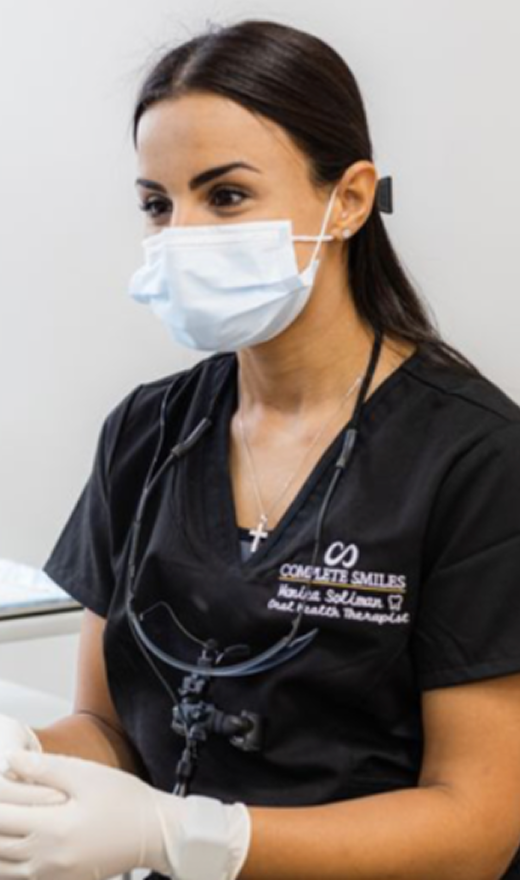
Take Complete Smiles Bella Vista, for example. Under the leadership of Dr. James Hanna, they incorporate data from smart toothbrushes into customised treatment plans. Regular follow-ups allow the dental team to track your progress and tweak recommendations based on the insights your toothbrush provides [6]. This is especially helpful for patients who face challenges with oral hygiene or have limited dexterity [6]. The data shared through the smart toothbrush app can also alert your dentist to any potential issues, giving them a clearer picture of your brushing habits between visits [11].
Professional Dental Services That Complement Smart Toothbrushes
Beyond education and training, dental clinics are using smart toothbrush data to enhance a wide range of treatments. Preventive care, for instance, benefits greatly from the detailed brushing data these devices provide. Dentists can better assess how motivated and consistent patients are with their oral hygiene routines.
Periodontal care has also seen improvements when paired with smart toothbrush use. A study by Tonetti et al. highlighted significantly lower plaque levels in patients using smart toothbrushes during periodontal treatments (p < 0.001).
For those undergoing orthodontic treatments, like Invisalign, smart toothbrushes offer real-time feedback to ensure thorough cleaning around brackets and aligners. This guidance makes it easier to maintain proper hygiene in those tricky-to-reach spots.
Research backs up the effectiveness of combining professional care with smart toothbrush technology. A study by Grender et al. found that after eight weeks of smart toothbrush use, patients showed significant reductions in plaque and gingivitis. Impressively, 82% of smart toothbrush users achieved a healthy status compared to just 24% of manual brush users. Similarly, research by Adam et al. revealed that over 80% of participants with gingivitis (defined as having ≥10% bleeding sites) improved to a generally healthy state (with <10% bleeding sites) after eight weeks.
Sharing your smart toothbrush data with your dental clinic allows for a more focused and data-driven approach to your care. Your dentist can analyse your brushing patterns, identify problem areas, and provide targeted advice. This kind of collaboration not only improves treatment outcomes but may also help you avoid more invasive dental procedures down the line. It’s a great example of how smart technology can transform everyday brushing into a proactive, dentist-supported routine.
Conclusion: Better Brushing Habits Lead to Better Oral Health
Smart toothbrushes bring together real-time feedback and personalised data to transform oral care. They turn a routine task into a focused, measurable effort, helping to address inconsistent brushing habits and prevent dental problems before they arise.
These devices guide users with real-time feedback on timing and technique, encouraging better brushing habits over time. Features like pressure sensors and thorough cleaning modes help protect gums and teeth from damage, while personalised care plans based on actual brushing data provide tailored advice for optimal oral hygiene [17][5][3][20][19]. By adopting this proactive approach, many Australians could potentially avoid the need for more complex and expensive dental treatments in the future.
For those thinking about upgrading, smart toothbrushes are a step toward long-term oral health. Picking a device that suits your needs and syncing it with its app ensures you can make the most of its features [18].
When used alongside regular dental check-ups, these devices can also enhance professional care. As dental hygienist Denise Stepka explains:
"I’ve seen patients who have had difficulty with home care have an overall decrease in plaque, tartar and stain when using an electric toothbrush. I think it’s a combination of the brush being more effective and patients brushing for longer because of the two-minute timers that many of these brushes have." [21]
FAQs
How can smart toothbrushes help improve my brushing habits?
Smart toothbrushes come equipped with sensors that track your brushing habits, including how much pressure you apply, how long you brush, and which areas you cover. They sync with a mobile app or device to offer real-time feedback, letting you know if you’re brushing too hard, skipping spots, or not brushing for the recommended duration.
This instant feedback allows you to make adjustments as you brush, leading to a more effective clean. Over time, these features can help improve your oral care routine, reducing the risk of plaque build-up and gum problems.
What features should I consider in a smart toothbrush if I have sensitive gums or wear braces?
When selecting a smart toothbrush for sensitive gums or braces, focus on features that prioritise comfort and care. Look for soft or ultra-soft bristles to avoid irritating delicate gum tissue. A toothbrush with gentle cleaning modes is ideal for sensitive teeth, while pressure sensors can help ensure you’re not brushing too hard, which could cause harm.
If you have braces, it’s worth considering models with specialised brush heads designed to clean effectively around brackets and wires, ensuring thorough oral hygiene without added difficulty.
Some popular choices include the Oral-B iO series and Sonicare ProtectiveClean, both of which are equipped with these helpful features to provide a gentle yet thorough cleaning experience.
How can sharing data from my smart toothbrush with my dentist improve my oral health?
Sharing the data from your smart toothbrush with your dentist can make a noticeable difference in your oral care routine. By examining details like how often you brush, how long you spend brushing, and which areas you cover, your dentist can pinpoint spots you might be neglecting or brushing too hard. This information lets them give you advice that’s tailored to your specific needs, making it easier to keep your teeth and gums healthy.
Smart toothbrushes also offer real-time feedback, helping to spot potential trouble areas before they turn into bigger problems. By combining this technology with your dentist’s expertise, you can take a more proactive approach to dental care and work towards a healthier, brighter smile.
Related Blog Posts
- How Wearables Help Prevent Dental Issues
- AR in Dental Care: Patient Education Tools
- AI Research in Oral Disease Detection: Key Findings
- Toothbrushing Tips for Kids by Age
Important Notice: Any surgical or invasive procedure carries risks. Before proceeding, you should seek a second opinion from an appropriately qualified health practitioner.
Individual results may vary. The information provided in this article is for educational purposes only and does not constitute medical advice.
Checkout Related Blogs




Get in touch with us
For more information, call us now to start feeling better. Or fill the form below to make appointment
The Latest News from Complete Smiles
How to Clean Clear Plastic Retainers
Checklist for Choosing Wearable Dental Devices
Checklist for Choosing Cloud AI Platforms in Dentistry
Complete Smiles Bella VistaAccepts All Major Health Funds, Including





