





AI-Powered Caries Detection: What Patients Should Know
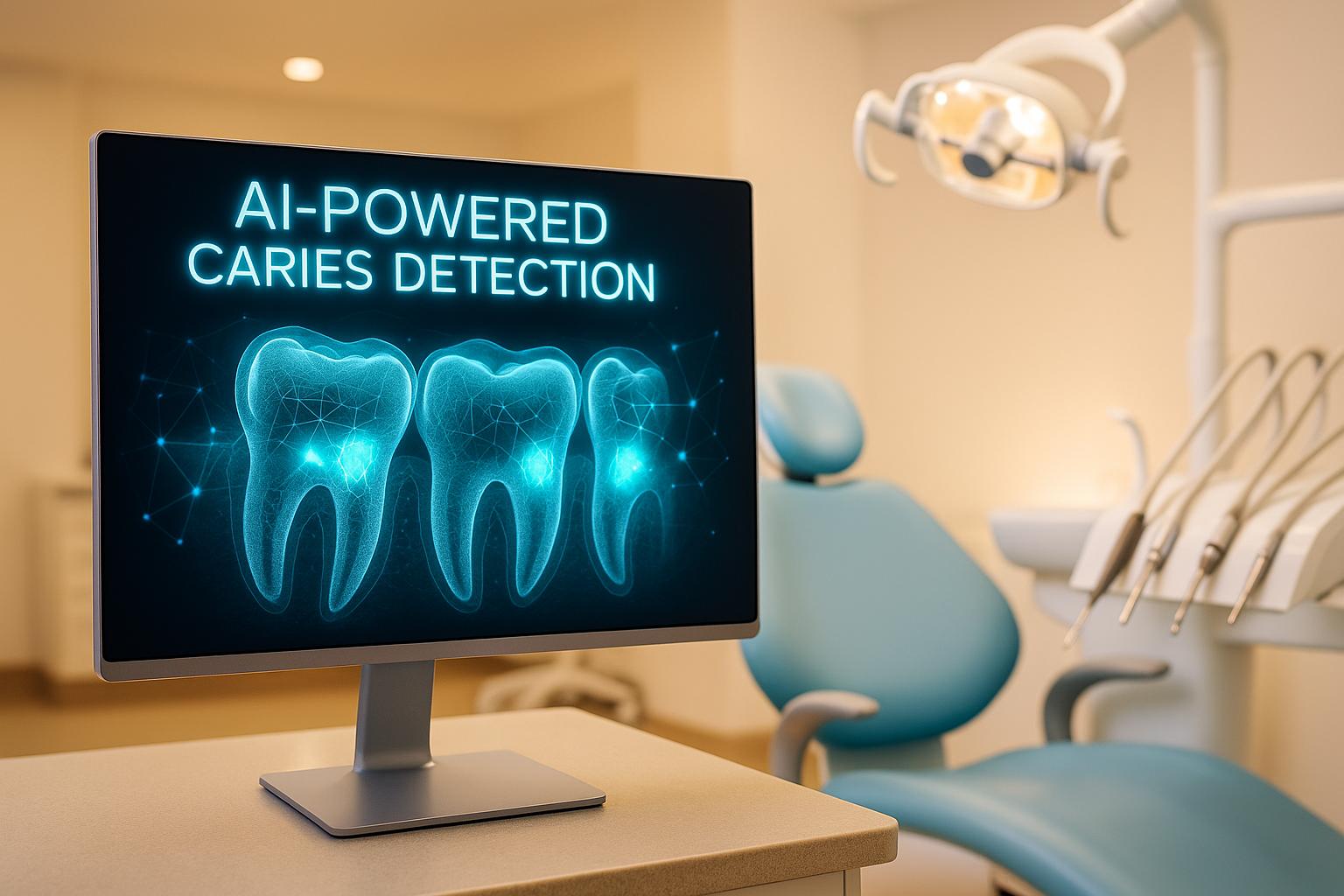
AI is changing dentistry in Australia, making it easier to detect tooth decay early and accurately. AI-powered caries detection uses advanced algorithms to analyse dental images, such as X-rays, and identify decay with precision. This technology helps dentists spot problems sooner, improving treatment outcomes and reducing the need for complex procedures. Here’s what you need to know:
- How it works: AI scans dental images in seconds, highlighting decay or areas of concern using colour-coded overlays. Dentists then confirm the findings and decide on treatment.
- Benefits: Faster diagnosis, fewer missed issues, and clear visual evidence for patients. It also ensures consistent results across clinics.
- Accuracy: AI systems can detect decay with over 93% accuracy, often catching issues that might be overlooked by the human eye.
- Safety: In Australia, AI tools comply with strict privacy laws and are regulated by the Therapeutic Goods Administration (TGA) to ensure safe and effective use.
- Cost: Early detection often leads to less expensive treatments, saving patients money in the long run.
AI doesn’t replace dentists – it supports them by improving diagnosis and communication. This technology is already being used in Australian clinics, offering patients better care and more informed choices.
AI Helps Dentist Detect an Early Cavity…. See Pearl‘s Second Opinion in Action!
How AI Detects Dental Caries
The way AI identifies dental caries is a fascinating blend of cutting-edge technology and professional expertise. By understanding how this process works, we can better appreciate the role AI plays in modern dental diagnostics. The system combines advanced algorithms, streamlined workflows, and the oversight of skilled dentists to ensure precise and reliable results.
The Technology Behind AI Detection
AI-powered caries detection is built on machine learning and deep learning models, particularly convolutional neural networks (CNNs). These models are trained using extensive datasets of annotated dental images, enabling them to identify the visual patterns that signal tooth decay.
The technology works by classifying image pixels to distinguish between healthy and decayed tissue. In practice, these models are integrated into diagnostic tools to improve accuracy and consistency. To standardise the process further, many systems use the ICDAS™ scoring system, which rates caries severity on a scale from 0 (healthy) to 6 (extensive decay). This standardisation ensures uniform assessments across different platforms and practices.
From X-ray to Diagnosis: The Process
Here’s how the diagnostic workflow unfolds:
- Digital X-ray capture: A clear digital X-ray is taken and uploaded to the AI platform.
- Real-time analysis: The AI processes the image using its trained algorithms, scanning for subtle changes in density and structure that might indicate tooth decay. This analysis is lightning-fast, often completed in seconds, providing immediate feedback during the appointment.
- Visual feedback and imaging versatility: The AI enhances the X-ray with overlays or annotations, often using colour-coded markers to highlight areas of concern. These tools can analyse a variety of dental images, such as intraoral photos, bitewing and periapical radiographs, panoramic images, CBCT scans, and even near-infrared light transillumination. This adaptability makes it easy to incorporate AI into existing diagnostic workflows.
The Dentist’s Role in AI-Assisted Diagnosis
Despite its technological sophistication, AI is not a replacement for a dentist’s expertise. Instead, it acts as a powerful support tool, complementing the dentist’s clinical skills. Dentists remain central to the diagnostic process, interpreting AI findings alongside the patient’s medical history, symptoms, and overall oral health.
For instance, while the AI might flag an area of concern, it’s the dentist who determines the next steps – whether that’s immediate treatment or simply monitoring the situation. Dentists also consider factors beyond the AI’s scope, like patient comfort and individual risk factors, ensuring a more comprehensive approach.
Interestingly, many clinicians have noted that AI overlays improve communication with patients. The clear, objective evidence provided by the AI helps patients better understand their condition, often leading to increased acceptance of recommended treatments during routine visits.
Safety, Accuracy, and Reliability of AI Detection
When it comes to dental diagnostics, people naturally want to know if they can trust AI-powered systems with their oral health. The good news is that AI technology has reached impressive levels of accuracy while adhering to strict safety standards. However, it’s essential to understand both its strengths and limitations.
How Accurate Is AI Detection?
AI-based caries detection systems are proving to be as reliable as, if not better than, traditional diagnostic methods used by dentists. Research using advanced convolutional neural networks shows these systems can achieve a diagnostic accuracy of 93.40% and specificity of 95.65% when interpreting dental images[6].
Take Overjet, for example. This FDA-cleared platform has demonstrated exceptional ability in identifying subtle lesions that might go unnoticed by the human eye, particularly in radiographs where early decay can be tricky to detect[2]. Studies consistently show that AI systems using deep learning algorithms deliver high sensitivity and specificity, often outperforming human experts in controlled environments[5][1].
These systems are trained on expert-annotated images, enabling them to spot even the faintest signs of decay in its early stages. By recognising visual markers that may seem minor to the untrained eye, AI can provide a level of precision that supports earlier intervention.
However, AI’s performance can be influenced by factors like image quality and the diversity of its training data. Poor-quality radiographs or unusual cases may present challenges, which is why these systems are designed to complement – not replace – clinical judgement[5][1]. This balance ensures consistent and reliable application across various dental practices.
Reliability Across Different Dental Practices
One standout feature of AI in dentistry is its consistency across different practices and practitioners. Unlike traditional diagnostic methods, which can vary depending on the clinician, AI applies standardised criteria to every case. Whether you’re visiting a solo dentist in rural Australia or a large clinic in Sydney, the diagnostic approach remains the same[2][1].
Platforms like Overjet and Denti.AI are trained on extensive, diverse datasets, allowing them to deliver uniform results across a range of clinical environments. This consistency is particularly valuable in bridging the gap between urban and regional healthcare, ensuring that high-quality diagnostics are accessible no matter where you are in Australia[2][1].
For patients, this consistency means more objective discussions about treatment. AI-generated visual evidence eliminates much of the subjectivity that can vary between appointments or practitioners. This not only builds trust but also aligns with robust safety and privacy standards.
Safety and Data Privacy
Safety and data protection are key priorities when introducing AI into dental diagnostics. In Australia, AI dental systems must comply with the Privacy Act 1988 and the Australian Privacy Principles, which outline how personal health information is collected, stored, and managed[2].
From a regulatory standpoint, the Therapeutic Goods Administration (TGA) oversees medical devices, including AI-powered diagnostic tools. Before these systems are approved for clinical use, they undergo rigorous assessments to ensure their safety, effectiveness, and data security. Ongoing monitoring ensures these systems continue to meet Australian standards for patient care and safety.
AI contributes to patient safety by enabling earlier and more precise detection of caries, reducing the need for invasive treatments and lowering the risk of disease progression. By minimising human error and subjective interpretation, AI helps prevent both over-treatment and missed diagnoses, paving the way for better long-term oral health outcomes[1][2].
Additionally, AI-generated visual overlays enhance communication between dentists and patients. These overlays make it easier for patients to understand their oral health and make informed decisions about their treatment options[2].
Patients are encouraged to ask their dental providers about the AI systems being used and how their data is safeguarded under Australian privacy laws. Reputable clinics will be transparent about their data handling practices and the regulatory approvals their AI tools have received.
Impact on Patients and Dental Care
With its precision and dependable performance, AI is reshaping not just dental diagnostics but also how patients experience care. By integrating AI-powered caries detection into Australian dental practices, patients benefit from improved care from their very first visit to long-term oral health management.
Benefits of Early Detection
AI’s ability to detect early-stage decay is impressive, with studies showing up to 92% sensitivity in identifying lesions that might otherwise go unnoticed by the human eye[8][3].
Catching decay early allows for less invasive treatments, such as applying preventive resin restorations or targeted fluoride treatments, rather than resorting to traditional fillings or more complex procedures[8][1]. These options are gentler, preserve more of the natural tooth, and often result in less discomfort during and after treatment.
Addressing decay early also helps avoid serious complications. Advanced decay can lead to infections, abscesses, or the need for root canal therapy, all of which are more invasive and costly. For Australian patients, this means fewer dental emergencies and a more predictable, preventive approach to oral health. Instead of dealing with sudden toothaches or urgent procedures, they can plan treatments around their schedules, making dental care more manageable and efficient.
Faster and More Efficient Dental Visits
AI significantly speeds up the diagnostic process. By analysing dental images in real time, AI systems provide instant diagnostic insights, enabling same-day treatment planning[1][3]. This eliminates the need for multiple appointments, as patients can discuss their treatment options and even begin care during the same visit.
Dental practices using AI platforms like Overjet have noted a 10–20% increase in treatment acceptance rates. This is largely because AI provides clear, visual evidence of problem areas, helping patients better understand their oral health and feel more confident about proceeding with recommended treatments[2].
Shorter diagnostic times also mean less time in the chair for routine check-ups. For patients with packed schedules or those who feel anxious about dental visits, this streamlined approach is a huge relief. And for those in regional areas who often travel long distances for care, reducing the number of appointments saves both time and money.
Cost Considerations for Patients
AI-powered caries detection can be a cost-effective option for patients, offering both direct and indirect savings. Early detection typically leads to less expensive treatments, as minimally invasive procedures require fewer resources and simpler protocols[8][1].
For example, catching decay early might only require fluoride treatments or preventive resins, which are far cheaper than crowns, root canals, or extractions. Preserving the natural tooth structure also reduces the likelihood of future complications that could result in costly treatments down the line.
| Treatment Stage | Typical Interventions | Cost Implications |
|---|---|---|
| Early Detection (AI-assisted) | Fluoride treatments, preventive resins | Lower cost, minimal procedures |
| Traditional Detection | Fillings, crowns, potential root canals | Moderate to high cost, more invasive |
| Late-stage Detection | Extractions, implants, complex restorations | Highest cost, extensive treatment |
Some dental practices include AI diagnostics in their standard fees, while others may charge separately. Patients should clarify costs with their dentist, but it’s worth noting that any additional diagnostic fees are often offset by the savings from avoiding more invasive treatments.
The time saved through faster diagnoses and same-day planning also translates to cost savings. Fewer appointments mean less disruption to patients’ lives and potentially lower overall expenses. Australian dental practices that embrace AI technology are leading the way in offering more efficient, patient-friendly care, paving the path for better oral health outcomes without breaking the bank.
sbb-itb-2be92ed
Ethical and Regulatory Considerations
As AI becomes a part of Australian dental practices, it’s important for patients to understand the ethical and regulatory frameworks guiding its use. While AI introduces exciting possibilities, it also raises critical questions about fairness, accountability, and professional responsibility. Recognising the current limitations of AI diagnostics is key to addressing these concerns.
Ethical Concerns in AI Diagnosis
One major issue is bias in AI systems. If these systems aren’t trained using data that reflects Australia’s diverse population, they may deliver skewed results. This makes it essential for dental professionals to remain accountable. The "black box" nature of AI – where the decision-making process isn’t entirely transparent – further complicates this accountability, highlighting the need for human oversight [7].
Current Limitations of AI in Caries Detection
Despite its advancements, AI still struggles in certain areas. Complex cases involving unusual tooth anatomy, overlapping dental structures, or poor-quality radiographs can challenge its diagnostic accuracy. Additionally, AI systems may falter when encountering rare dental conditions or patient profiles that weren’t adequately represented in their training data [1] [4] [7]. The quality and diversity of training data are crucial, as are technical factors like image clarity, both of which directly impact AI reliability [4].
Australian Regulatory Standards
To address these challenges, Australia enforces strict regulatory oversight. Bodies like the Australian Health Practitioner Regulation Agency (AHPRA), the Dental Board of Australia, and the Therapeutic Goods Administration (TGA) play a vital role in ensuring that AI technologies meet safety, efficacy, and ethical standards [7]. While specific AI-focused dental regulations are not yet in place, practitioners must adhere to broader guidelines covering clinical safety, patient consent, and data privacy. As technology evolves, so too will these regulatory frameworks, ensuring patient interests remain protected.
This evolving framework not only safeguards patients but also strengthens the reliability of AI-driven diagnostics in daily dental care. For instance, practices like Complete Smiles Bella Vista use AI tools under strict human oversight and robust data protection measures. Patients are encouraged to inquire about their dental practice’s regulatory compliance, data management, and oversight procedures to ensure AI enhances their care without compromising quality or safety.
Modern Dental Care Options in Australia
Australian dental clinics are quickly adopting cutting-edge technologies to provide care that’s more precise, efficient, and tailored to individual needs. The use of AI-powered tools alongside a broad range of treatment options reflects a shift towards patient-focused dentistry that aligns with the growing expectations of healthcare today. This evolution highlights how modern technology not only improves diagnostics but also upholds the profession’s high standards.
Personalised Care with Modern Technology
Across Australia, dental practices are transforming patient experiences by blending advanced diagnostic tools with comprehensive treatment strategies. For instance, AI-powered caries detection systems can analyse dental X-rays to spot early signs of decay that might escape the naked eye during routine checks[1][4]. This early detection allows for preventive measures and less invasive treatments, giving patients better outcomes[7].
AI platforms like Overjet have made a noticeable impact in some practices, leading to higher case acceptance rates during hygiene appointments. Why? Because the technology provides clear, visual explanations of diagnoses that both dentists and patients can easily understand[2]. This clarity fosters better communication and builds trust, making patients feel more involved in their care decisions.
But the advancements don’t stop at AI. Many Australian clinics are using digital imaging systems, CAD/CAM technology for creating restorations, and updated sterilisation methods to deliver well-rounded care[1][4]. These tools allow dentists to craft precise, customised treatment plans – whether it’s for preventive care or more complex procedures.
Take Complete Smiles Bella Vista as an example. Led by Dr. James Hanna, this practice offers a wide range of services, from general and cosmetic dentistry to orthodontics and Invisalign. They utilise AI-powered caries detection, digital imaging, and advanced techniques to deliver tailored treatments, including porcelain veneers, dental implants, root canals, and teeth whitening.
For patients, the advantages are clear: quicker diagnoses, fewer invasive procedures, and better communication about their oral health[1][4]. AI systems can process various types of images – like intraoral photos, bitewing X-rays, panoramic scans, and cone beam CT scans – making them incredibly versatile for diagnostics[5]. As a result, patients receive more accurate assessments and can make well-informed treatment choices.
Meeting Australian Professional Standards
While technology is reshaping dental care, maintaining high professional standards remains a priority. Australian dental clinics using advanced tools must meet stringent guidelines set by regulatory bodies like the Dental Board of Australia and the Australian Dental Association. These rules ensure that AI tools are rigorously tested, regularly updated, and used to support, not replace, a dentist’s clinical judgement[3][4].
Transparency is also key. Clinics must inform patients about how these technologies work, their benefits, and any limitations[3][4]. This openness builds trust and ensures that technology enhances care without compromising it.
Regulations require all diagnostic and treatment tools to prioritise patient safety, privacy, and ethical use. AI systems, for example, must demonstrate reliable performance across diverse patient groups and scenarios. Studies show that AI algorithms, like convolutional neural networks, often match or even surpass traditional methods in detecting cavities, proving their value in clinical settings[5].
That said, technology is meant to complement – not replace – the human element in dentistry. While AI boosts diagnostic accuracy and efficiency, a dentist’s expertise and personal connection with patients remain irreplaceable. Empathy, communication, and sound clinical judgement are still at the heart of patient care[1]. By blending advanced tools with compassionate service, modern Australian dental practices ensure patients receive both cutting-edge diagnostics and meaningful human interaction.
As AI tools continue to evolve, Australian dental clinics are well-positioned to lead this technological wave. With ongoing improvements, patients can look forward to even more reliable diagnostic solutions that support better oral health outcomes – all while maintaining the highest standards of care and ethics. This balance ensures that AI’s role in dentistry grows in a way that benefits everyone.
The Future of AI in Dentistry
The future of AI in dentistry is shaping up to be an exciting frontier, especially in Australia, where AI-powered caries detection is already making a difference. These systems are improving accuracy, streamlining processes, and making dental care more accessible. As the technology continues to advance, it’s transforming how dental professionals diagnose and treat issues, paving the way for better patient outcomes nationwide.
One of the key strengths of AI in dentistry is its ability to learn and improve. Unlike traditional diagnostic methods, AI systems evolve with each new case, becoming smarter and more precise over time[1]. Future advancements will likely include larger datasets, better detection of subtle lesions, and reduced variability in diagnoses between practitioners[1][2]. These developments promise not just consistency but also greater reliability for patients.
Currently, AI systems boast impressive statistics, with about 92% sensitivity and an accuracy rate of 88–92.5% in detecting caries[8][7]. In practical settings, tools like Overjet have led to earlier detection, fewer false positives, and increased patient trust by presenting clear visual evidence of dental issues[2].
As these technologies improve, patient acceptance is growing. AI-generated visuals make it easier for patients to understand their diagnoses and the urgency of treatment, particularly during routine hygiene visits. This clarity fosters trust and empowers patients to make informed decisions about their oral health[2].
It’s important to note that AI isn’t about replacing dentists – it’s about enhancing their expertise. AI provides a dependable second opinion, helping to minimise diagnostic inconsistencies and ensuring uniform care across different clinics and practitioners[3]. At the same time, the human side of dentistry – empathy, communication, and clinical judgement – remains irreplaceable despite technological progress.
Ethical and regulatory standards are also evolving to keep pace with AI advancements. In Australia, strict guidelines ensure that AI systems meet high standards for safety, efficacy, and privacy. These regulations are designed to align with professional dental practices and protect patient data integrity[7]. Transparency in AI decision-making and clinician accountability are critical considerations as these technologies become more widespread[7].
For Australian patients, the integration of AI into dentistry means earlier intervention, less invasive treatments, and improved long-term oral health outcomes[3]. Practices like Complete Smiles Bella Vista are already blending AI-powered diagnostics with personalised care, offering patients the best of both worlds – state-of-the-art technology paired with experienced clinical expertise.
When choosing a dental practice, patients should look for those that combine advanced AI tools with skilled professionals to achieve optimal results[8][1]. As AI continues to evolve, the collaboration between cutting-edge technology and human expertise will redefine oral healthcare across Australia, delivering exceptional outcomes for patients.
FAQs
How does AI protect my privacy and keep my dental records secure during caries detection?
AI systems for detecting caries are built with rigorous privacy and security protocols to keep your dental records confidential. They adhere to Australian privacy laws and healthcare standards, ensuring sensitive data is safeguarded throughout storage, processing, and analysis.
Clinics and dentists using this technology usually depend on encrypted data transmission and secure servers to block unauthorised access. On top of that, patient information is often anonymised during AI analysis, adding an extra layer of protection for your personal details. If you’re curious or concerned, your dentist can walk you through the specific steps they take to secure your records.
How is AI-powered caries detection different from a traditional dental check-up?
AI-powered caries detection is transforming dental check-ups by incorporating advanced technology to spot tooth decay with higher accuracy. During your appointment, your dentist might pair AI software with imaging tools like digital X-rays to closely examine your teeth and catch early signs of cavities that could otherwise go unnoticed.
This method is not only safe and dependable but also helps in delivering more precise diagnoses. By identifying issues early, it may reduce the likelihood of needing invasive treatments down the track. You’ll still enjoy personalised care, now enhanced by state-of-the-art technology to better protect your oral health.
How accurate is AI in detecting tooth decay, and how do dentists confirm the results?
Dentists are increasingly turning to AI-powered tools to help detect signs of tooth decay. These tools can analyse dental images with impressive accuracy, pinpointing areas that might not be obvious to the naked eye. However, it’s important to note that the dentist always reviews these findings. They combine the AI’s insights with their own clinical expertise and a thorough understanding of your dental history to make the final diagnosis.
This teamwork between technology and professional judgment ensures that any potential dental issues are carefully evaluated, giving you tailored and dependable care.
Related Blog Posts
- AI-Powered Dental Imaging: Future Trends
- AI vs. Traditional Caries Detection Methods
- Real-Time AI for Caries Detection: Pros and Cons
- AI vs Radiographs: Caries Detection Accuracy
Important Notice: Any surgical or invasive procedure carries risks. Before proceeding, you should seek a second opinion from an appropriately qualified health practitioner.
Individual results may vary. The information provided in this article is for educational purposes only and does not constitute medical advice.
Checkout Related Blogs




Get in touch with us
For more information, call us now to start feeling better. Or fill the form below to make appointment
The Latest News from Complete Smiles
How to Clean Clear Plastic Retainers
Checklist for Choosing Wearable Dental Devices
Checklist for Choosing Cloud AI Platforms in Dentistry

Complete Smiles Bella VistaAccepts All Major Health Funds, Including





